Modi's new BJP at 44

As the BJP heads for a likely third successive term in power, it's fascinating to debate how true it looks to the original proposition: A party with a difference
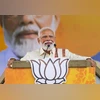
Modi, Narendra Modi, Modi in  Vellore
Shekhar Gupta
6 min read Last Updated : Apr 13 2024 | 9:30 AM IST
It was going to be a party with a difference, Lal Krishna Advani (now Bharat Ratna awardee) promised, as the Bharatiya Jana Sangh, subsumed in the doomed Janata Party experiment of 1977, was reborn as the Bharatiya Janata Party (BJP) on April 6, 1980. It was Easter Sunday; convent-educated Advani would say with delight that his party was resurrected on the same day as Jesus Christ.
 
Forty-four years later, almost to date, as the BJP heads for a likely third successive term in power, it is fascinating to debate how true it looks to that original proposition: A party with a difference. How might it look when it turns 50, six years from now?
The basic postulates marking that difference from the rest (though mostly the Congress) will be its adherence to ideology and ideological purity, unapologetic Hindutva, an economics drawn largely from a founding father who was Deendayal Upadhyaya, hard nationalism, humble, abstemious lifestyles, and a collegial leadership.
 
At the peak of its political power now, the party, however, shows marked elements of “difference” also from its own original proposition. An almighty personality cult to begin with. Until the rise of Narendra Modi, the party’s leadership was collective, for a long time led by a duo: Atal Bihari Vajpayee and Mr Advani, the voice and the mind of the party, respectively. Leading from behind were the grandmasters of the Rashtriya Swayamsevak Sangh (RSS) in Nagpur.
 
All this looks radically different now. Mr Modi has risen as the sole, unquestioned leader. This is a fundamental shift in the party’s launch model. Of course, he has earned this on merit. This lies in his ability, like Indira Gandhi did for her Congress, to get the additional “Modi vote”, without which his party might have struggled even to reach 200. Vajpayee’s best was 182.
 
It now reaches a vote share and Lok Sabha seat numbers that his party’s founders might have dreamed of but probably didn’t imagine becoming a reality in their lives. It’s wonderful for the BJP. But it also marks a change in its original proposition, which was distinct from one-man (one-woman in the case of Indira’s Congress) parties. As it goes past its resurrection day, this BJP is as much Mr Modi’s as the Congress was Indira’s in her second coming in early 1980.
 
In the course of time, Mr Advani and the party think tank he headed came up with the proposition that made the BJP stand out among the competition in India: Its chaal, charitra aur chehra (its direction/method, character, and image).

We shuffle the order of the three attributes just a bit to take this argument forward. So: Chaal, chehra and charitra. On the first, the party shows no deviation. If anything, its ideological positioning is the same as its actions and policies.
 
The slogan of sabka saath/sabka vikas/sabka vishwas might have been written by any of the founders of the party, or even the RSS.
 
The party’s method and direction are consistent, from foreign policy to economics to welfare, to religion and society.
 
The next point, chehra, or the face (image), is where we see changes. The most evident, we spoke about earlier on: A one-man leadership.
 
After Indira, he is our first leader to be able to swing a nationwide “lamppost” election: This lamppost is my candidate, vote for it.
 
This is great for the BJP, though contrary to its founders’ idea of the “image”, which, in that spring of 1980, would have been the opposite of Indira’s Congress. Now it has evolved into a mirror image. 
 
The decline in the sway of the RSS is, in a way, collateral damage, though I am not sure if the Sangh will see it that way today. The BJP’s ideological school is not only enjoying power and influence it might not have imagined, it is also seeing many of its dreams realised: Article 370, Ram Mandir (and probably Varanasi and Mathura to come), triple talaq, and some more.

Probably it is because of the breathtaking pace of the BJP’s rise under Mr Modi that the party realised soon enough that it had an HR (human resources) crisis. It simply did not have enough prospective leaders among the RSS alumni. They needed a flurry of mergers and acquisitions. One aspect of it is what we’ve seen in Maharashtra and Bihar.
 
The other is a wide open door to defectors from traditional rivals. Many of them come for easy power, some because they detest their original leaders, but many more embroiled in corruption allegations to escape the “agencies”. However much the Opposition may talk about its “washing machine politics” the BJP couldn’t care less. What matters in politics ultimately are election results. The rest is just noise, it seems to believe.
 
As a result, these acquisitions haven’t just got protection, many have risen to key positions that would normally be reserved for the party originals. This includes four chief ministers, all in the Northeast, where the BJP barely existed. Of these, Himanta Biswa Sarma is also the party’s czar in the Northeast. At the high command level, Baijayant ‘Jai’ Panda, who came in from the Biju Janata Dal, is now in charge of the campaign in Uttar Pradesh.
 
Former Assam chief minister and now Cabinet minister Sarbananda Sonowal is a parliamentary board member. Besides assorted national vice-presidents, Basavraj Bommai has been chief minister, and D Puranadeshwari (Andhra Pradesh) and Sunil Jakhar (Punjab) are state chiefs. And Samrat Chaudhry, formerly a Lalu family and Rashtriya Janata Dal loyalist, is the BJP’s deputy chief minister in Bihar. This is a spectacular change in the party’s cast of characters. It also underlines a change in character, or charitra.
 
Looking at Bahadurshah Zafar Marg outside my window is a prolific BJP campaign hoarding. It hails Mr Modi as a corruption fighter and black & white (more black than white) silhouettes of familiar Opposition leaders among the “corrupt” he is up against. One of these is also in a typical AAP cap and wrapped in a muffler to leave no doubts. This is the party reasserting a charitra different from all of them. How does it work with so many recent imports, from Ajit Pawar to Ashok Chavan and more, remains a question.
 
This week, The Hindu ran findings of a CSDS-Lokniti poll. Its findings on popular view on corruption are intriguing. It shows 55 per cent Indians believing corruption has gone up in the past five years. That is 15 per cent more than what a similar poll showed in 2019. The percentage is mostly common across income segments, a little bit worse, in fact, among the poorest. Yet the BJP is positioning itself now as a party of anti-corruption crusaders. And you know what, the same poll says only 8 per cent of the people see corruption as the biggest issue, number four alongside Ram Mandir, after unemployment (27 per cent), prices (23 per cent), and development (13 per  cent). This is a different political era, a different BJP. Is this also a different Indian voter?

By special arrangement with ThePrint

One subscription. Two world-class reads.

Already subscribed? Log in

Subscribe to read the full story →
*Subscribe to Business Standard digital and get complimentary access to The New York Times

Smart Quarterly

₹900

3 Months

₹300/Month

SAVE 25%

Smart Essential

₹2,700

1 Year

₹225/Month

SAVE 46%
*Complimentary New York Times access for the 2nd year will be given after 12 months

Super Saver

₹3,900

2 Years

₹162/Month

Subscribe

Renews automatically, cancel anytime

Here’s what’s included in our digital subscription plans

Exclusive premium stories online

  • Over 30 premium stories daily, handpicked by our editors

Complimentary Access to The New York Times

  • News, Games, Cooking, Audio, Wirecutter & The Athletic

Business Standard Epaper

  • Digital replica of our daily newspaper — with options to read, save, and share

Curated Newsletters

  • Insights on markets, finance, politics, tech, and more delivered to your inbox

Market Analysis & Investment Insights

  • In-depth market analysis & insights with access to The Smart Investor

Archives

  • Repository of articles and publications dating back to 1997

Ad-free Reading

  • Uninterrupted reading experience with no advertisements

Seamless Access Across All Devices

  • Access Business Standard across devices — mobile, tablet, or PC, via web or app

More From This Section

Disclaimer: These are personal views of the writer. They do not necessarily reflect the opinion of www.business-standard.com or the Business Standard newspaper

Topics :Rashtriya Swayamsevak SanghBharatiya Janata Partynational politicsLok Sabha elections

Next Story



