Regimes collapse because of weak institutions, not leaders or ideologies

To be truly functional and durable, even eternal, a state doesn't just need a leader, a party, or an ideology. It needs functional and robust institutions
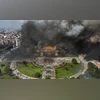
Nepal Protest, Parliament Nepal, Nepal Parliament
Kathmandu: An aerial view of smoke rising from the Federal Parliament of Nepal premises after it was set on fire by protestors during massive anti-government protests, in Kathmandu, Nepal, Tuesday, Sept. 9, 2025.(Photo:PTI)
Shekhar Gupta
7 min read Last Updated : Sep 13 2025 | 9:30 AM IST
Is there such a thing as a hard or a soft state? What if we said that any state is indeed just that, the state? It has to have it in its guts to stay together, cohesive, and orderly. That last is not my line. From whom it’s borrowed, I’ll tell you as we go along. 
Take Nepal. The fall of its constitutionally elected government in just over a day of Gen Z protests in the capital is the third such in three years in the subcontinent, after Sri Lanka (Colombo, July, 2022) and Bangladesh (Dhaka, August, 2024). As we keep saying, invoking the primer of journalism, this conforms to the three-example rule. We can also note much clamour on social media, mostly from the Bharatiya Janata Party base, which includes many prominent and respected names, that this is just what the “powers that be” would want done with the Modi government in India. The regime-change toolkit, as they’d put it. 
Let’s also look at exceptions. Not every government collapses under a public protest. I know this is a super-provocative example, but remember Pakistan on May 9, 2023? 
Imran Khan’s supporters rioted not in one city but across many, even stormed Lahore’s Jinnah House, the Corps Commander’s home. The situation had many more ingredients for a “regime” overthrow than in Colombo, Dhaka or Kathmandu. A widely hated civilian government, the handmaiden of a then-reviled army, had jailed the most popular mass leader. 
That “revolution” ended within 48 hours. The leader (Imran Khan) is still in jail, now handed a 14-year sentence, the same coalition is still in power, having been rebirthed through another rigged election, and all socio-economic and democratic grievances remain. More than 250 protest leaders are being tried in military courts. The state looks way stronger. 
Did the Pakistan establishment survive because it is a hard state, while Sri Lanka, Bangladesh, and Nepal weren’t? Definitely, even Asim Munir doesn’t think so. Or, he wouldn’t have given Pakistan a “we have to become a hard state” call in that infamous April 16 speech. 
The fact is, the regime survived in Pakistan because it is still a functional state. The heart of a functional state is law and order. Functional is the key word here, not hard or soft. No state can be functional unless it’s capable of maintaining law and order. And when there is law and order, catastrophic state failures like Colombo, Dhaka, and now Kathmandu will not take place. 
Regime change can always be a democratic aspiration. But it will take more to achieve it than a few days of protests, riots and arson. It will take long months if not years of toil and struggle to build a political counter, go to the people, and create the revolution you want, through elections or mass movement. 
What the collapse in Kathmandu with just one push underlines to us is that it was a non-functional state. It had an elected government, but its leaders did not have the first prerequisite for governance: Democratic patience. 
The leadership trained as guerrilla fighters through their youth to middle age, and then ran cynical musical chairs through defection and alliance-switching, as elected politicians had no experience in dealing with “other” angry people. The Maoists were once heroic change agents. Once they rode that wave to power, they no longer thought the same people could also get angry with them. And when they did, they needed some negotiations to revive trust and credibility, not bullets. 
Guns were an instrument of winning popularity and power. Nor had they spent any of the past 17 years since the end of the monarchy in 2008 to build and strengthen institutions of democracy. If they had, the same institutions would have protected them. If, in the end, the only institution the protesting masses trust is the army, it shows what a colossal failure the revolutionary political class in Nepal has been. They never built a functional state.  
A hard state can be quite fragile. My most valuable case study is Georgia, then a Soviet republic. History has rarely seen a state harder than the USSR. It panicked when the first protests broke out in Georgia in 1988-89? It sent out the Red Army with special forces and armed KGB, who unleashed bullets and poison gas. This was a classical bull-headed hard state. It unravelled. 
Its discredited party state had a broken economy, and didn’t know how to handle disagreements. Individual dissenters it could kill, or pack off to distant gulags. A mass protest wasn’t its glass of vodka. 
We got a better understanding shortly afterwards as we were hosted for dinner, with my then editor, Aroon Purie, by Buta Singh, Rajiv Gandhi’s home minister. He said he had recently hosted Russian foreign minister Eduard Shevardnadze (a Georgian) who “asked me how we handled protests by lakhs  — when his army unleashed poison gas on a much smaller crowd” in Tbilisi.
  “I said, your excellence,” said Buta Singh, “I can lend you a few companies of CRPF.” The lesson is that a state must maintain law and order. For this, it must have three prerequisites: The uniformed forces with the right training, negotiating skills and democratic patience or the willingness to trade spaces. 
Today’s discourse confuses the absence of an Opposition for a hard-state essential. It’s the opposite. The Opposition serves as a pressure-release valve. People can vent through it rather than sack your President, Prime Minister or corps commander’s homes. All four of our neighbours banished their Opposition to different degrees. 
At which point, we return to our earlier question. Could this happen in India? A regime change through any “tool-kit”? A quick way to explain why it can’t happen is to remind ourselves that constitutional democracies do not have a “regime.” 
While there are a couple of dozen mutinies going on across India at any point, we have seen two serious challenges to the state from the “street” in the past 50 years. The first was Jayaprakash Narayan’s (JP) Navnirman Andolan, beginning 1974 and compounded by the George Fernandes-led railway strike that paralysed India. Yet, failed to dislodge Mrs Gandhi. It took an election. 
The second was Anna Hazare’s so-called anti-corruption protests, fully backed by new TV and strong elements in the Opposition, especially the RSS, as was the case with JP’s movement. But even a government as weak as the United Progressive Alliance-2 had the strength to ride it out. 
A debate on the Jan Lokpal Bill, going well past midnight, sealed the issue. It was that line from the late Sharad Yadav in response to the self-proclaimed Gandhi, Anna Hazare, pouring scorn over Parliament and elected leaders. “Think of an Indian with the name Pakauri Lal, he said, pointing to fellow MP (Samajwadi Party, Forbesganj). In this system, a man as humble as him can be here. And this is the system you’ve come to destroy?” The Anna movement was over at that moment. The parliament had risen to protect the state. 
Finally, I will let you know about the “state needing to have it in its gut to stay together” observation. In 2010, when mass stoning and terror had peaked in the Valley, many mainstream voices were rising, saying, “If Kashmiris are so unhappy, why don’t we just let them go?” M K Narayanan, then national security advisor, spoke this line in a conversation, pointing his fist — where else, but at his gut. It was 15 years ago, so I hope he’d forgive me for recounting this. See where the Valley is, now. This, by the way, was the same UPA-2, now widely seen to be running a soft state. 
By special arrangement with ThePrint

One subscription. Two world-class reads.

Already subscribed? Log in

Subscribe to read the full story →
*Subscribe to Business Standard digital and get complimentary access to The New York Times

Smart Quarterly

₹900

3 Months

₹300/Month

SAVE 25%

Smart Essential

₹2,700

1 Year

₹225/Month

SAVE 46%
*Complimentary New York Times access for the 2nd year will be given after 12 months

Super Saver

₹3,900

2 Years

₹162/Month

Subscribe

Renews automatically, cancel anytime

Here’s what’s included in our digital subscription plans

Exclusive premium stories online

  • Over 30 premium stories daily, handpicked by our editors

Complimentary Access to The New York Times

  • News, Games, Cooking, Audio, Wirecutter & The Athletic

Business Standard Epaper

  • Digital replica of our daily newspaper — with options to read, save, and share

Curated Newsletters

  • Insights on markets, finance, politics, tech, and more delivered to your inbox

Market Analysis & Investment Insights

  • In-depth market analysis & insights with access to The Smart Investor

Archives

  • Repository of articles and publications dating back to 1997

Ad-free Reading

  • Uninterrupted reading experience with no advertisements

Seamless Access Across All Devices

  • Access Business Standard across devices — mobile, tablet, or PC, via web or app

Topics :Nepalsri lankaPakistan protestsIndian democracyBS Opinion

Next Story



