Solar energy is growing. But in the evening, the sun goes down, and the big users of solar switch back to the grid. Economic growth and changes in the built environment are exacerbating cooling demand in the evening. Grid managers are manfully struggling with this problem of the surge in evening demand, but it is becoming harder to accommodate. The only way out is market prices.
The price of solar energy has dropped handsomely. For every firm, there is an opportunity to cut energy expenses in the day by obtaining solar electricity through some contracting mechanism. But the sun is a fickle friend, and every evening solar energy dwindles away while electricity demand surges. With economic growth and cheap Chinese manufacturing, air conditioning adoption grows by the day. The built environment is transitioning to heavier structures, which have more heat capacity, which irradiate the interiors in the evening, thus motivating more use of air conditioning into the evening.
The last piece of the present situation is a revival in private investment. In the CMIE Capex database, projects “under implementation” have gone up from the trough of Rs 44 trillion in 2020 to a current level of Rs 55.7 trillion (both values in 2024 rupees), a gain of 26 per cent real in about three years. As these projects trickle through into completion, electricity demand will rise.
We should all bang the pots and pans out of appreciation for the grid managers who are valiantly fighting this situation. Every evening, the sun goes down and demand from the grid goes up. Grid managers scramble to make ends meet. Wind power (which is itself fickle) is particularly welcome at this time. Some small storage facilities have started kicking in. Hydel plants and gas plants help. Coal thermal plants are pushed to the limits of economic and technical good sense. What grid managers need, in this every evening battle, is flexibility. They are hampered by their legacy of power-purchase agreements (where they are forced to do certain things contractually) and coal thermal plants (which are an inflexible technology).
The three forces at work (private desire for cheap solar in the daytime, global finance blocking new fossil fuel plants, and rising cooling demand) are beyond the power of policy makers. There is one powerful tool which can be brought to bear on the problem, and that is the price system.
Grid engineers today see the price as fixed, so the demand is a given. They mobilise a supply response every evening. They view the gap between supply and demand as something which the grid manager should solve. The economics perspective adds value. Solving gaps between supply and demand is what the price system does.
The supply and demand of tomatoes fluctuate, and there are no horticultural engineers figuring out the solution. The heavy lifting is done by the price system. The price of tomatoes fluctuates, and generates equality between supply and demand at every moment. And so it can be with electricity. In the afternoon, the sun is shining, and the price of electricity should go to zero (even if it is a coal thermal supplier). In the evening shortage, the price of electricity should go up sharply.
Everyone will change their behaviour in response to the price. Buyers of electricity will shift their activities into the day to enjoy cheap electricity. People will look at the price of electricity in the evening before deciding to switch on an AC. The right office attire for Chennai is shorts. The built environment will favour cooler designs. Two-shift operations will be structured with a gap in the evening, so as to do a day shift (when the sun is shining) and a night shift (that starts after the evening peak price).
Storage is the business of buying cheap in the day and selling dear in the evening. The daily price fluctuation will trigger private investments in storage. The decision to build a storage plant should be made by a private person — based on the possibility of profit — and not central planners. Wind generators will reap a bounty every evening, which will reshape investments in favour of more wind and less solar. Coal thermal plants will earn zero or low revenues in the day, and reap profits in the evening peak.
At present, too much is being asked of grid engineers. The electricity system of the future is a combination of solar, wind, and storage, orchestrated by the price. Decentralised adjustments by private persons will solve the bulk of the problem. This gives grid engineers a modest problem to fight each evening.

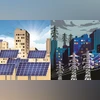 "The evenings are hard")












 Connect with us on WhatsApp