The Gaza model of AI

The Gaza model, if one can call it that, will be studied with care and attention to detail by all sorts of agencies as well as military strategists
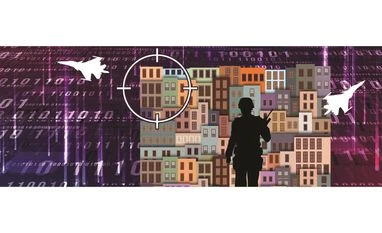
Gaza model of AI, artificial intelligence
Illustration: Binay Sinha
Devangshu Datta
4 min read Last Updated : Apr 19 2024 | 10:14 PM IST
Military strategists war-game potential conflicts. For example, the North Atlantic Treaty Organization and the Warsaw Pact nations were eyeball-to-eyeball in Europe for 45 years during the Cold War. Both sides stayed braced for scenarios of sudden conflict and continually tweaked their opposed plans.
 
In 2021, an Israeli intelligence officer using the pen-name “Brigadier Y.S.” wrote a book The Human-Machine Team. This suggested farming out the nitty-gritty of future military plans to machines. Artificial intelligence (AI) would process data, identify targets, and figure out times and pathways to strike targets. “Brigadier Y.S.” is, in fact, in charge of the unit that planned the Gaza assault and multiple news reports indicate Israel has used AI to plan their campaign.
 
Since the Lebanon invasion in 1982 and the Intifada, the Israelis have been well aware of the challenges of fighting asymmetric wars against urban guerrillas. Conventional forces can easily get bogged down and suffer losses. It is hard to find the enemy. The Israeli Defence Forces (IDF) felt AI would help overcome some of those issues.
 
One type of AI, codenamed “Lavender”, rifled through databases containing municipal data, signals intelligence generated by cellphone monitoring, a mass face-recognition database deployed by Israel, social media data, location data, etc, to identify and track some 37,000 individuals who “could” be connected to Hamas.
 
An official statement describes Lavender as “a database used to cross-reference intelligence sources, in order to produce up-to-date layers of information on the military operatives of terrorist organisations”. Lavender was trained to identify typical militant behaviour patterns, such as being in a WhatsApp group with known militants, changing cellphones often, etc. Such data was used to benchmark the entire population of Gaza more or less, on a 1-100 scale based on a similarity of patterns to the behaviour of known Hamas operatives. People who hit a certain threshold were marked as targets.
 
Lavender is said to have a 10 per cent error rate though it is unclear if these are all “false positives” (individuals identified as Hamas operatives who are not), or there are also “false negatives” (genuine Hamas militants undetected).
 
“The Gospel”, another AI instrument, ran locational data, Google Earth, satellite pictures, etc, to identify buildings and facilities that may have been used by Hamas.  We don’t know the error rates for The Gospel but the levelling of hospitals, schools, etc, suggests it is substantial. 
 
A third AI item, “Where’s Daddy”, tracked individuals identified by Lavender, and worked out the ideal times and places to kill them. Cold logic indicated the best time to strike was when they were at home with families. Hamas facilities may contain bomb shelters and sentries, and are harder to hit. Residential buildings are easy targets.  Of course, strikes on these led to massive fatalities, with entire families wiped out.
 
Humans — Israeli officers — signed off on these targets and they were institutionally comfortable with very high levels of collateral damage. Several Israeli sources say the IDF applied “pre-authorised” allowances for the estimated number of civilians who would be killed when a strike was authorised. Lack of precision meant more civilian deaths.
 
The carnage in Gaza has raised multiple legal and moral questions. Morality apart, it transforms the purposing of AI into the military. Hitherto, AI usage in war has consisted of weaponry and support systems, such as drones, and autonomous systems like Iron Dome (which identifies and shoots down missiles). Using AI to manage back-end logistics is also common — indeed Google is at the centre of a firestorm because it helped the IDF to do this.
 
Using AI to identify military targets at such scales is new. But many of the tasks — finding people, identifying their behaviour patterns, locating residences, mapping preferences — are all more or less the same as commercial data-mining. Similar algorithms try to sell you ice-cream.  
 
Law enforcement and security agencies use AI all the time for much the same purposes of identifying targets. While other nations may not share Israel’s blithe acceptance of collateral damage, they may certainly use programmes similar to these three to identify “enemies of the state”.
 
The Gaza model, if one can call it that, will be studied with care and attention to detail by all sorts of agencies as well as military strategists. It is an object lesson in the extreme use of data, and it adds new and scary dimensions to privacy concerns.

One subscription. Two world-class reads.

Already subscribed? Log in

Subscribe to read the full story →
*Subscribe to Business Standard digital and get complimentary access to The New York Times

Smart Quarterly

₹900

3 Months

₹300/Month

SAVE 25%

Smart Essential

₹2,700

1 Year

₹225/Month

SAVE 46%
*Complimentary New York Times access for the 2nd year will be given after 12 months

Super Saver

₹3,900

2 Years

₹162/Month

Subscribe

Renews automatically, cancel anytime

Here’s what’s included in our digital subscription plans

Exclusive premium stories online

  • Over 30 premium stories daily, handpicked by our editors

Complimentary Access to The New York Times

  • News, Games, Cooking, Audio, Wirecutter & The Athletic

Business Standard Epaper

  • Digital replica of our daily newspaper — with options to read, save, and share

Curated Newsletters

  • Insights on markets, finance, politics, tech, and more delivered to your inbox

Market Analysis & Investment Insights

  • In-depth market analysis & insights with access to The Smart Investor

Archives

  • Repository of articles and publications dating back to 1997

Ad-free Reading

  • Uninterrupted reading experience with no advertisements

Seamless Access Across All Devices

  • Access Business Standard across devices — mobile, tablet, or PC, via web or app

More From This Section

Disclaimer: These are personal views of the writer. They do not necessarily reflect the opinion of www.business-standard.com or the Business Standard newspaper

Topics :BS Opinionartifical intelligenceGaza conflictMilitary weapon

Next Story



