Trump's bipolar G2 dream is fundamentally unstable, lacks global influence

What is clear is that both G1 and G2 know that their field of geographical dominance cannot increase any more than it already has
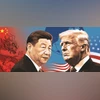
US-China relations, G2 world order, Donald Trump Xi Jinping summit, global power balance, US China rivalry, multipolar world, geopolitics 2025, global economy 2025, China economic power, US dominance decline, India global role, post Ukraine war geopo
Illustration: Ajaya Mohanty
R Jagannathan
6 min read Last Updated : Nov 04 2025 | 10:26 PM IST
In his recent summit with President Xi Jinping of China, Donald Trump raised the possibility of a new world order headed by the two superpowers — a new “G2.” By implication, he meant that they could, together, rule the world and decide what is good for everyone.
 
However, the 2025 G2 may partly be an illusion, not least because of the diametrically opposite positions the United States and China have on issues like trade, climate change, and Taiwan, or anything involving global security. What is clear is that both G1 and G2 know that their field of geographical dominance cannot increase any more than it already has. The US threat to Venezuela suggests that it is more concerned about dominance in the Americas, and China knows that beyond a point it cannot bully India or Japan, the other Asian powers. And who knows how much leverage it will have with Russia after the Ukraine war ends?
 
This is quite unlike the G2 situation that emerged in the post-war era. Even then, it was effectively G1 (with the US being the sole military and economic superpower) for nearly a decade. It was only after the Soviet Union itself became a nuclear power in 1949 that it could claim the second G spot, as it rapidly built its military and economic power based on socialist ideology and numerical support from the newly decolonised and poorer countries of Asia, Africa and Latin America. Even so, the Soviet Union was never a full economic superpower, and we can call that situation at best G1.5, not G2, though for all practical purposes the Soviet Union was the US’ primary rival till the early 1990s. It was the weakness of the rest of the world, more than the reality of economic power that made the Soviet Union the other node to the US.
 
But the G2 of today, comprising the US and China, is more evenly matched in terms of comprehensive national power, and, in theory, it could be a real G2 if only their goals converged in some places (they do, but we will deal with that later). In terms of military and economic power, the US is ahead of China, but this is partly illusory. Reason: It works only if you count economic power in dollar terms, when the reality is that the dollar will decline as trust in Uncle Sam declines. In terms of purchasing power parity (PPP), China is already ahead of the US, and even in terms of technology, it is catching up in most areas.
 
The US-China combo is at best a G1.75 because neither side now has the power to truly influence the whole world, unless they unite, and that does not seem like a possibility right now. The one idea they are quietly in agreement on is about slowing India’s rise, but they were doing this well before Mr Trump glibly talked about G2. Separately or together, they will seek to trim India’s sails, indirectly or directly.
 
The important differential between the G2 of the pre-1990s era and now is that, earlier, both poles had only vassal states around them. Post-war Europe lay in ruins, and the rest of the world was just casting off the shackles of colonialism, housing the world’s largest repository of poor and hungry people. Today, if you leave out very small or very poor countries in Africa, there are major economic and military powers rising in Asia, and (in due course) European powers and Japan could also rediscover their voice after nearly a century of playing second fiddle to America. They too know that America cannot be trusted, but they won’t say that right now when their dependency is so high.
 
While the US is unchallenged in the Americas and western Europe, China is still an Asian power, and additionally hemmed in by midi powers like India and Japan. In short, today’s G2 is powerful only in a limited sense of the term.
 
While military and economic alliances remain, no major country can afford to be intimidated by either of the G2 powers. In fact, they may pit one against the other to get good deals from both.
 
Economic reality explains why. Today the US and China are more interdependent, with America depending on Chinese products and China on America for a large market. Both are trying to decouple to prevent the other from gaining undue advantage from this dependency. This means the rest of the world does not have to choose between China and the US, and can deal with both independently (at least in the case of reasonably large economies).
 
Economic power is also more distributed in 2025 than in 1945. In dollar terms, the US economy is $30.5 trillion and China $19.23 trillion, according to the International Monetary Fund (IMF). But if you take the next five or six powers (Germany, Japan, India, France, the UK and Russia), they become as large as China.
 
But seen through the lens of PPP, the economic power map looks quite different, with China on top at $40.72 trillion in GDP (dollar equivalent), followed by the United States at $30.6 trillion and India at $17.71 trillion. The next five countries — Russia, Japan, Germany, Indonesia, and Brazil — have a collective PPP GDP roughly equal to that of the US. Russia, often labelled an economic failure, ranks fourth after India with a PPP GDP of $7.14 trillion. In terms of its own internal prices, Russia is hardly an economic weakling.
 
The point one is getting at is simple. Today’s G2 looks powerful on paper, but unlike 1945, the next five powers — both economically and militarily — will be no pushover. In dollar terms, the US and China account for 42 per cent of global GDP. In PPP terms, their share falls to 34 per cent, according to IMF data for 2025.
 
Whittling down the power of the G2 — whom everyone will need anyway for their market size and investment clout — means the midi powers of today must find a way to bargain collectively (or in smaller groups) with the G2 to find growth, good trade, and military deals.
 
Today’s G2 situation is fundamentally unstable for there are many actors with reasonably strong bargaining powers — either on their own or in groups. In other words, there is no real G2 to work solely in its own interest. This is one reason why India can play a larger role on the world stage. If it can get Europe and Russia to work together in Eurasia after the Ukrainian war ends, and if Japan, India and Asean can work together to counterbalance Chinese economic power in Asia, we can create a better world and a new multipolar order. If China is held in check in Asia and the US restricted to its dadagiri (muscle-flexing) in North and South America, the world will find a better balance of economic and military interests.
 
The author is a senior journalist

One subscription. Two world-class reads.

Already subscribed? Log in

Subscribe to read the full story →
*Subscribe to Business Standard digital and get complimentary access to The New York Times

Smart Quarterly

₹900

3 Months

₹300/Month

SAVE 25%

Smart Essential

₹2,700

1 Year

₹225/Month

SAVE 46%
*Complimentary New York Times access for the 2nd year will be given after 12 months

Super Saver

₹3,900

2 Years

₹162/Month

Subscribe

Renews automatically, cancel anytime

Here’s what’s included in our digital subscription plans

Exclusive premium stories online

  • Over 30 premium stories daily, handpicked by our editors

Complimentary Access to The New York Times

  • News, Games, Cooking, Audio, Wirecutter & The Athletic

Business Standard Epaper

  • Digital replica of our daily newspaper — with options to read, save, and share

Curated Newsletters

  • Insights on markets, finance, politics, tech, and more delivered to your inbox

Market Analysis & Investment Insights

  • In-depth market analysis & insights with access to The Smart Investor

Archives

  • Repository of articles and publications dating back to 1997

Ad-free Reading

  • Uninterrupted reading experience with no advertisements

Seamless Access Across All Devices

  • Access Business Standard across devices — mobile, tablet, or PC, via web or app

Topics :Donald TrumpBS OpinionChinaXi Jinping

Next Story



