Against the flow

Urban water crisis demands alternative management
water crisis, Bengaluru water crisis
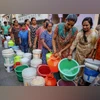
Bengaluru: People collect drinking water from a water tank amid the ongoing water crisis in Karnataka, at Shivananda Nagar in Bengaluru, Wednesday, March 20, 2024. (Photo: PTI)
Business Standard Editorial Comment Mumbai
3 min read Last Updated : Apr 02 2024 | 10:11 PM IST
Bengaluru’s intensifying water shortage this year is being seen as a prelude to the fate of urban India in the not so distant future. How a city that once boasted an abundance of natural lakes and adequate groundwater aquifers has come to this predicament is a cautionary tale of poor water-supply management. Chennai and Hyderabad have faced similar problems in the recent past, and up north the red signals have been blinking for the information-technology and services hub of Gurugram since 2013. Most other emerging urban conglomerates appear to follow similar water-exploitation templates, pointing to a national water emergency in the making.

Bengaluru’s water crisis has been building over the past two decades because exponential urban growth caused a greater pressure on groundwater resources. This was exacerbated by the fact that lakes were filled over to generate more land for development, severely disrupting natural groundwater recharging systems. At the same time, the city’s water-sewage infrastructure has lagged the pace of urbanisation, a deficiency flagged by the Comptroller and Auditor General in a 2021 report. At the same time, the abundant rain that the city receives is draining away. Rain-water harvesting was made mandatory for new constructions beyond a minimum size but is being observed mostly in the breach. As a result, only 10 per cent of the rain the city receives is recycled; the rest simply drains away. The principal problem, as noted environment expert Sunita Narain pointed out in a recent column in this newspaper, is that the city planners chose to rely on complex engineering solutions for water supply rather than focusing on recharging and enhancing natural sources. In Bengaluru’s case, this involves pumping water from the Cauvery up to a height of almost 500 metres and then transporting 100 km to the city. The Cauvery accounts for half the city’s water supply, the demand for which has more than doubled from 2010. The rest comes from rapidly depleting groundwater sources. The additional problem here is that the bulk of the sewage — almost half, by some estimates — is going untreated, raising the dangers of contaminating this groundwater resource.

As with other Indian cities, another key problem lies in the lack of robust institutional mechanisms to manage water on a more universal basis. This is the key since water is a shared resource between town and countryside and among Indian states, several of which (such as Karnataka and Tamil Nadu) are engaged in fierce disputes over control. The bulk of the water in India is consumed by agriculture, where incentives for key water-guzzling crops such as sugarcane (in Karnataka and Uttar Pradesh) and rice (in Punjab and Haryana) have depleted water tables to dangerous levels. At the same time, climate change is altering rainfall patterns and, in the north, depleting the once abundant resources of the Himalayan snowpack, which provides the main sources of water to India’s densely populated plains. Rapid industrialisation is adding to the problem, especially because of India’s reliance on coal-fired electricity, which requires large quantities of water. All these developments point to the urgent need for more effective, sustainable, and equitable water management systems. The urgent need, according to experts, is to create geographically relevant management organisations that link local bodies, the states, and the Centre in a network of cooperative federalism so that water sharing is decided in a more equitable, objective, and sustainable manner.  

One subscription. Two world-class reads.

Already subscribed? Log in

Subscribe to read the full story →
*Subscribe to Business Standard digital and get complimentary access to The New York Times

Smart Quarterly

₹900

3 Months

₹300/Month

SAVE 25%

Smart Essential

₹2,700

1 Year

₹225/Month

SAVE 46%
*Complimentary New York Times access for the 2nd year will be given after 12 months

Super Saver

₹3,900

2 Years

₹162/Month

Subscribe

Renews automatically, cancel anytime

Here’s what’s included in our digital subscription plans

Exclusive premium stories online

  • Over 30 premium stories daily, handpicked by our editors

Complimentary Access to The New York Times

  • News, Games, Cooking, Audio, Wirecutter & The Athletic

Business Standard Epaper

  • Digital replica of our daily newspaper — with options to read, save, and share

Curated Newsletters

  • Insights on markets, finance, politics, tech, and more delivered to your inbox

Market Analysis & Investment Insights

  • In-depth market analysis & insights with access to The Smart Investor

Archives

  • Repository of articles and publications dating back to 1997

Ad-free Reading

  • Uninterrupted reading experience with no advertisements

Seamless Access Across All Devices

  • Access Business Standard across devices — mobile, tablet, or PC, via web or app

Topics :BS OpinionBusiness Standard Editorial CommentWater crisisWater shortage

Next Story



