3 min read Last Updated : Nov 08 2023 | 9:19 PM IST
The most violent of protests against the alleged irregularities in Railway Recruitment Board exams in January 2022 and also the Agniveer scheme later in June that year were reported from Bihar, reflecting the angst among the state’s youth about the lack of job opportunities within the state. The socio-economic details of the Bihar caste survey, which the state government made public on Tuesday, have again revealed its abysmal job situation and widespread poverty. However, Bihar’s ruling dispensation, the Janata Dal (United)-Rashtriya Janata Dal-Congress grand alliance, which has the outside support of the Left parties, seems to have drawn wrong conclusions from the survey findings.
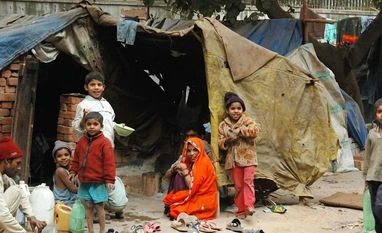
Instead of proposing ways to invite private capital into the state to improve the situation, the data has convinced the Bihar government to bring a Bill to increase caste-based quotas in the state to 65 per cent, taking the total to 75 per cent. It is hardly the panacea for a state that is struggling to escape its low-income status and among the worst in the country in offering salaried or regular wage work. According to the Periodic Labour Force Survey (PLFS), Bihar had just 8.6 per cent of such jobs in 2022-23, the worst among the 21 larger states, whose median is 22.7 per cent. According to the Bihar government data, only 1.57 per cent, or 2.04 million, of Bihar’s 130 million people were employed with the government, 1.22 per cent, or 1.6 million, had private-sector jobs, 2.14 per cent, or 2.8 million, worked in the unorganised sector, and 3.05 per cent, or nearly 4 million, identified themselves as self-employed. Of the rest, the survey categorised 67.54 per cent, or 88.29 million, as housewives and students, 7.7 per cent, or 10 million, associated with farming, and nearly 17 per cent, or 21.86 million, as labourers. The survey showed 63.74 per cent of the state’s 29.7 million households survived on less than Rs 333 a day, or Rs 10,000 a month, and 34.13 per cent, or more than a third, made do with Rs 200 or less a day.
While the data shows that the general category, or Hindu upper castes, have a disproportionately significant presence in government jobs and ownership of land and vehicles compared to other castes, this size of the pie is small. Even here, while the incidence of poverty is greater among the Scheduled Castes and Scheduled Tribes at 42 per cent, as many as 25 per cent of the “general category” households, and 33 per cent of the Other Backward Classes and Extremely Backward Classes survive on Rs 6,000 or less a month. The data underlined that the crisis in Bihar was not merely born of caste discrimination and indeed could not be cured only by positive discrimination. What the state needs is facilitating investment, supporting small and medium industries, and investing in horticulture, fisheries, and food processing. It also needs to increase the participation of women in the labour force. In the 2020 Assembly polls, Rashtriya Janata Dal leader Tejashwi Yadav garnered support for his promise of creating jobs and seemingly distancing himself from his father’s caste-oriented politics. Unfortunately, the Nitish Kumar government’s prescription for the state’s ailments is administering a political solution with an eye on the forthcoming Lok Sabha polls in 2024 and Assembly polls in 2025.