Home / Opinion / Editorial / In war and peace, national unity also means rejecting divisive forces
In war and peace, national unity also means rejecting divisive forces
It is reasonable to assume that the security establishment is also assessing every aspect to plug gaps, if any, and further improve preparedness for the future
premium
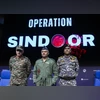
New Delhi: Director General of Military Operations (DGMO) Lt General Rajiv Ghai with Air Marshal AK Bharti and Vice Admiral AN Pramod during a press conference on 'Operation Sindoor', in New Delhi, Monday, May 12, 2025.(Photo: PTI)
3 min read Last Updated : May 16 2025 | 12:23 AM IST
The events of the past three weeks or so will find a special place in India’s contemporary history. The April 22 terrorist attack in Pahalgam, in which 26 persons were killed, shocked the nation. Although the actual perpetrators of the attack have not been caught, the security establishment had enough to connect the dots to Pakistan and Pakistan-based terrorist outfits. The political Opposition chose to support the government in any action it deemed appropriate. In the early hours of May 7, Indian armed forces launched Operation Sindoor and targeted terrorist infrastructure in nine locations in both Pakistan and Pakistan-occupied Jammu & Kashmir. The operation was precise, targeted, and non-escalatory in nature. However, Pakistan escalated the situation, forcing Indian forces to respond. Indian forces inflicted significant damage to military assets in Pakistan. Since the Indian armed forces had attained the initial objectives, India decided to suspend the operations on Pakistan’s appeal.
All aspects of events since April 22 are being analysed and discussed, including on these pages. It is reasonable to assume that the security establishment is also assessing every aspect to plug gaps, if any, and further improve preparedness for the future. Notably, besides the success of the armed forces, India also displayed absolute national unity. It is worth remembering that the terrorist attack in Pahalgam was targeted, and tourists were killed after verifying their faith. It is now widely acknowledged that, among other objectives, the attack was intended to flare up communal tensions in the country. It did not work. As Prime Minister Narendra Modi noted in an address to the nation on May 12: “... the entire nation, every citizen, every community, every class … unitedly stood up for strong action against terrorism.” However, unfortunately, some individuals don’t want this unity to hold. A sitting minister in the Madhya Pradesh government, for example, has made derogatory and communal remarks against a woman army officer who, among others, briefed the media during Operation Sindoor. Although the courts have taken notice and legal action is being taken, there is a need to send a clear political message. The state government and the political leadership must show that such acts have irreversible costs.
Unfortunately, what the minister has said is merely a reflection of a divisive polity and society, and it was not an isolated instance. The widow of the navy officer who was killed in the Pahalgam attack was heavily trolled online for her appeal not to target Muslims or Kashmiris. Foreign Secretary Vikram Misri and his family, particularly his daughter, were trolled online after he made the ceasefire announcement. Trolls apparently found a communal angle in Mr Misri’s daughter’s professional engagements as a lawyer. Such things should be simply unacceptable in India’s public discourse. The unity shown by the country over the past weeks is worth preserving. Operation Sindoor should not go down in history solely as a military success, but also as a moment that united the country for times to come. Thus, it is incumbent upon the political leadership across parties to refrain from indulging in divisive politics for electoral gains, and the Indian state must not tolerate those inciting such divisions. This will also enable internal harmony and faster economic development.




