Monsoon relief

Policy must focus on long-term management issues
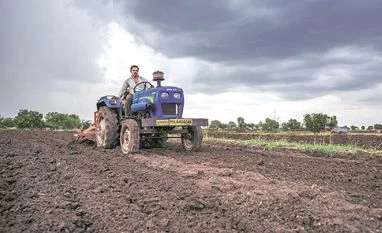
Monsoon
Business Standard Editorial Comment Mumbai
3 min read Last Updated : Apr 16 2024 | 10:19 PM IST
After the monsoon in India culminated with a rain deficit of 5.6 per cent in 2023, the level of precipitation this year became extremely important. Fortunately, the India Meteorological Department’s monsoon forecast this week came as a harbinger of good news, with the prediction of an above-normal southwest monsoon rainfall in 2024, estimated at 106 per cent of the long-period average. With the weakening of El Nino conditions and the emergence of La Nina, a stronger monsoon circulation is expected over the subcontinent. Coupled with this, positive Indian Ocean Dipole conditions and below-normal snow cover over the northern hemisphere are also expected to be favourable for rainfall. The spatial distribution of monsoon is not expected to be uniform, however. A few areas in the Northeast, Northwest, and eastern regions are expected to receive below-normal rainfall.

Precipitation during the southwest monsoon remains critical for agriculture production during the kharif season, despite improving irrigation coverage. The second advance estimates of gross domestic product, released by the National Statistical Office, expect growth in agriculture and allied activities to remain subdued at 0.7 per cent in 2023-24 compared to 4.7 per cent in the previous year. This is not surprising because of the irregular monsoon and the El Nino spell last year. Erratic rainfall patterns and drought-like conditions can break routine crop-growing cycles and promote the emergence of new pests and plant diseases. In contrast, a spell of good rain can go a long way in raising crop output and farm productivity.

There is an established relationship between annual rainfall and growth in agriculture gross value added. A good monsoon is also conducive for rabi crops due to higher moisture and augmented reservoir levels. Higher agricultural productivity will help contain food prices, which have kept the overall inflation rate elevated for some time even as the core rate has moderated below the target of 4 per cent. Improvement in agriculture prospects will also help push overall growth both through higher output and increased rural demand. Higher production and lower food inflation will also hopefully prompt the government to remove export curbs on food items. Frequent export bans can affect India’s credibility as a global supplier of agricultural commodities.

Expected above-average rainfall, however, should not distract policymakers from long-term challenges emerging from climate change. Incidents of extreme weather events are increasing. In 2023, the country experienced extreme weather events on 318 of the 365 days, affecting 2.21 million hectares of crop area, claiming lives and damaging property. In the absence of any multi-pronged strategy, the impact of such events will only increase. The impact of heat waves and floods arising from deficient and erratic rainfall patterns is not limited to the agriculture sector alone. It affects productivity and life in general. Owing to a deficient monsoon last year, for instance, water levels in reservoirs receded below the levels seen in 2022 by 19 per cent, about 8 per cent below the 10-year average. The data from the Central Water Commission also suggests that the current water level in half of India’s major reservoirs is less than 40 per cent of the capacity. A supportive monsoon this year thus must be fully utilised to recharge the underground aquifers and replenish key reservoirs in the country. However, the long-term policy focus must be to preserve more water and reduce its usage in the agriculture sector, which takes away the bulk of this essential resource.

One subscription. Two world-class reads.

Already subscribed? Log in

Subscribe to read the full story →
*Subscribe to Business Standard digital and get complimentary access to The New York Times

Smart Quarterly

₹900

3 Months

₹300/Month

SAVE 25%

Smart Essential

₹2,700

1 Year

₹225/Month

SAVE 46%
*Complimentary New York Times access for the 2nd year will be given after 12 months

Super Saver

₹3,900

2 Years

₹162/Month

Subscribe

Renews automatically, cancel anytime

Here’s what’s included in our digital subscription plans

Exclusive premium stories online

  • Over 30 premium stories daily, handpicked by our editors

Complimentary Access to The New York Times

  • News, Games, Cooking, Audio, Wirecutter & The Athletic

Business Standard Epaper

  • Digital replica of our daily newspaper — with options to read, save, and share

Curated Newsletters

  • Insights on markets, finance, politics, tech, and more delivered to your inbox

Market Analysis & Investment Insights

  • In-depth market analysis & insights with access to The Smart Investor

Archives

  • Repository of articles and publications dating back to 1997

Ad-free Reading

  • Uninterrupted reading experience with no advertisements

Seamless Access Across All Devices

  • Access Business Standard across devices — mobile, tablet, or PC, via web or app

Topics :BS OpinionBusiness Standard Editorial CommentIndian monsoonkharif crop

Next Story



