More ambition needed: New FTAs welcome, but bigger targets lie ahead

An FTA has also been agreed upon with the United Kingdom (UK), which means that India now has formal trade pacts with three of the five Anglosphere economies
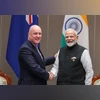
New Zealand PM Christopher Luxon with Narendra Modi
New Zealand Prime Minister Christopher Luxon and Prime Minister Narendra Modi. (Image: X/@narendramodi)
Business Standard Editorial Comment
3 min read Last Updated : Dec 22 2025 | 11:16 PM IST
India and New Zealand on Monday announced that they had concluded discussions successfully on a free-trade agreement (FTA). Shortly before that, it was revealed that a Comprehensive Economic Partnership Agreement, or Cepa, had been signed with the state of Oman, West Asia. While neither of these two economies is large or of significant global scale, these agreements are an opportune moment to consider India’s fresh approach to such pacts in recent years. An initial distrust of FTAs, particularly those signed by the previous dispensation, has now been partly rescinded. India has not gone so far, however, as to begin meaningful negotiations with any of its peer economies. There is still a belief that other developing countries might be able to outcompete India and thus there is more benefit to be had in economic integration with richer nations. In an age in which competitiveness depends on the ability to be part of flexible and disaggregated global supply chains, this is not entirely true. However, any attempt to open up new markets and deepen global integration will be a net positive for the Indian economy, and thus these new agreements are welcome, as is the broader shift in policy that they represent.
 
Both build on existing, if recent, precedent. A Cepa was signed with the United Arab Emirates shortly after New Delhi began to take a relook at the possibilities of such pacts. And the agreement with New Zealand follows a similar deal with another agricultural powerhouse, Australia. An FTA has also been agreed upon with the United Kingdom (UK), which means that India now has formal trade pacts with three of the five Anglosphere economies. Union Commerce Minister Piyush Goyal has said that discussions with Canada will now resume — which is significant, given the downturn in ties between the two nations, which had held up such talks in recent years. Mr Goyal has also indicated that talks with the United States (US) are at “an advanced stage”. That agreement, of course, will be harder to obtain.
 
These piece-by-piece deals with smaller countries are a useful indicator of a new attitude in New Delhi, but it is deals with larger economies, like the US, or with plurilateral groupings, such as the Regional Comprehensive Economic Partnership (RCEP) or the Comprehensive and Progressive Agreement for Trans-Pacific Partnership (CPTPP), that have a far greater impact and must be a priority. Deadlines for concluding talks with the European Union (EU) and the US have already been missed. They must be finished, however, latest by the end of the first half of calendar 2026 before the new age of tariffs begin to really bite and take a chunk out of the growth momentum that the Indian economy is displaying. For the EU, a possible visit by the senior leadership in the first months of next year serves as an informal deadline. As for the US, the longer it takes to finalise a deal, the more exporters lose valuable contracts that they will not be able to replicate elsewhere. Finally, it is past time to take a relook at larger blocs. Even if the RCEP, which includes China, is considered geopolitically too sensitive an idea at this point of time, the CPTPP — which includes several countries with which India now has FTAs, including New Zealand, Australia, Japan, and the UK —  remains a possibility. New Delhi’s direction of travel on trade agreements is welcome, but it must show more ambition.

One subscription. Two world-class reads.

Already subscribed? Log in

Subscribe to read the full story →
*Subscribe to Business Standard digital and get complimentary access to The New York Times

Smart Quarterly

₹900

3 Months

₹300/Month

SAVE 25%

Smart Essential

₹2,700

1 Year

₹225/Month

SAVE 46%
*Complimentary New York Times access for the 2nd year will be given after 12 months

Super Saver

₹3,900

2 Years

₹162/Month

Subscribe

Renews automatically, cancel anytime

Here’s what’s included in our digital subscription plans

Exclusive premium stories online

  • Over 30 premium stories daily, handpicked by our editors

Complimentary Access to The New York Times

  • News, Games, Cooking, Audio, Wirecutter & The Athletic

Business Standard Epaper

  • Digital replica of our daily newspaper — with options to read, save, and share

Curated Newsletters

  • Insights on markets, finance, politics, tech, and more delivered to your inbox

Market Analysis & Investment Insights

  • In-depth market analysis & insights with access to The Smart Investor

Archives

  • Repository of articles and publications dating back to 1997

Ad-free Reading

  • Uninterrupted reading experience with no advertisements

Seamless Access Across All Devices

  • Access Business Standard across devices — mobile, tablet, or PC, via web or app

Topics :BS OpinionBusiness Standard Editorial CommentEditorial CommentIndia New Zealand FTAfree trade agreementTrade ties

Next Story



