American President Donald Trump’s policy choices since he took office in January have seesawed, confusing markets. Tariffs have been declared on some of the US’ closest trading partners, but then withdrawn or postponed. However, few still doubt that Mr Trump intends to impose tariffs, rather than just threatening them as a negotiation tactic. The eventual timeline, extent, and applicability of these duties are still unknown, however. This makes their impact on any particular sector or the US economy as a whole hard to predict, and is weighing on sentiment. In fact, some in the US are now beginning to fear that a recession might follow this abrupt reversal of sentiment. The New York Federal Reserve runs a “recession probability gauge”, which serves to aggregate predictions of recessions. This index has hit its third-highest peak in decades for August 2025. This is comparable only to similar peaks in the mid-1970s and the early 1980s, each of which was followed by a period in which US output shrank. Bond yields are also demonstrating a similar concern about the remainder of this calendar year. The yield on two-year US Treasury paper has come down noticeably over the past weeks. This appears to reflect expectations that the economy will slow, forcing the Federal Reserve to cut rates.
This is an obvious reversal of expectations since last year, when yields increased sharply after the results of the presidential election were known. It was assumed that Mr Trump’s policies in office would be pro-business, driving up growth (but also inflation). The sequencing also seemed likely at that point to be tax cuts first, followed by higher tariffs. Those assumptions are no longer shared by the majority of traders. Indeed, some are now willing to ask the President himself what his opinion is. Appearing on Fox News on Sunday, Mr Trump was directly questioned about the possibility that his actions would lead to a recession, and he seemed relatively unbothered by the possibility. He said he hated to make predictions, but that there would certainly be “a period of transition” reflecting the size of the adjustments he was forcing on the US economy. This view was in keeping with his message in the address to Congress last week, as well as interventions from senior officials in his administration such as the commerce secretary. The latter warned the US economy needed to “detox” off “an addiction” to government expenditure.
The long-term negative effect of tariff walls on growth and inflation is well understood. But, in the medium term, there might well be some positive effect. What explains this turmoil? Perhaps it is because the messaging from the administration about sequencing and timing has been poor, and companies and investors have not been given sufficient time to adjust their choices. This has led sentiment to turn negative. For economies and companies that sell into the US market — such as India’s information technology-enabled sector — recession risks will now have to be factored into their calculations. What is also noteworthy is that Mr Trump, in his second term in office, seems sufficiently convinced of his economic ideas to risk a recession. Although he renegotiated some trade pacts in his first term and imposed some tariffs, his planned measures on this occasion are far broader and he is willing to risk a great deal — even a recession.

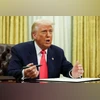 "Recession risk: Rising uncertainty casts a shadow over US economic outlook")










 Connect with us on WhatsApp