The Union government has asked the NITI Aayog to revisit the basic principles behind toll rates on national highways. This will be the first review in 17 years. The study will reassess parameters such as the cost of operating vehicles, damage factors, and the willingness to pay. The study will take a fresh look at the principles that underlie the base rate, and align it with the realities of modern highways. The National Highways Fee (Determination of Rates and Collection) Rules, 2008, has remained the foundation of India’s toll framework for nearly two decades. These rules were designed when the highway network was much smaller, road quality was less uniform, and vehicle technology was far less efficient. However, toll rates continue to be adjusted mechanically every year, based on a fixed 3 per cent increment and adjusting it to the wholesale price index, regardless of the road’s condition, congestion level, or service quality. In August this year, a report by the Public Accounts Committee, a standing committee of Parliament, highlighted this issue, calling the current toll regime “perpetual and outdated”, and urging the creation of an independent tariff authority.
India’s highway tolls have surged along with its expanding road network. According to Icra Analytics, they increased nearly 16 per cent to ₹49,193 crore between January and September this year, up from ₹42,474 crore in the same period a year earlier. Given the extensive development of the national highways, which have expanded by 60 per cent over the past decade, rising to 146,195 km as of 2024, toll receipts and asset monetisation have become critical funding channels for the National Highways Authority of India (NHAI). The authority has increasingly relied on monetising operational stretches through the toll-operate-transfer (ToT) and models of infrastructure investment trusts (InvITs), allowing private players to lease completed road assets for upfront payment. Under this framework, the NHAI has achieved 71 per cent of the NITI Aayog’s National Monetisation Pipeline (NMP) for FY22 to FY25, generating ₹1.15 trillion against the target of ₹1.6 trillion. Cumulatively, monetisation since inception stands at ₹1.4 trillion, highlighting the growing role of user fees and private participation in India’s highway financing.
Yet, road conditions and toll consistency remain uneven. The NHAI’s new survey-vehicle initiative aims to build a reliable database on pavement quality, road inventories, and surface defects in response to growing public complaints about paying full tolls on incomplete or poorly maintained stretches. The proposed framework, therefore, is timely. It must link tolls to measurable parameters such as traffic flow, maintenance standards, and service quality, while balancing financial needs with user fairness. Going forward, India should adopt a performance-linked toll model, where rates depend not just on inflation but also on measurable indicators like road quality, congestion levels, safety audits, and maintenance scores. The goal should not merely be to raise more revenue but to design a system that ensures value for every rupee paid — one that is transparent, predictable, and performance-based. In doing so, India can evolve from a toll regime that simply extracts fees to one that earns public trust.

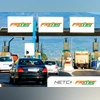 "Value for money: Toll rates should be linked to road quality, performance")










 Connect with us on WhatsApp