Home / Politics / Electoral bonds used as bribe by companies for contracts: Prashant Bhushan
Electoral bonds used as bribe by companies for contracts: Prashant Bhushan
Out of the Rs 16,500-crore electoral bonds, half went to the BJP and the rest to parties like the TMC and the Congress. However, those who were not ruling did not get any money, he said
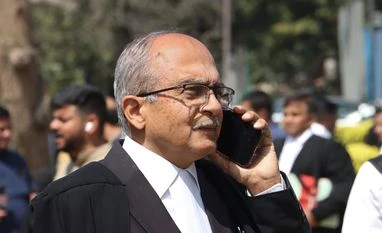
Senior advocate Prashant Bhushan after electoral bonds case hearing at the Supreme Court, in New Delhi, Monday, March 18, 2024. (Photo: PTI)
Lawyer Prashant Bhushan on Saturday labelled the electoral bonds as the biggest scam in the history of Indian democracy and alleged that they were used as bribes for contracts, shielding people from central probe agencies, manipulating policies, and influencing drug regulators.
He said the Supreme Court will soon commence hearing on a petition filed before it seeking a probe by a Special Investigation Team (SIT) into alleged quid pro quo arrangements between corporates and political parties.
"The electoral bonds were used (by companies) as bribes to get contracts, to protect themselves from the Enforcement Directorate (ED) and the CBI and to save themselves from drug regulators," Bhushan said.
Out of the Rs 16,500-crore electoral bonds, half went to the BJP and the rest to parties like the TMC and the Congress. However, those who were not ruling did not get any money, he said.
"I see that Rs 5,000-crore worth of electoral bonds were issued, resulting in the sanctioning of contracts worth Rs 5 lakh-crore. Additionally, bonds worth Rs 2,500 crore were provided by companies that were subjected to raids by the CBI, ED, or the Income Tax department. Curiously, investigations into these companies abruptly ceased following the issuance of the bonds," he alleged.
Bhushan also alleged that "either this money (through electoral bonds) was taken as 'vasooli' (recovery or protection money) or 'haftas' (subscription) similar to the manner taken by goons."
He alleged that a telecom company paid electoral bonds of over Rs 100 crore to the BJP and the import policy was changed on their behalf.
Some pharma companies issued Rs 1,000-crore bonds to the BJP and some state governments since they were manufacturing some dangerous drugs.
"The regulatory authorities told them that they were manufacturing drugs that might be harmful to humans, but soon after they paid money through the bonds, action against them stopped," Bhushan alleged.
He said an independent and neutral SIT should be formed under the supervision of a retired Supreme Court judge.
"The hearing of the petition filed in the apex court to form an SIT will start soon. A neutral SIT must be constituted under the supervision of a retired judge of the Supreme Court. The CBI and Enforcement Directorate (ED) should not be included in the SIT as they are also accused in the matter," Bhushan said at the Kolkata Press Club.
Bhushan said the probe will reveal who were involved in the electoral bonds and how money could be retrieved from the political parties.
"Political donation was not illegal but keeping it secret is. Accepting a bribe is illegal and if someone in a political party has accepted it, then they must return it. The question is who is responsible for this controversy? Whether those in the companies, in the political parties, or those in the CBI, ED be held responsible," he questioned.
(Only the headline and picture of this report may have been reworked by the Business Standard staff; the rest of the content is auto-generated from a syndicated feed.)

 "Electoral bonds used as bribe by companies for contracts: Prashant Bhushan")

