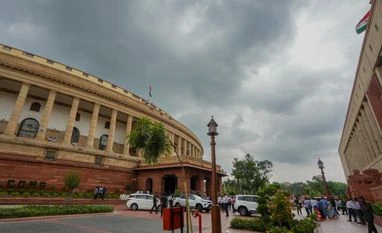
Union Minority Affairs Minister Kiren Rijiju introduced the Waqf (Amendment) Bill in the Lok Sabha on Thursday. The Bill, aimed at overhauling the Waqf Act of 1995, has sparked considerable debate and opposition, leading to a proposal to refer it to a joint parliamentary committee (JPC) for detailed scrutiny.
What is the Waqf (Amendment) Bill?
The Waqf (Amendment) Bill seeks to bring substantial changes to the existing Waqf law, some of the key provisions of the Bill include:
1. Renaming of the Act: The Bill proposes renaming the Waqf Act, 1995, to better reflect its broader objectives of management, empowerment, and development of Waqf properties.
2. Omission of Section 40: The Bill seeks to remove Section 40, which currently allows Waqf boards to decide if a property is a Waqf property, a move that could change how properties are classified.
3. Representation in Waqf bodies: It introduces a broader composition for the Central Waqf Council and state Waqf boards, ensuring the inclusion of Muslim women and non-Muslims. This has been a particularly contentious point, with some opposition members arguing that this violates the religious rights of Muslims.
4. Establishment of separate boards: The bill proposes establishing separate boards for communities such as the Boharas and Aghakhanis, ensuring representation for various Muslim sects, including Shias, Sunnis, and others.
5. Centralised registration: It aims to streamline the registration of Waqf properties through a central portal and database, establishing a more detailed procedure for property mutation as per revenue laws.
Opposition parties against Waqf Bill
Notice of the Bill was circulated among Lok Sabha members late on Tuesday. However, when Rijiju sought to formally present the Bill, it was met with immediate resistance from Opposition parties. Members of the Congress, Trinamool Congress (TMC), Samajwadi Party (SP), and Dravida Munnetra Kazhagam (DMK) raised strong objections, labelling the proposed amendments as an attack on the Constitution, religious freedoms, and the federal structure of India.
Congress MP KC Venugopal was particularly vocal, condemning the Bill as “draconian” and accusing the government of undermining the principles of the Constitution. Other opposition MPs echoed his concerns, with SP MP Mohibullah Nadvi criticising the inclusion of non-Muslims in the Waqf bodies, viewing it as a violation of Muslim rights. TMC MP Sudip Bandhopadhyay and DMK MP Kanimozhi also expressed their disapproval, calling the Bill divisive and anti-federal.
Amendments in Waqf Bill necessary: Rijiju
In response to these concerns, Rijiju assured the House that the Bill does not infringe upon the freedoms of any religious community and insisted that the proposed amendments were necessary to correct flaws in the current law. He argued that the 1995 Act, as it stands, has been unable to fulfil its intended purpose and claimed that the opposition’s resistance was politically motivated.
Rijiju further highlighted that many MPs had privately acknowledged issues with the current Waqf boards, citing concerns of mafia influence, but were hesitant to support the Bill publicly due to party pressure.
Home Minister Amit Shah also weighed in, explaining that the Mussalman Wakf Act of 1923, which is being repealed through a separate Bill introduced on the same day, had outlived its relevance, particularly after the enactment of the Waqf Act in 1995.
The proposed amendments, if passed, would bring about significant changes in how Waqf properties are managed across the country. They include the establishment of a separate board for Boharas and Aghakhanis and clear definitions for Waqf properties, aiming to streamline registration processes through a central portal and database.
With the Bill now set to be examined by a JPC, the outlook remains uncertain.
[With agency inputs]

 "Govt proposes JPC scrutiny over controversial Waqf (Amendment) Bill")


 Connect with us on WhatsApp