
Never faced any political pressure from govt in 24 years as judge: CJI
CJI said judges in India are trained to decide disputes in a manner that allows for courts to decide on the basis of settled traditions based on constitutional scheme
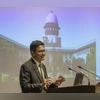 "Never faced any political pressure from govt in 24 years as judge: CJI")
Explore Business Standard

Associate Sponsors
Co-sponsor
CJI said judges in India are trained to decide disputes in a manner that allows for courts to decide on the basis of settled traditions based on constitutional scheme
Allaying apprehension of any interference of the legislature, Chief Justice DY Chandrachud has said he never faced any political pressure from any government in his 24-year stint as a judge.
Responding to a question during a session organised by the Oxford Union, he said judges in India are trained to decide disputes in a manner that allows for courts to decide on the basis of settled traditions based on constitutional scheme as opposed to the passions of the moment.
"Political pressure, in the sense if you ask me in the sense of pressure from the government, I would tell you that in the 24 years that I have been a judge, I have never faced a sense of political pressure from the powers that be. Some of the democratic traditions that we follow in India include that we lead lives which are isolated from the political arm of the government.
"If you mean 'political pressure' in a broader sense of a judge realising the impact of a decision which may have political ramifications, obviously, judges have to be conversant of the impact of their decisions on the polity at large when you are deciding constitutional cases. That is not political pressure I believe," Chandrachud said.
Talking about the "social pressure", he said the judges often think about the societal impact of their judgments.
"Many of the cases we decide involve intense societal impacts. As judges, I believe it is our duty to be cognizant of the impact of our decisions on the social ordering which we are ultimately going to affect," he said.
Acknowledging the issue of pendency, Chandrachud said the judge to population ratio in India is among the lowest in the world.
"We simply need more judges. We are engaging with the government to increase the strength of the judiciary at all levels," he said.
On the issue of social media, Chandrachud said it is a reality and in our courts today, we have live-tweeting by minute.
"Every remark which is said by a judge is conveyed on social media. That is something we need not stop and we cannot stop.
"Obviously, we are the receiving end on some occasions. Sometimes the criticism is fair, sometimes the criticism is not fair. But I do believe as judges our shoulders are broad enough to accept the critique which people have of the work we do," he said.
(Only the headline and picture of this report may have been reworked by the Business Standard staff; the rest of the content is auto-generated from a syndicated feed.)
First Published: Jun 27 2024 | 8:41 PM IST


