Rooted in the Dravidian model of growth, Tamil Nadu is aiming to take a giant leap forward by focusing on research and development (R&D), distributed growth, and the broader vision of ‘product nation.’
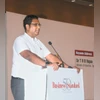
This strategy looks to empower micro, small, and medium enterprises (MSMEs) to drive the state toward a knowledge-based economy through innovation, said Tamil Nadu Industries Minister TRB Rajaa at the Business Standard Tamil Nadu Round Table 2025 in Chennai on Wednesday.
While batting for ‘Making in Tamil Nadu for the world,’ the minister highlighted the importance of improving coordination between the Centre and the State on key geopolitical issues, such as the recent actions taken by the United States government.
He also expects larger gains for Tamil Nadu due to the current developments in the US. The roundtable, organised in collaboration with the State Planning Commission and Guidance Tamil Nadu, was centered around the theme of "Reimagining Tamil Nadu: Path to Knowledge Economy."
“I know that ‘product nation’ is something that sounds very small, just two words. The depth of those two words, and I know that the industry understands that. The probable boost to the economy, the probable boost to the availability of new ideas, and new opportunities for MSMEs, especially, which is the largest employer. Enabling MSMEs will also enable innovation. Enabling MSMEs is the best way to look at more innovation because all the innovation happens at the MSME level, not at the major industry level. The fighting happens there with MSMEs,” Rajaa said during a fireside chat following his inaugural address.
Product nation refers to an economic shift by a region to manufacturing and exporting high-value, branded goods, becoming a net producer rather than a net importer.
When asked about the current tariff moves by the US, Rajaa said: “They seem to be doing everything on their own, which I don’t think is advisable, especially when it comes to such large geopolitical issues. Everybody understands what's happening in the US. I see large gains coming, especially for states like Tamil Nadu, Maharashtra, and Karnataka.”
The inaugural session was attended by Guidance Managing Director and Chief Executive Officer Darez Ahamed and State Planning Commission Full-Time Member R Srinivasan.
Earlier, in his inaugural address, Rajaa emphasised “Making in Tamil Nadu for the World,” through excelling in R&D, design, manufacturing, and education.
“We have never thought about Tamil Nadu alone as one single entity. We are doing this for India; a healthy, flourishing, strong India is essential; it's extremely key for Tamil Nadu,” he added.
He added that the manufacturing talent of Tamil Nadu is at par with Japan. “Let's start re-engineering, let's start doing things on our own, let's start products for our own consumption, let's create from the bottom up our own products. We excel at manufacturing; we know how to provide top world-class services. Our manufacturing talent is on par with the Japanese,” he said.
“The Japanese are coming here to Tamil Nadu to see how some of our factories are doing zero parts per billion when some are not able to do zero parts per million. So, we have reached that level, at least Tamil Nadu.”
The session with the theme "Shaping Tamil Nadu’s Future: Role of GCCs & Beyond," focused on the role of GCCs in leapfrogging Tamil Nadu’s journey toward a $1 trillion economy by 2030, driven more by high-value technology work, product innovation, and R&D, aided by the state government’s policies.
The session had key industry representatives like Gangapriya Chakraverti (managing director of Ford Business Solutions), Siva Padmanabhan (managing director of AstraZeneca India), Jaikumar Subramanian (partner at Deloitte India), and Kewyn George (global director of information services, Expeditors).
The general consensus of the second panel discussing “Redefining Manufacturing: The Power of Policy” was that in Tamil Nadu, policies for manufacturing are working great and have the scope to work more in addressing the demand for more manufacturing.
However, the mindset has to now move more into a product nation thinking, and the state would do well to look at its P&L (profit and loss) every morning to decide on what should be focused on in driving manufacturing, the panel indicated.
The session highlighted that the state should now be competing with countries on capabilities, talent, products, and R&D, instead of states in India. Labour codes for all kinds of workforce, including women with different skill sets, should be looked into from the policy standpoint to have uniformity and not disparity for better manufacturing. The participants of the session included Srinivasan, Gopala Krishnan CS (Chief Manufacturing Officer, Hyundai Motor India), Brajesh Kumar Singh (Executive Director, Indian Bank), Mahesh Babu (CEO, Switch Mobility), and Anil Jain (Managing Director, Refex Group).
(With inputs from Udisha Srivastav, Arindam Bhattacharjee & Shine Jacob)

 "BS Round Table: TN takes 'product nation' route on road to $1 trn economy")


