Moving India: The ₹2-trillion connectivity projects bet to unclog Mumbai

Metro sprawl, coastal links, and a fading bus fleet - Maximum City's biggest transport makeover yet is racing time, rain, and red tape to keep it moving
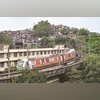
Mumbai metro
From suburban trains and Brihanmumbai Electric Supply and Transport (BEST) buses to newer metro and monorail networks, public transport has long been Mumbai’s lifeline, moving millions daily.
Anjali SinghPrachi Pisal Mumbai
7 min read Last Updated : Nov 12 2025 | 11:38 PM IST
Connectivity projects worth more than ₹2 trillion are set to transform Mumbai’s transport network, with most metro lines and ring roads expected to be operational by 2029. These projects aim to improve connectivity, both last-mile and across the city, and meet the Mumbai Metropolitan Region’s (MMR’s) growing commuting needs. 
From suburban trains and Brihanmumbai Electric Supply and Transport (BEST) buses to newer metro and monorail networks, public transport has long been Mumbai’s lifeline, moving millions daily. 
According to the Asian Transport Observatory, Mumbai’s high population density and limited land make it reliant on public transport, particularly suburban rail. 
Suburban rail: Vast but strained 
Over 7 million people daily use Mumbai’s suburban trains, 3,200-3,400 in number. Expansion projects worth ₹16,000 crore are underway and will increase capacity to 4,500 trains daily once completed. 
However, overcrowding remains an issue. Anil Desai, member of the Lok Sabha from the Mumbai South Central constituency, said in Parliament: “The local train network is vast and dependable, but if we take into account the population, we find it inadequate. During peak hours, it is almost a Herculean task to enter any compartment or come out of it. A large number of passengers lose lives every year in local train accidents. About 2,590 commuters lost their lives on Mumbai’s suburban rail network in 2023, averaging seven deaths daily.” 
BEST buses: Declining fleet & finances   BEST buses, another backbone of transport for decades, daily carry 2.5-3.0 million passengers, supported by over 2,700 vehicles, of which only 391 are owned and the rest wet-leased. By end-2025, just 213 buses are expected to remain under BEST ownership. 
“Frequency has reduced because there are not enough buses, and traffic congestion adds to delay,” a BEST driver said.
As a result some commuters have shifted to shared taxis despite higher fares. “The difference is just ₹3, but the convenience makes it worth it,” said a Worli commuter. 
Financial stress persists. Following fare hikes in May, daily ticket revenue rose from ₹2.25 crore to ₹3.25 crore, but ridership fell to 2.5 million from 3.2 million, according to media reports. “Tickets are cheap at ₹5-20, but expenses are high. Even state buses charge more,” a BEST source noted. 
Since FY13, the Brihanmumbai Municipal Corporation (BMC) has given ₹11,305 crore in assistance, including ₹1,000 crore for FY26, according to the BMC’s FY26 Budget. The 15th Finance Commission sanctioned ₹992 crore for electric buses, but BEST’s accumulated losses still hover around ₹9,500 crore, according to a PTI report. 
 
 
Metro network expanding gradually 
Lines 1, 2A, 3, and 7 are operational. Line 1 carries about 300,000 passengers daily, projected to reach 883,000 by 2031. Line 3 has around 60,000 daily riders, while Lines 2A and 7 together crossed 200 million riders in August since launching in April 2022. 
Despite progress, execution delays, overcrowding, and monsoon disruptions persist. This year’s early monsoon caused flooding and leaks at Acharya Atre station on the underground Line 3, forcing a temporary shutdown. The entire Aqua Line became fully operational in October after repairs. 
Still, commuters value the metro’s speed and convenience. 
Abhinav Kumar, a commuter, added: “I reached the airport from Dadar in less than 20 minutes. By road, it’s frustrating.” To give an indication, a road journey in peak evening hours from Dadar to the airport can take over an hour. 
The Mumbai Metropolitan Region Development Authority (MMRDA) is executing projects worth ₹3 trillion, aiming to expand the metro network from 60 km to 360 km. Lines 2B, 4, 4A, and 9 are expected to become operational by next year. 
However, finances raise concern. Line 1, which runs the Versova-Andheri-Ghatkopar line, posted a ₹420.4 crore loss in FY21 (a year that saw the pandemic peaking), up from ₹241.57 crore in FY20, according to the latest available data. 
Emails sent to BEST and the MMRDA went unanswered. 
Mumbai Monorail, connecting Sant Gadge Maharaj Chowk and Chembur, was designed as a feeder system. But reliability issues persist. 
In August, a power supply issue due to overcrowding and heavy rains caused the two two trains to stall and strand nearly 800 passengers. All passengers were evacuated safely, but service has remained suspended since September 20 as the MMRDA is doing technical fixes. 
Private vehicles and congestion 
Private-vehicle ownership is going up. According to the Vahan data, as of November 4, Thane — part of the MMR — ranks fourth among Maharashtra’s top five road transport operators, with 1.6 million vehicles registered (to date). Mumbai West and Mumbai Central are among the state’s top revenue earners, having collected ₹6,974.11 crore and ₹6,804.16 crore (to date), respectively. Overall, Maharashtra has generated ₹1.3 trillion in revenue (to date) — the highest in India. 
This surge, coupled with limited road expansion, worsens congestion. Experts stress the need for integrated mobility to balance private and public transport. 
Fragmented governance & missed opportunities 
Overlapping routes, weak inter-municipal coordination, and slow fleet expansion limit efficiency. Private operators like Cityflo and Chalo are bridging the gaps, with their rise highlighting shortcomings in public services. 
“Public transport continues to be Mumbai’s backbone, but capacity hasn’t kept pace with demand. Integration and last-mile connectivity are weak,” said Sumit Mishra, executive director, Deloitte India. 
Authorities are now attempting coordinated approaches. The Unified Mumbai Metropolitan Transport Authority (UMMTA) oversees multiple agencies, while a chief minister-led task force is preparing an Integrated Bus Plan. New initiatives include metro extensions, pod taxis in the Bandra-Kurla Complex and Thane, and expressways linking outer MMR towns. Coastal roads are being built to connect Mumbai’s extreme ends as well as the island city’s key areas. 
“The city’s transport is both its lifeline and its biggest paradox — overcrowded yet indispensable. What’s needed is integrated, people-centric planning rather than piecemeal project-driven growth,” said Dikshu C Kukreja, managing principal, CP Kukreja Architects. 
Although Mumbai is considered one of India’s safest cities for women, concerns remain, point out some experts. 
“Public transport and surrounding infrastructure are closely linked. Safety around public washrooms, especially at night, remains a concern, with cases of abuse reported. Misuse of technology has worsened risks, with instances of women being filmed without consent during commutes,” said Uma Subramanian, co-founder and director, RATI Foundation. 
Authorities have deployed special teams to improve safety, but challenges persist. Between January and September last year, Western Railway’s RPF arrested 39 persons in 45 molestation cases and six in five rape cases. “Some metro stations are in poorly lit, remote areas where finding an auto rickshaw is difficult. Integrating metros with other transport modes is crucial for safer travel, especially at night,” Subramanian added. 
Mumbai’s public transport network remains vital to the city’s functioning, yet growing demand, fragmented governance, and rising private vehicles strain the system. While metro expansion, monorail modernisation, pod taxis, and digital initiatives provide hope, achieving a sustainable, efficient, and accessible transport system requires continued investment, integrated planning, and a forward-looking approach. Without it, the city risks enduring congestion, overcrowding, and transport inefficiencies for years to come.   


One subscription. Two world-class reads.

Already subscribed? Log in

Subscribe to read the full story →
*Subscribe to Business Standard digital and get complimentary access to The New York Times

Smart Quarterly

₹900

3 Months

₹300/Month

SAVE 25%

Smart Essential

₹2,700

1 Year

₹225/Month

SAVE 46%
*Complimentary New York Times access for the 2nd year will be given after 12 months

Super Saver

₹3,900

2 Years

₹162/Month

Subscribe

Renews automatically, cancel anytime

Here’s what’s included in our digital subscription plans

Exclusive premium stories online

  • Over 30 premium stories daily, handpicked by our editors

Complimentary Access to The New York Times

  • News, Games, Cooking, Audio, Wirecutter & The Athletic

Business Standard Epaper

  • Digital replica of our daily newspaper — with options to read, save, and share

Curated Newsletters

  • Insights on markets, finance, politics, tech, and more delivered to your inbox

Market Analysis & Investment Insights

  • In-depth market analysis & insights with access to The Smart Investor

Archives

  • Repository of articles and publications dating back to 1997

Ad-free Reading

  • Uninterrupted reading experience with no advertisements

Seamless Access Across All Devices

  • Access Business Standard across devices — mobile, tablet, or PC, via web or app

Topics :MetroMumbai Metrotransport

Next Story


