Indian researchers develop low-cost mobile pollution monitoring tech

They have developed a low-cost mobile air pollution monitoring framework in which, pollution sensors mounted on public vehicles can dynamically monitor the air quality
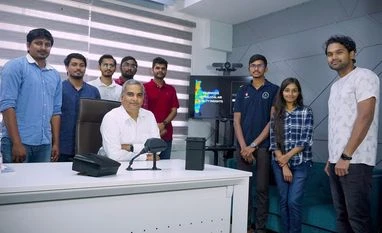
Prof. Raghunathan Rengaswamy, Dept of Chemical Engineering, IIT Madras, with Project Kaatru Team that developed mobile pollution monitoring
Peerzada Abrar Bengaluru
4 min read Last Updated : Jun 21 2023 | 8:00 AM IST
India has been ranked as the world's eighth most polluted country in 2022, dropping from the fifth place the previous year, according to Swiss firm IQAir in its 'World Air Quality Report'.
 
In the list of most polluted cities in the world, out of the 50 cities, 39 are in India. The researchers at the Indian Institute of Technology Madras (IIT Madras) are trying to address this problem. They have developed a low-cost mobile air pollution monitoring framework in which, pollution sensors mounted on public vehicles can dynamically monitor the air quality of an extended area at high spatial and temporal resolution.
 
Traditionally, ambient air quality is measured in monitoring stations and reported as ‘Air Quality Index’ (AQI). Since these stations are at fixed locations, they only measure the air quality of a small geographic area. 
 
Air pollution however is dynamic with locations just a few hundred meters away from each other exhibiting different levels of pollution. Levels can also vary at different times of the day. However, setting up more stations is not practical because of the high costs.
 
“Interestingly, one specific location showed a significant spike of PM2.5 (particulate matter) pollution between 2 am and 3 am. This was associated with trucks carrying milk from a major milk distribution hub in this location at this time. PM2.5 spikes were also found in school neighbourhoods during school start and end hours and in commercial zones during peak hours,” said Prof. Raghunathan Rengaswamy, faculty, department of chemical engineering, IIT Madras. 
 
Rengaswamy, who is also Dean (Global Engagement) and Faculty at the institute is leading the initiative called ‘Project Kaatru (air in Tamil) leverages the Internet of Things (IoT), big data, and data science. The aim is to obtain a pan-India hyperlocal air quality map and exposure assessment for each Indian citizen. The goal is to also develop data-driven solutions for policy, intervention, and mitigation strategies

Kaatru device - (L-R) - Stationary device, IoT mirror and mobile device

 
Towards tackling this issue, IIT Madras Researchers, have developed a new IoT-based mobile air pollution monitoring technology wherein low-cost air quality sensors are mounted on vehicles to gather spatio-temporal air quality data. For the cost of a single reference monitoring station, it would be possible to map an entire city at high resolution using these low-cost mobile monitoring devices.  
 
Rengaswamy said that mobile air quality sensors would find extensive use in both personal and public health initiatives.

Personal monitoring devices can help people know the extent of pollution in their neighbourhood so that they can take protective measures. Traffic can be rerouted if local pollution levels are known. He said government policy changes and smart city planning would benefit enormously from the use of mobile air quality trackers. 
 
“Our affordable IoT-based mobile monitoring network, coupled with data science principles offers an unprecedented advantage in gathering hyperlocal insights into air quality,” said Rengaswamy. “It is the only viable option at present, capable of offering high spatio-temporal awareness that could allow for informed mitigation and policy decisions,” he added.
 
The devices are capable of measuring multiple parameters, ranging from PM1, PM2.5, PM10, and gasses such as NOx and SOx. In addition to pollutants, the devices can assess road roughness, potholes, and UV (ultraviolet) index among others. The modular design of the device allows for sensors to be replaced on demand. The patented IoT side view mirror design enables the devices to be retrofitted on any kind of vehicle, ranging from buses to cars and even two-wheelers. The IoT devices are also equipped with GPS and GPRS systems to collect and transmit location information. Data Science principles are used to analyse the large volume of data generated from these IoT devices.
 
One of the studies undertaken by researchers was aimed at assessing hyper-local air quality assessments to evaluate the effects of vehicular traffic, urban topography, and urban functions.  Measurements were made across a 15 sq. km. area of a carefully selected region in western Chennai to study and authenticate how pollution concentration varied.
 
The pilot area was chosen carefully to include different land use such as commercial, industrial, residential, hospital and school zones, that would have an impact on unevenly distributed emission sources, dilution, and physicochemical transformations over short distances. 

Additionally, the impact of different factors such as vehicular density, urban, industrial and residential functions on hyperlocal level air quality was assessed. Daily trends in specific zones were identified and correlated with human activity in those zones. The study was able to capture even subtle variations in PM2.5 concentrations at various locations across time. The gradation in PM2.5 concentration between main roads and arterial roads was also captured through this assessment.

One subscription. Two world-class reads.

Already subscribed? Log in

Subscribe to read the full story →
*Subscribe to Business Standard digital and get complimentary access to The New York Times

Smart Quarterly

₹900

3 Months

₹300/Month

SAVE 25%

Smart Essential

₹2,700

1 Year

₹225/Month

SAVE 46%
*Complimentary New York Times access for the 2nd year will be given after 12 months

Super Saver

₹3,900

2 Years

₹162/Month

Subscribe

Renews automatically, cancel anytime

Here’s what’s included in our digital subscription plans

Exclusive premium stories online

  • Over 30 premium stories daily, handpicked by our editors

Complimentary Access to The New York Times

  • News, Games, Cooking, Audio, Wirecutter & The Athletic

Business Standard Epaper

  • Digital replica of our daily newspaper — with options to read, save, and share

Curated Newsletters

  • Insights on markets, finance, politics, tech, and more delivered to your inbox

Market Analysis & Investment Insights

  • In-depth market analysis & insights with access to The Smart Investor

Archives

  • Repository of articles and publications dating back to 1997

Ad-free Reading

  • Uninterrupted reading experience with no advertisements

Seamless Access Across All Devices

  • Access Business Standard across devices — mobile, tablet, or PC, via web or app

Topics :air pollutionResearchAir qualityIndian Institute of TechnologyIIT-Madras

Next Story



