By now, we have come to expect the unexpected from
Nothing. Whether it is earbuds with transparent stems or phones that flash and beep like they are from a cooler, more minimalist future. The new Nothing Phone 3 is no exception. It builds on the familiar transparent aesthetic that the company has proudly owned, but takes bolder risks this time, especially with the rear camera layout and the new Glyph Matrix display.
Nothing is also pitching this as its first “true flagship” device. On paper, it checks many of the right boxes: high-refresh AMOLED display, large battery with fast charging, wireless charging, a periscope telephoto lens, and a splash of AI to keep things trendy. But the flagship label brings with it a higher price tag, but more importantly expectations to match. So, does the Phone 3 bring enough to justify its Rs 79,999 asking price? Let us find out:
Design and Glyph Matrix
As with every Nothing device, the story of the Phone 3 largely revolves around its design. The company has doubled down on its now-signature transparent aesthetic, and this time, it is not just transparent, but also confidently bold.
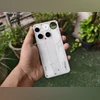
Where the Phone 1 and Phone 2 kept things relatively grounded with more familiar camera layouts, the Phone 3 throws symmetry out the window. If you thought the unusual placement on the Phone 3a Pro hinted at design rebellion, the Phone 3 feels like a full-blown protest. The camera modules on the back are arranged with a kind of chaos that defies logic. At best, it resembles a modern art take on a board game: square housings holding random circular elements that do not quite align. The two main camera sensors, both sitting on the top left and nearly aligned, are especially confounding.
That said, love it or hate it, the Phone 3’s design draws attention. Whether it is admiration or confusion, that is up to the observer, but it is unmistakably distinct. In-hand, the phone feels premium. The flat, metallic frame has a solid grip, and the glossy glass back adds just the right amount of sheen. While it carries some heft, the weight is well distributed, making extended use surprisingly comfortable.
The practical downsides to this bold aesthetic start to show when the phone leaves your hand. The misaligned camera rings are prone to catching on your pocket contents with keychains being a frequent offender. And on flat surfaces, expect the phone to wobble unpredictably thanks to the varying heights of the camera islands. It is a multi-directional teeter that makes casual table-top use a mild challenge.
But then comes the twist: flipping the phone over offers more than just a solution to the wobble. The Phone 3 replaces the familiar Glyph light bars with something more ambitious, the “Glyph Matrix.” This dot-matrix LED display is like a secondary, low-res screen on the back. While it sacrifices the clean minimalist layout of the older Glyph interface, it brings in new tricks.
You still get notification-based animations and app-specific glyph cues. But now, you also get quirky additions like emoji-based alerts, mini-games like Spin the Bottle and Rock Paper Scissors, and a stopwatch. Nothing calls these “Glyph Toys” and while they are a fun novelty at first, they may wear thin over time. Still, they add an undeniably playful touch.
There is also actual utility in features like the “Glyph Mirror,” which turns the matrix display into a basic viewfinder for taking selfies with the rear camera. No, it is not sharp enough to actually frame your shot, but it helps with alignment and positioning.
Navigating through all this is made possible by a small pressure-sensitive button on the back. A light press cycles through glyph toys, while a long press lets you interact with the current one. Surprisingly, the button rarely misfires even when you are gripping the phone tightly, which speaks to thoughtful hardware execution despite the phone’s wild design choices.
Display
The front of the Nothing Phone 3 looks relatively normal. There is less room here for experimental flourishes, which might explain why Nothing kept it clean and conventional. And it works. The sleek, minimal bezels surrounding the 6.67-inch AMOLED panel make for a modern flagship-worthy appearance, fully in line with Nothing’s claim that the Phone 3 belongs in that tier.
Thankfully, the panel is not just about looks. It delivers where it counts. With a resolution of 1260 x 2800, visuals appear sharp and vibrant. Colours are punchy without being overdone, and the display maintains excellent clarity and brightness across various lighting conditions. Nothing claims a peak outdoor brightness of 1600 nits. While I was not able to confirm the exact figure, I had no trouble using the phone in direct sunlight. The panel’s brightness held up well in all kinds of environments, and viewing angles are equally impressive, with very little colour shift when viewed off-axis.
The 120Hz refresh rate ensures fluid scrolling and slick animations, which pairs nicely with the Phone 3’s zippy interface. While the panel is not LTPO, it does support dynamic refresh rate adjustments with LTPS technology. In line with its “flagship” positioning, Nothing has also added a few more display customisation options this time. You get two screen colour modes: Alive and Standard, as well as a manual slider to fine-tune colour temperature.
There is also a toggle in the Settings app for enabling or disabling “HDR display,” which can help optimise power usage by adjusting brightness during HDR playback. Speaking of which, the Phone 3’s display supports Widevine L1, allowing full-resolution streaming on services like Netflix. While HDR playback does not appear to be supported on Netflix just yet, it does work on compatible YouTube videos.
Camera
While the display checks almost every box for a device being positioned as a “flagship,” the Nothing Phone 3’s camera performance is a bit trickier to pin down.
Let is get the specs out of the way first. The Phone 3 features a triple 50MP setup on the rear: a primary sensor with optical image stabilisation (OIS), a periscopic telephoto lens with 3x optical zoom and OIS, and an ultra-wide angle lens with a 114-degree field of view. Autofocus is present on the primary and telephoto lenses. On the front, you get yet another 50MP sensor, this time with electronic image stabilisation (EIS).
In use, the primary camera delivers solid results in good lighting. Detail retention is strong, and colours are generally accurate without being overly punchy or boosted. Dynamic range is decent too. However, the Phone 3 struggles in challenging lighting, occasionally blowing out highlights or crushing shadows, leading to loss of detail in darker or brighter parts of the image. It takes good photos overall, but colour accuracy and light handling still need polishing to bring it closer to what other flagship phones are doing.
The periscopic telephoto is capable of 3x optical zoom (70mm equivalent), and it performs well. Colours remain consistent with the main sensor, and details are crisp. What is especially nice is that this telephoto lens can double as a macro camera – you can capture close-ups without needing to physically get closer, and thanks to OIS and autofocus, it stays sharp even with small hand movements.
Portrait shots, however, are a bit hit or miss. Whether taken from the primary or telephoto lens, subject separation can feel off, with edge detection occasionally failing or creating uneven blur. Oddly enough, I found myself preferring the portrait output from the more affordable Phone 3a Pro.
Moving to the ultra-wide, the colour profile noticeably shifts as it pushes vibrancy more aggressively, especially in daylight. Detail retention is still solid, but the ultra-wide also brings with it a more dramatic fisheye effect that can distort crowded or geometric scenes like buildings and streets. It is fun, but not always usable.
On the front, the camera produces decent shots with natural-looking skin tones and facial detail, even in low light. That said, the absence of autofocus here feels like a missed opportunity at this price point.
For video, all four cameras, including the front, support 4K recording at up to 60fps, which is a nice touch. However, there is no option for 4K slo-mo capture, which might disappoint some content creators.
Performance
There has been plenty of chatter about Nothing opting for the Qualcomm Snapdragon 8s Gen 4 instead of the top-tier Snapdragon 8 Elite for its first “true flagship.” In day-to-day use, the decision does not feel like a downgrade.
The Phone 3 handles multitasking with ease, switching between apps without breaking a sweat. Graphic-intensive games like Real Racing 3 run smoothly at the highest settings, with no visible stutter or frame drops. Even during extended gaming sessions or prolonged 4K video recordings, performance remains steady.
Yes, the back of the phone does get warm, especially around the camera module, but it never crosses into uncomfortable territory, nor does it impact overall performance. For most users, this chipset choice will feel more than adequate, unless you are specifically chasing benchmark records. From price-to-performance optics, Snapdragon 8 Elite would have been a better fit for the Phone 3.
Software and AI
The Android-based Nothing OS has consistently been one of the most enjoyable aspects of using a Nothing phone, and the Phone 3 carries forward that legacy. The interface remains clean, responsive, and highly customisable, letting users switch between a stock Android feel or lean into Nothing’s signature dot-matrix aesthetics. While the core software experience aligns with what you would find on recent Nothing devices, the Phone 3 introduces a few new AI tricks up its sleeve.
Nothing’s customisable hardware key, the Essential Key, which debuted with the Phone 3a and 3a Pro, returns on the Phone 3. Pressing it launches the Essential Space app, a sort of digital hub where you can save screenshots, voice notes, text, and more. It also integrates smart features like automatic categorisation and reminder prompts based on saved content.
Another fresh addition is Essential Search, a global search bar embedded into the app drawer. It allows you to search for local content like files and images using keywords. It does not stop there, you can also type general queries such as “Who won the FIFA Club World Cup 2025,” and the phone will pull concise web results directly into the interface. It even handles quick tasks like solving equations without the need to open a separate calculator app.
A particularly noteworthy AI feature is Flip to Record, which acts as a contextual meeting notes tool. By holding the Essential Key and flipping the phone, you can initiate a smart transcription tool that records your meeting and generates a summarised breakdown. Double-pressing the Essential Key also records voice snippets with transcription. In my usage, transcriptions were accurate and the feature worked consistently as intended.
Battery
The Nothing Phone 3 packs a sizeable 5500mAh battery, and it comfortably delivers a full day of usage, often stretching into a second day with moderate use. Battery anxiety is not something you will be dealing with much here.
Charging has also seen a meaningful upgrade, with support for 65W wired charging. While a charger is not included in the box, using a 67W charger I had, I was able to go from 2 per cent to a full charge in just under an hour. What is also good to see is 15W wireless charging support, which adds flexibility and brings the Phone 3 closer in line with other flagships.
Verdict
The Nothing Phone 3 continues Nothing’s tradition of making phones that stand out, not just with their designs, but with their attitude. It is bold, quirky, and not afraid to embrace eccentricity, whether it is the Glyph Matrix pulling notification duty with dot animations or the chaotic rear camera layout that looks like a board game gone rogue.
Underneath all that flair, the Phone 3 does feel and perform like a flagship in most day-to-day scenarios. The Snapdragon 8s Gen 4 may not be Qualcomm’s top-tier chip, but Nothing has optimised it well enough that you likely will not notice performance drop. Battery life is excellent, the software remains delightfully minimal and fast, and the AI additions are smartly integrated rather than shoved in for the sake of a checklist.
But for all its polish, the Phone 3 does not quite escape some flagship expectations. Camera performance, especially in portraits and low-light scenarios, lags behind similarly priced rivals. And at a starting price of Rs 79,999, that is not a small miss. You also start to notice that the flashy rear display and Glyph toys, while fun and functional in small bursts, may not hold long-term value for every user.
Ultimately, the Phone 3 is a well-rounded and memorable device, but it walks a fine line between form and function. It is a phone that dares to be different, but at this price point, it also invites fair scrutiny where all the hype Nothing built around it lays bare and exposes more focus on style than on substance.

 "Nothing Phone 3 review: Flagship aspirations, but is it worth the price?")


