44 yrs after hanging, Pak SC says Bhutto's trial didn't follow due process
Lahore High Court had sentenced Zulfikar Ali Bhutto to death on March 18, 1978, on charges of ordering the assassination of Ahmed Reza Kasuri, a founding member of the PPP
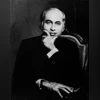
Vasudha Mukherjee New Delhi Pakistan's Supreme Court (SC) declared that Zulfikar Ali Bhutto, founder of the Pakistan People's Party (PPP) and former Prime Minister, was not granted a fair trial by the courts 44 years ago before his execution by Zia-ul-Haq's military regime in 1979.
Former president Asif Ali Zardari, during the Pakistan People's Party's tenure between 2008 and 2013, filed a reference with the Supreme Court of Pakistan, seeking an opinion on the judgments of the SC and the LHC in the ZAB case. This reference was based on the fundamental rights guaranteed under the Constitution.
On Wednesday, the SC issued a written opinion asserting that the trial proceedings of Zulfikar Ali Bhutto by the Lahore High Court (LHC) and the subsequent appeal by the Supreme Court of Pakistan failed to meet the requirements of the fundamental right to a fair trial and due process as enshrined in Articles 4 and 9 of the Constitution.
Chief Justice of Pakistan (CJP) Qazi Faez Isa, leading a nine-member bench hearing the presidential reference, emphasised the importance of impartiality in judicial decisions. He stressed the need for self-accountability within the judiciary, stating that acknowledging past errors is crucial for the progress of the judiciary.
Who was Zulfikar Ali Bhutto?
Born on January 5, 1928, near Larkana, Sindh, India (now in Pakistan), Zulfikar Ali Bhutto was a prominent figure in Pakistani politics. Bhutto's father had also served as a politician in the Indian colonial government. Hailing from a noble Rajput family that had converted to Islam, Bhutto served as president from 1971 to 1973 and prime minister from 1973 to 1977.
Bhutto studied at premier institutions, including the University of California, Berkeley, and later the University of Oxford, before establishing a successful law practice in Karachi in 1953. His political journey began when he was appointed a member of Pakistan's delegation to the United Nations in 1957.
During Bhutto's tenure as president and later prime minister, he introduced reforms, including the nationalisation of key industries and land redistribution.
However, Bhutto's political journey was fraught with challenges, including tensions with the military establishment and allegations of authoritarianism. In 1977, Bhutto was ousted in a military coup.
The Lahore High Court had sentenced Zulfikar Ali Bhutto to death on March 18, 1978, on charges of ordering the assassination of Ahmed Reza Kasuri, a founding member of the PPP. The Supreme Court, with a majority vote of 4 to 3, upheld the LHC verdict on February 6, 1979, leading to Bhutto's execution on April 4 of the same year.
Who was Mohammad Zia-ul-Haq?
Mohammad Zia-ul-Haq, born on August 12, 1924, in Jullundur, Punjab (now in India), held positions as the Pakistani chief of Army staff, chief martial-law administrator, and president of Pakistan from 1978 to 1988.
Zia's military career began when he was commissioned from the Royal Indian Military Academy in Dehra Dun in 1945. He served with the British armoured forces in Southeast Asia towards the end of World War II.
In 1972, Zia presided over the military courts that tried several Army and Air Force officers accused of plotting against Prime Minister Zulfikar Ali Bhutto's government. Bhutto promoted Zia to lieutenant general in 1975 and appointed him as chief of Army staff in 1976.
On July 5, 1977, Zia led a coup, ousting Bhutto. He assumed the role of chief martial-law administrator while retaining his position as Army chief. Subsequently, he took over the presidency after Fazal Elahi Chaudhry resigned.
During his presidency, Zia tightened control over the government, banning labour strikes, imposing strict censorship on the press, and declaring martial law (nominally lifted in 1985). He died in an airplane crash on August 17, 1988.

 "44 yrs after hanging, Pak SC says Bhutto's trial didn't follow due process")


