
China is not our motherland, says Taiwan's President in defiant speech
Beyond direct military intimidation, Lai said Taiwan also faces 'identity warfare' from China
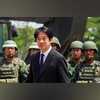 "China is not our motherland, says Taiwan's President in defiant speech")
Explore Business Standard

Associate Sponsors
Co-sponsor
Beyond direct military intimidation, Lai said Taiwan also faces 'identity warfare' from China
The People's Republic of China (PRC) is not the "motherland" of the Republic of China (ROC) and has never owned Taiwan, President William Lai said yesterday, as reported by the Taipei Times.
Delivering the third in a planned series of 10 speeches across Taiwan, Lai addressed a Lions Clubs International banquet in Hsinchu, where he outlined external threats posed by China and emphasised Taiwan's sovereign identity.
According to the Taipei Times, Lai said that on June 21, the Taiwanese military detected 12 Chinese aircraft, eight of which entered Taiwanese airspace, as well as six Chinese warships operating around the nation.
Beyond direct military intimidation, Lai said Taiwan also faces "identity warfare" from China, which seeks to manipulate global perception by falsely claiming that Taiwan is part of its territory.
China also engages in espionage targeting Taiwan's military, citing groups such as the Rehabilitation Alliance Party and Taiwan Military Government, which include active and retired personnel, the Taipei Times reported.
Lai criticised Beijing's coercion of Taiwanese artists to publicly claim the PRC as their motherland. He stressed this was historically inaccurate, noting that the ROC has a 114-year history, compared to the PRC's 70 years, making the notion of Chinese ownership over Taiwan invalid.
Taiwan remains a generous and peaceful society, Lai said, pointing to its aid to China during natural disasters. However, he warned that China exploits Taiwan's goodwill to conduct "united front" infiltration activities, according to the Taipei Times.
He also refuted China's attempts to lure Taiwanese youth and entrepreneurs, stating that Beijing's economic decline contradicts its portrayal as a land of opportunity. In contrast, Taiwan's economy has remained strong, supported by proactive government policies aiding global business expansion.
As reported by the Taipei Times, Lai said China poses an international threat and reaffirmed his commitment to protecting the Constitution, democracy, and Taiwan's future through civil rights and judicial reform.
(Only the headline and picture of this report may have been reworked by the Business Standard staff; the rest of the content is auto-generated from a syndicated feed.)
First Published: Jun 30 2025 | 3:13 PM IST

