
China marks 75 years of Communist Party rule as challenges, threats linger
No festivities have been announced for the occasion on Tuesday, save for a flag-raising ceremony at Tiananmen Square
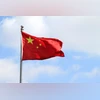 "China marks 75 years of Communist Party rule as challenges, threats linger")
Explore Business Standard

Associate Sponsors
Co-sponsor
No festivities have been announced for the occasion on Tuesday, save for a flag-raising ceremony at Tiananmen Square
China is marking the 75th year of Communist Party rule as economic challenges and security threats linger over the massive state.
No festivities have been announced for the occasion on Tuesday, save for a flag-raising ceremony at Tiananmen Square. In recent decades, China has mounted military parades and displays of the country's economic might only at the turn of decades, such as for the 60th and 70th anniversaries.
The world's second largest economy has struggled to regain momentum after Covid-19.
A prolonged property slump led to a spillover effect on other parts of the economy, from construction to sales of home appliances. Last week, China announced a slew of measures to boost the economy, including lower interest rates and smaller down payment requirements for mortgages.
Party leader and head of state Xi Jinping has largely avoided overseas travel since the pandemic, while continuing with his purges at home of top officials considered insufficiently loyal or being suspected of corruption or personal indiscretions.
"The road ahead will not be smooth, there will definitely be difficulties and obstacles, and we may encounter major tests such as high winds and rough seas, or even stormy waves," Xi warned during a banquet on the eve of the anniversary.
"We must be vigilant in times of peace, plan ahead, and rely closely on the entire Party, the entire army, and people of all ethnic groups across the country," he said. "No difficulties can stop the Chinese people from moving forward."
The anniversary also comes as China is facing growing friction with neighbours, including Japan, South Korea and the Philippines over territorial claims and their close relationships with Beijing's chief rival, the US.
The Communists under Mao Zedong seized power in 1949 amid a civil war with the Nationalists, also known as the KMT, led by Chiang Kai-shek, who shifted their political, economic and military power to the now self-governing island democracy of Taiwan.
Beijing continues to insist Taiwan must be annexed under Communist Party rule, by force if necessary, while the US has provided arms to ensure its defence.
China, meanwhile, has involved itself in disputes over its claims to most of the South China Sea and uninhabited islands held by Japan, the Philippines, Vietnam and other neighbouring nations.
China's military buildup and its recent launch of a nuclear capable ballistic missile into the Pacific Ocean have raised concerns about a possible conflict.
At home, Xi has made himself effectively the leader for life by ending term limits and extending his power over key government and party bodies. China allows no competitive elections and the party retains near total control over the media that informs its 1.4 billion people.
(Only the headline and picture of this report may have been reworked by the Business Standard staff; the rest of the content is auto-generated from a syndicated feed.)
First Published: Oct 01 2024 | 8:11 AM IST

