China’s sluggish approval of rare earth exports is threatening to disrupt global supply chains, the Financial Times reported, with exporters and industry bodies warning that delays are already affecting European manufacturers and could soon hit other major economies including India.
While the Chinese commerce ministry has started granting some export licences, reportedly to select European-bound shipments, the pace is far too slow to meet industrial demand. “The window to avoid significant damage to production in Europe is rapidly closing,” Financial Times quoted Wolfgang Niedermark of the Federation of German Industries (BDI) as saying.
An unnamed European executive based in China described the delays as “untenable” and said officials had “underestimated” the operational requirements of enforcing the restrictions.
Why did China impose export controls on its rare earth minerals?
Beijing introduced new export controls in early April on seven rare earth elements and related permanent magnets, materials crucial for the production of electric vehicles (EVs), wind turbines, fighter jets, and advanced electronics. The move followed sweeping US tariffs, announced by President Donald Trump. While tariffs were announced on all US trade partners, China has been especially targeted by the Trump administration’s new trade policy. The tariff announcement marked an escalation in ongoing trade tensions between the two powers.
How is China controlling rare earth mineral exports?
The restrictions come under China’s rights as a signatory to the international Non-Proliferation of Nuclear Weapons Treaty, which allows it to regulate exports of "dual-use" items. The applies to products that can be used for both civilian and military applications.
How does China export restrictions impact global supply chains?
Rare earth elements like terbium, dysprosium, and samarium are critical to modern industry. They are essential for manufacturing everything from electric motors and MRI scanners to laser surgery devices and precision-guided military systems.
But it is not their scarcity that makes them so strategically important — it’s China’s grip over the supply chain. While rare earths are found in several countries, China accounts for 61 per cent of global production and 92 per cent of processing, according to the International Energy Agency.
Processing rare earths is expensive and environmentally hazardous due to their radioactive by-products, which has led most other countries to scale back or abandon domestic production.
Global automakers, including Tesla and Volkswagen, as well as US defence contractors like Lockheed Martin, have already raised concerns about the export delays.
With four Chinese rare earth magnet producers, some of whom supply global giants like Volkswagen, recently granted export licences, there is hope of some relief. But experts warn that these approvals are selective and fail to address the broader risk of disruption.
Impact of China's rare earth minerals on India
The pressure is also being felt in India, where EV manufacturers are facing potential shortages of rare earth magnets used in electric motors, power steering systems, and braking units.
Industry sources told The Indian Express that Chinese suppliers are now demanding undertakings that the magnets won’t be used for military purposes. There is also growing pressure on Indian carmakers to buy entire electric motor assemblies from China, rather than sourcing just the magnets, as a way to bypass red tape.
These magnets, especially neodymium-iron-boron (NdFeB) magnets, are critical to EV performance due to their strength and efficiency. Any disruption in their supply could delay production timelines and increase costs, particularly damaging for India’s price-sensitive EV sector.

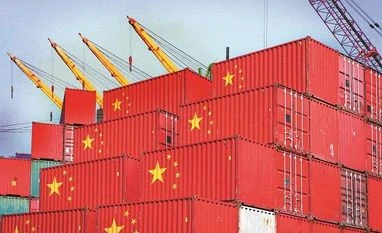 "How China's slow approval of rare earths is threatening supply chains")

