Beijing-based Space Pioneer completed a full-scale test of the first stage of its Tianlong-3 rocket from an offshore platform in Shandong province earlier this week, the South China Morning Post reported on Wednesday. This successful test is a significant step for China as it pushes to build massive satellite internet constellations.
A major hurdle faced by China was a shortage of rockets to launch these satellites. To counter this, Space Pioneer was one of two private companies and a state-owned aerospace contractor racing to build reusable rockets, a technology that could cut costs and boost launch frequency.
Guowang and Qianfan satellite projects
Over the past few years, China has announced plans for two broadband satellite projects: Guowang and Qianfan.
Each is expected to consist of more than 13,000 satellites in low Earth orbit, similar to SpaceX’s Starlink constellation. However, progress so far has been slow. Fewer than 1 per cent of the planned satellites are in place, largely because China does not yet have the launch capacity to deploy them at scale.
China looks to build reusable rockets
Reusable launch vehicles are seen as the solution to carrying larger satellite constellations. Unlike traditional expendable launchers, these rockets can be flown multiple times, giving China a faster way to put satellites into orbit and significantly reducing costs.
Have reusable rockets been used before?
Yes. SpaceX’s Falcon 9 has already proven the model, flying the same booster over a dozen times. Chinese players are now looking to achieve similar results.
Who are the main contenders?
Tianlong-3 by Space Pioneer:
At the forefront is Beijing-based Space Pioneer and its Tianlong-3, which cleared a key milestone this week with a full-scale test of its first stage from an offshore platform in Shandong. The 72-metre rocket fired nine engines for 35 seconds, generating nearly 1,000 tonnes of thrust. The company aims for an orbital debut by the end of the year and eventually plans to conduct up to 30 launches annually.
Zhuque-3 by LandSpace:
Rival start-up LandSpace is preparing to debut its Zhuque-3, a similar medium-lift reusable rocket, as soon as September and no later than November. The company has faced setbacks, including the failure of its Zhuque-2E rocket in July, but says the issue does not affect Zhuque-3. Like Tianlong-3, it is built to lift about 18 tonnes and be reused multiple times.
Long March-12A by CASC:
China’s state-owned China Aerospace Science and Technology Corporation (CASC) is also developing the Long March-12A, which aims for an orbital test flight by late 2025. The rocket has already attempted a vertical take-off and landing trial, though the result was not made public.
All three projects are intended to support China’s planned Guowang and Qianfan satellite constellations.
Challenges
Developing reusable rockets is extremely difficult, and all three programmes have seen setbacks:
In 2023, Tianlong-3 unintentionally lifted off during a ground test and exploded after crashing into nearby hills.
In July, LandSpace’s Zhuque-2E, a different model but with related design features, failed during flight.
Meanwhile, official details for the Long March-12A have not been released, but media reports have speculated that its vertical landing test may not have gone as planned.
Bottom line
Despite the hurdles, if even one of these rockets proves reliable, China’s ability to launch satellites at scale could change rapidly and strengthen its position in the global commercial space industry.

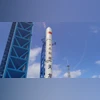 "China bets on reusable rockets as Tianlong-3 passes 1,000-tonne thrust test")


 Connect with us on WhatsApp