By Linda Lew
China’s multi-pronged stimulus package helped supercharge electric vehicles sales during the week-long National Day holiday, with one manufacturer describing it as the “best Golden Week in many years.”
Zhou Jinkai, a marketing director for General Motors Co.’s joint venture with SAIC Motor Corp. and Wuling Motors Holdings Ltd., said it was the best Golden Week for the brand in terms of sales for years. “The stock market is up, and the car market is up!” he wrote in a post on Chinese social media platform Weibo on Monday as the week-long holiday drew to a close.
He wasn’t the only one sharing good news. Zhu Jiangming, the chief executive officer of Stellantis NV’s Chinese electric car partner Zhejiang Leapmotor Technology Co., said in a post on Wechat that Leapmotor received a record 17,000 orders in the first week of October, and thanked his staff for their efforts during the holiday. Xiaomi Corp. Chairman Lei Jun said orders have been locked — which means a deposit taken — for more than 6,000 SU7 EVs in the past seven days — more than half its average monthly deliveries.
Pictures of crowded car showrooms during the past week on Chinese social media add to indications that the fiscal bazooka, introduced in late September, is already starting to lift consumer sentiment after delivering a stunning stock market rally. It remains to be seen if the boost can reverse the overall trend of a declining auto-related spending, which shrank 2.4 per cent in the first eight months of the year compared with 2023, according to the National Bureau of Statistics.
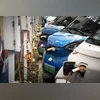
Other than spending on cars, people also took their wheels for a spin during the holiday. Road tripping has emerged as the preferred way to travel during the vacation, causing traffic chaos and, for those in electric cars, long queues at charging stations.
An estimated 80 per cent of Chinese traveling during Golden Week chose to drive, with roughly 1.53 billion trips taken, according to forecasts released by the Ministry of Transport on Sept. 27. Planes, trains and other commercial services like bus trips made up the other 20 per cent.
With electric vehicles in China now comprising one-in-three new car sales in some parts of the country, many of those road trips were made in an EV, although the government doesn’t break out exact figures. That helped push the power sucked up by public chargers on highways to a record 15.58 gigawatt hours over the first two days of the holiday, official data show.
That’s a 56 per cent increase over the same period of the holiday in 2023, according to data from the state grid. This year’s average daily road traffic on highways is also estimated to be up 3 per cent versus last year, early reports from Baidu Maps suggest.
The surge in popularity of road trips comes as more people choose to travel within China and prefer the flexibility that comes with driving. With international travel taking a back seat, exploring lesser known attractions is in vogue with web searches for “niche tourist sites” increasing 200 per cent. Far-flung places in Gansu and Yunnan provinces have been some of the most popular destinations, according to Baidu Maps.
One downside of the road tripping craze — long queues at charging stations and traffic jams.
Many travelers took to social media to complain about the time wasted being stuck motionless as traffic came to a standstill or as they waited hours for an EV charging point to become free.
For all Chinese smart cars’ added extras, like large screens and in-built entertainment systems, some people resorted to killing time by playing card games on the side of the road, posts on Chinese platform Xiaohongshu showed, although conserving electricity was also probably a factor.

 "China's stimulus package has EV makers talking 'best golden week' in years")


 Connect with us on WhatsApp