
Different system needed to end standoffs over US debt ceiling: Yellen
It's a predicament that has occurred nearly 80 times since 1960, she said. The Treasury Department has warned the US could default as soon as June 1 if there is no deal
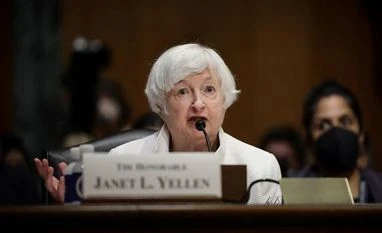 "Different system needed to end standoffs over US debt ceiling: Yellen")
WebinarsNew
Deep DiveNew
Explore Business Standard
It's a predicament that has occurred nearly 80 times since 1960, she said. The Treasury Department has warned the US could default as soon as June 1 if there is no deal
After dozens of standoffs with Congress over government spending in recent decades, Treasury Secretary Janet Yellen said Thursday that in her personal opinion, the United States should adopt a different system for national finances.
Emphasising that it was her own opinion, not President Joe Biden's, Yellen said there are various alternatives for avoiding situations where the Treasury lacks the funds to pay its bills.
In January, the US government ran up against its legal borrowing limit of USD 31.381 trillion, and the Treasury Department began implementing extraordinary measures to avoid missing payments on its bills.
It's a predicament that has occurred nearly 80 times since 1960, she said. The Treasury Department has warned the US could default as soon as June 1 if there is no deal.
Personally, I think we should find a different system for deciding on fiscal policy, Yellen said when asked about the issue. Congress could repeal the debt ceiling or handle it differently. The president could decide to raise the debt ceiling and inform Congress, which could vote to override that decision, and the president could veto that, and it would take a supermajority of two-thirds of Congress to override the veto.
Congress votes on taxes and on government spending and those decisions imply a path of deficits, Yellen said. Bills come due because of those decisions and that makes the Treasury responsible for paying for goods and services already contracted.
Biden wants the debt ceiling raised. Republican House Speaker Kevin McCarthy is calling for trillions of dollars in spending cuts over the coming decade in return for an increase.
The debt ceiling then creates a situation where we can't pay all the government's bills, and I don't think that's any way to run the government," she said. The US Treasury note is the most important asset in global financial markets, and a loss of confidence in its value would put financial markets in turmoil.
"To go through this every couple of years is tremendously damaging," Yellen said.
For now, raising the debt ceiling to avert a default on the national debt remains the only short-term solution, she said.
Speaking ahead of a meeting in Japan of finance ministers and central bank governors of the Group of Seven advanced economies, she said she did not want to discuss what she might do if the debt ceiling is not raised in time to avoid a default.
There are choices, she said, but the answer is there is no good alternative that will save us from catastrophe.
"The only reasonable thing to do is to raise the debt ceiling and avoid the dreadful consequences that will come if we have to make those choices," she said.
A White House analysis has found that a brief default would cost the economy 500,000 jobs, while a longer one could cost 8.3 million jobs, almost as many as were lost during the 2008 financial crisis.
I'm very hopeful that the differences can be bridged and the ceiling will be raised, she said.
One idea being discussed would be invoking the 14th amendment of the Constitution, which states that the validity of the public debt of the United States, authorised by law, shall not be questioned.
That would justify issuing the debt needed to pay the all government's bills and ignore the debt ceiling, Yellen said. But she added that it's not a short-run solution and it's legally questionable whether that's a viable strategy.
(Only the headline and picture of this report may have been reworked by the Business Standard staff; the rest of the content is auto-generated from a syndicated feed.)
First Published: May 11 2023 | 4:16 PM IST


 Connect with us on WhatsApp