Home / World News / Elon Musk's Starlink satellites may cause Ozone layer harm, warns study
Elon Musk's Starlink satellites may cause Ozone layer harm, warns study
The study warned that SpaceX's Starlink satellites emit significant amounts of aluminium oxide gas, which leads to reactions with chlorine, ultimately destroying ozone molecules
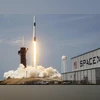
A SpaceX Falcon 9 rocket. Photographer: Joe Raedle/Getty Images |Bloomberg|
Researchers from the University of Southern California (USC) have raised concerns that internet satellite networks, including Elon Musk’s Starlink, might be harming the Earth’s ozone layer. The warning stems from studies conducted by the USC’s Department of Astronautical Engineering.
The researchers indicate that the surge in low-earth orbit satellites could trigger harmful chemical reactions in the atmosphere. Specifically, a study published in the journal Geophysical Research Letters shows that SpaceX’s Starlink satellites emit significant amounts of aluminium oxide gas, which could deplete the ozone layer. The presence of aluminium oxides in the atmosphere leads to reactions with chlorine, ultimately destroying ozone molecules.
Impact of satellite burn-up
The ozone layer is crucial for human survival. It absorbs harmful ultraviolet radiation from the Sun. Without this protective layer, exposure to ultraviolet radiation could increase the risk of skin cancer and negatively impact crop yields and food production.
However, internet satellites in low Earth orbit typically have a lifespan of about five years. As these satellites re-enter the atmosphere and burn up, they release aluminium oxides. According to the researchers, this process could release over 1,000 tons of aluminium oxide annually, a 646 per cent increase compared to natural levels. These particles are not consumed and could persist in the atmosphere for decades, continuing to deplete the ozone layer.
The study found that from 2016 to 2022, the presence of aluminium oxides in the atmosphere increased roughly eightfold. Projections indicate that with ongoing satellite launches, this figure could rise to as much as 397 tons a year, leading to significant ozone depletion. In 2022 alone, 18.7 tons of aluminium oxide nanoparticles were released into the atmosphere by falling satellites.
Satellite launches and space debris concerns
SpaceX has permission to launch another 42,000 Starlink satellites, and other tech giants like Amazon are also planning to launch thousands more. This rapid increase in satellite numbers not only raises concerns about ozone depletion but also about space debris, which can cause collisions and damage other satellites.
The deployment of numerous small satellites in low-earth orbit has revolutionised high-speed internet, allowing for faster data processing. Previously, satellites operated at higher altitudes, which compromised internet speeds but extended lifespan.
SpaceX, founded by billionaire Elon Musk in 2002, has been at the forefront of this shift. The first experimental Starlink satellite launch occurred in 2019, and since then, the network has expanded to provide global internet coverage, including critical support for Ukraine’s defence communications.
As of May 2024, Starlink is reported serving three million customers across 100 countries and territories, illustrating the growing demand for fast internet access.

 "Elon Musk's Starlink satellites may cause Ozone layer harm, warns study")


 Connect with us on WhatsApp