
EU, China agree on steps to resolve tariffs and pricing for EV exports
A guidance document released by the EU gives instructions for EV manufacturers on making price offers, including minimum import prices and other details
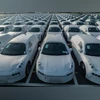 "EU, China agree on steps to resolve tariffs and pricing for EV exports")
WebinarsNew
Deep DiveNew
Explore Business Standard
A guidance document released by the EU gives instructions for EV manufacturers on making price offers, including minimum import prices and other details
China and the European Union said on Monday they have agreed on steps toward resolving their dispute over the bloc's imports of Chinese-made electric vehicles.
A statement by China's Commerce Ministry said the EU would issue guidelines on minimum pricing for Chinese auto exporters. It did not directly mention if the deal involved an end to the tariffs of up to 35.3 per cent that the EU imposed on imports of Chinese EVs in 2024 following an investigation.
This is conducive not only to ensuring the healthy development of China-EU economic and trade relations, but also to safeguarding the rules-based international trade order, a statement by the commerce ministry said.
A guidance document released by the EU gives instructions for EV manufacturers on making price offers, including minimum import prices and other details. It said that wide variations in the types of vehicles made it necessary to set specific minimum import prices "appropriate to remove the injurious effects of the subsidisation." The EU said the European Commission would assess each offer in an objective and fair manner, following the principle of non-discrimination and in line with World Trade Organisation rules.
The expansion of Chinese EV makers overseas has alarmed automakers in Europe and the US The EU imposed the tariffs to counter an influx of affordably priced Chinese EV models into its markets, saying Chinese automakers had benefited from unfair government subsidies. The US enacted a 100 per cent tariff on China-made electric cars in 2024.
The value of battery-powered cars imported to Europe skyrocketed from USD 1.6 billion in 2020 to USD 11.5 billion in 2023. Most of the imports were from Western automakers with factories in China, including Tesla and BMW.
EU officials complained that China's homegrown automakers were poised to gobble up market share by undercutting European car brands on price thanks to Beijing's massive subsidies. Those include orders for government fleets, low-interest loans from state-owned banks, access to cheap land for factories, tax breaks, and subsidised raw materials and parts from state-owned industries.
The US tariffs effectively block virtually all Chinese EV imports. The EU needs affordable electric cars from abroad to achieve its goals of cutting greenhouse gas emissions by 55 per cent by 2030.
Chinese car brands have been expanding into Europe despite the higher tariffs. China-manufactured cars rose to 6 per cent of sales in the EU in the first half of 2025, according to the European Automobile Manufacturers' Association (ACEA) and S&P Global Mobility, up from 5 per cent in the same period of 2024.
EU-based manufacturers represented 74 per cent of total EU car sales in the first half of 2025, the ACEA said. Germany still produced about 20 per cent of cars sold in the EU, followed by Spain, Czechia and France.
By 2030, Chinese automakers are likely to double their European market share to 10 per cent, according to the consultancy AlixPartners estimated last year.
(Only the headline and picture of this report may have been reworked by the Business Standard staff; the rest of the content is auto-generated from a syndicated feed.)
First Published: Jan 12 2026 | 5:51 PM IST


 Connect with us on WhatsApp