The U.S. Federal Reserve is considering a rule change that could save the country's eight largest banks combined billions of dollars in capital, in a potential long-sought win for the industry, according to four people with knowledge of the matter.
At issue is how the central bank calculates an extra layer of capital it imposes on U.S. global systemically important banks (GSIBs), known as the "GSIB surcharge," which it introduced in 2015 to boost their safety and soundness.
The Fed is considering updating inputs it uses in the calculation, which it fixed in 2015, to adjust for economic growth and in turn more accurately reflect the size of the banks relative to the global economy, the people said.
Updating those inputs or "coefficients" would reduce the banks' systemic scores and resulting capital surcharge, said the people who declined to be identified discussing private regulatory issues.
The Fed deliberations, which Reuters is reporting for the first time, are ongoing and no decisions have been made, the people said.
But the central bank's willingness to review the issue is major progress for GSIBs' years-long campaign to reduce the surcharge, which had gained little traction until recently. It also shows how a broader fight over capital rules is creating new opportunities for banks to push for other long-sought regulatory concessions.
The potential capital savings for the eight banks, which include JPMorgan, Citigroup and Bank of America , would depend on a number of factors, including their business models.
Together, the U.S. GSIBs held roughly $230 billion of capital on account of the surcharge in the first quarter of 2024, according to Fed data, suggesting even a small change could result in significant savings for some of the banks.
A 0.5% surcharge, for example, equals more than $8 billion each for JPMorgan and Bank of America, according to a Reuters calculation. That's cash banks say they could plow back into the economy through lending.
Spokespeople for the GSIBs, which also include Wells Fargo , Goldman Sachs, Morgan Stanley, BNY Mellon and State Street, declined to comment or did not immediately respond to requests for comment.
Introduced as a result of the 2009 global financial crisis, the surcharge aims to boost GSIBs' resilience given the threat they pose to financial stability.
When adopting the rule, the Fed said it was fixing the coefficients, which relate to a bank's size, interconnectedness, complexity and cross-border activity, using 2012-2013 data.
The central bank said that approach would improve the predictability of the scores and make it easier for banks to plan, but that it would periodically review the framework.
GSIBs say that review is long overdue. Because banks tend to grow in line with the economy, using an outdated methodology makes them appear larger relative to the global economy than they actually are, they have argued.
"U.S. GSIBs are holding more than $59 billion in GSIB capital buffers attributable solely to general economic growth," JPMorgan wrote in a public letter to the Fed in January.
The Fed is considering updating the coefficients to take into account global economic growth in recent years, the people said, although Reuters could not ascertain precisely how it might do that.
BASEL FIGHT
Fed officials were long reluctant to revisit the coefficients, wary of being seen to give a handful of giant banks handouts, according to the sources and other industry officials.
But the central bank last year ignited a debate when it unveiled, along with two other regulators, the "Basel Endgame" proposal which would hike capital for GSIBs and other big banks.
Fed officials have argued the plan would more accurately gauge the risk of bank losses.
At the same time, the Fed proposed making the GSIB surcharge more sensitive to banks' risks, a change it can make by itself.
It did not discuss the coefficients and envisaged the changes would have a small impact on the size of banks' capital surcharges, although some banks say it will increase them. But the proposals sparked a massive industry lobbying effort, opening the door for GSIBs to push again on the coefficients.
Big banks are hardest hit by the Basel proposal and have argued aggressively that it will force them to curb lending.
The Fed is sympathetic to those complaints and is working to overhaul the proposal, but any concessions have to be agreed by the other regulators who are less amenable, Reuters reported.
Updating the surcharge coefficients is one way the Fed could independently offset the impact of the Basel hikes for big banks, some industry officials have argued in private meetings with the Fed.
However, a fifth person familiar with the matter said the two projects are not related and Fed officials are proceeding with them independently.
If the Fed were to change the coefficients, it likely would opt to repropose the rule for additional public feedback, the sources said, which could delay a final decision by several months.

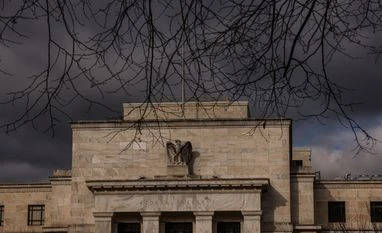 "Fed mulls rule change that could save biggest US banks billions in capital")


