
German election winner Merz, rivals start sounding out possible coalition
Merz's Union bloc, which has led the opposition since 2021, won Sunday's election, in which the far-right, anti-immigration Alternative for Germany took second place
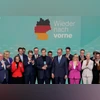 "German election winner Merz, rivals start sounding out possible coalition")
WebinarsNew
Deep DiveNew
Explore Business Standard
Merz's Union bloc, which has led the opposition since 2021, won Sunday's election, in which the far-right, anti-immigration Alternative for Germany took second place
Negotiators from German election winner Friedrich Merz's conservative bloc and the centre-left Social Democrats started exploratory talks Friday on a possible coalition government, but were tightlipped on the details as they launched what could be a complicated process.
Merz's Union bloc, which has led the opposition since 2021, won Sunday's election, in which the far-right, anti-immigration Alternative for Germany took second place.
The only plausible choice of coalition partner for the Union which like other mainstream parties rules out working with Alternative for Germany is the Social Democrats of outgoing Chancellor Olaf Scholz. They slumped to third place and their worst post-World War II result in a German parliamentary election on Sunday.
Between them, the Union and Social Democrats have 328 seats in the newly elected 630-seat parliament.
In a brief statement after a first round of talks on Friday, the two sides said the discussions began in an open and constructive atmosphere. They said that Finance Minister Jrg Kukies offered an overview of Germany's budget situation and upcoming talks will discuss the challenges.
Another round will be held next week, according to the statement, which gave no specific date. At some point, negotiators will have to decide whether to move on to formal coalition talks.
The possible partners will have to reconcile contrasting proposals for revitalising the economy, which has shrunk for the past two years, and for curbing irregular migration an issue that Merz pushed hard during the election campaign. They will also need to overcome distrust generated during the campaign.
Merz has said he hopes to do a deal by Easter. That may be an optimistic timeframe, although other recent governments have been in place within two or three months of an election.
There is no deadline for forming a government, and the record is much longer. After the 2017 election, it was nearly six months before lawmakers elected then-Chancellor Angela Merkel for her fourth and final term.
(Only the headline and picture of this report may have been reworked by the Business Standard staff; the rest of the content is auto-generated from a syndicated feed.)
First Published: Feb 28 2025 | 9:56 PM IST


 Connect with us on WhatsApp