By Mary Hui and Richard Frost
Hong Kong’s history of reacting to calamities suggests this week’s fire which claimed at least 128 lives is likely to result in far-reaching policy changes.
The government’s immediate response has been to offer monetary support and temporary shelter to those affected by the blaze. Longer-term outcomes may include the phasing out of bamboo scaffolding that is widely used in construction projects and is considered a unique part of Hong Kong’s urban landscape and culture, as well as tougher legislation on fire safety. City leader John Lee said Thursday that officials will talk to industry representatives about switching to metal frames.
While there is debate about how much the presence of bamboo contributed to the blaze, the intensity of the fire has sharpened focus on the ubiquitous role of the material in the local building industry as well as rules designed to protect residents. In a city as densely packed as Hong Kong, where the aging housing stock means external renovations seen at Wang Fuk Court are commonplace, the fear that such a tragedy could happen again will heap pressure on authorities to respond forcefully.
“Any situation like this requires the government to really watch out for the implications on its legitimacy,” said John D. Wong, a professor at the University of Hong Kong studying the city’s development. “Whenever you have a crisis moment, the government needs to figure out what to do differently.”
Some 200 residents of Wang Fuk Court were still unaccounted for as of Friday, with Secretary for Security Chris Tang saying at a briefing that officials couldn’t rule out finding more bodies. The death toll exceeds that of the Grenfell Tower fire in London, which killed 72 people in June 2017.
Hong Kong’s anti-graft agency on Friday arrested eight people on suspicion of corruption linked to the HK$315.5 million ($41 million) renovation project. Police earlier arrested three men in connection to the fire on suspicion of manslaughter.
Officials are also undertaking a city-wide inspection of all housing estates undergoing major renovations. Construction materials erected for renovation work at the estate have been blamed for contributing to the rapid spread of the fire. These include highly flammable foam boards installed around windows.
While disasters — man-made or otherwise — are catalysts for change in cities around the world, the dynamic appears more prominent throughout Hong Kong’s history due to the city’s traditionally light-touch government, rapid increase in population and fast economic growth.
As a small and open port city, Hong Kong’s economic policy has famously been defined by a laissez-faire approach — so much so that a former financial secretary opposed compiling detailed GDP data for fear it would enable official meddling in the economy. The government provided the basics, the narrative goes, then mostly got out of the way and let the private sector get on with it.
As the city matured, officials gradually threaded together a patchwork of regulations, often triggered by disruption or disaster.
An outbreak of bubonic plague in 1894 — which wiped out more than 10% of the population — prompted colonial authorities to regulate building designs in crowded Chinese tenement areas for the first time. A surprise typhoon in 1906 that killed more than 10,000 helped lead to the introduction of an early warning system still in use today.
But it was the massive influx of refugees fleeing China’s civil war and ensuing Communist Party victory in 1949 that really tested the government’s reluctance to get entangled in broader issues.
Between 1945 and 1951, Hong Kong’s population more than tripled to 2 million from 600,000, with hundreds of thousands living in squatter huts clustered on hillsides and coastlines. When a fire ripped through the shanty town of Shek Kip Mei in 1953, rendering 53,000 homeless, the government was forced to find shelter for them — which became the basis for Hong Kong’s public housing system. Today roughly 2.2 million people, or about 29% of the population, live in public rental housing.
The anthropologist Alan Smart has argued that the story is more complicated than that, and that it was a series of large, mostly forgotten squatter fires throughout the 1950s that shaped the city’s housing policies. Still, the basic point remains, he wrote: Fires brought disruptions but also openings, and “how the opportunities were exploited set Hong Kong on a particular path to development.”
From the 1970s, Hong Kong pursued a doctrine known as “positive non-interventionism,” which espoused that any government intervention in the private sector needed to be carefully weighed against potential damage to market forces. This practically ensured that it took a crisis to force a heavy government response.
The economy boomed, but crises would follow. A housing shortage prompted authorities to set up the Home Ownership Scheme in 1976, enabling the government to build homes and sell them to residents at subsidized prices. Wang Fuk Court — where this week’s deadly fire took place — was built in the early 1980s as part of this program.
A collapse in the Hong Kong dollar in the early 1980s triggered by concern over talks to hand the British colony to China led to the creation of a currency peg, which still endures. The Black Monday stock market crash in 1987 resulted in the formation of the current market regulator — the Securities and Futures Commission — two years later.
The mindset of “big market, small government” persisted after the 1997 handover. In a telling remark in 2006, then Chief Executive Donald Tsang described income inequality as an “inevitable phenomenon” of a capitalist economy, suggesting the government was constrained in what it could do about the issue.
In the years since, authorities moved further away from this principle of minimal intervention by acts such as mandating a minimum wage in 2011.
Yet despite the government deepening control over society through national security legislation enacted in the wake of another crisis — the 2019 pro-democracy protests — officials still pursue a version of Hong Kong’s laissez-faire legacy when it comes to economic issues. Chief Executive Lee in a recent speech celebrated Hong Kong’s ranking as the world’s freest economy by the Fraser Institute.
The challenge for Lee now is to identify the root causes of the deadly fire and establish how best to intervene in an effective manner to prevent any repeat of the tragedy.
One area of focus is whether current laws are sufficient and enforcement strong enough. Residents of Wang Fuk Court complained to authorities about materials used in the renovations more than a year before the fire. In October this year, scaffolding around Chinachem Tower, a 23-story commercial building under renovation in the Central business district, went up in flames, causing four people to be hospitalized and prompting an investigation into why the external framework burned so quickly.
“The government should take a good look at our existing legislation, and whether there are gaps in the requirements about fire retardant materials,” Hong Kong Legislative Council member Regina Ip told Bloomberg Television on Friday.
Ip also questioned building management mechanisms that rely on owners to be unpaid volunteers supervising renovation works. “There have always been complaints about the awarding of contracts because there’s a lot of competition for this lucrative work,” she said.
The key to rebounding from calamities, according to Wong, the HKU professor, is learning the right lessons and avoiding the temptation of quick but miscalibrated corrections.
In the case of the Wang Fuk Court fire, that would mean examining all the factors that led to the tragedy before considering, say, a blanket ban on bamboo scaffolding, Wong said.
“The government will most likely seize this moment and do something that it didn’t find a reason to do before. I hope it is the right thing.”

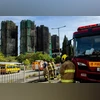 "Hong Kong fire sparks calls to end bamboo scaffolding, tighten safety laws")


