Home / World News / Indonesian cabinet ministers deny claims they misused government aid
Indonesian cabinet ministers deny claims they misused government aid
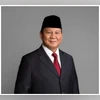
Defence Minister Prabowo Subianto won the election with 58.6 per cent of the votes, or more than 96 million ballots, more than twice the amount received by each of the two runner-ups in the three-way
The losing candidates former Jakarta Gov. Anies Baswedan and former Central Java Gov. Ganjar Pranowo say the election was marred by irregularities | Photo: X@prabowo
4 min read Last Updated : Apr 05 2024 | 3:02 PM IST
Four Indonesian Cabinet members testified Friday that no rules were violated in the distribution of government aid during the recent election campaign, despite claims by the two losing presidential candidates that it was used for the benefit of the election winner.
Defence Minister Prabowo Subianto won the election with 58.6 per cent of the votes, or more than 96 million ballots, more than twice the amount received by each of the two runner-ups in the three-way race, according to the General Election Commission.
The losing candidates former Jakarta Gov. Anies Baswedan and former Central Java Gov. Ganjar Pranowo say the election was marred by irregularities and are asking the Constitutional Court to annul the results and order a revote in separate lawsuits.
They say Subianto's victory was the result of widespread fraud and that outgoing President Joko Widodo and his administration bent laws and norms to support Subianto, with government social aid used as a tool to buy votes.
Indonesian presidents are expected to remain neutral in elections to succeed them, but Subianto, a former rival of Widodo who twice lost elections to him before joining his government, ran as his successor. He even chose Widodo's son, Gibran Rakabuming Raka, as his vice-presidential running mate, even though Raka did not meet a constitutional requirement that candidates be at least 40 years old.
Baswedan and Pranowo argue that Raka should have been disqualified and are asking the court to bar him from a revote. Before the election, Raka was granted a controversial exception to the minimum age requirement by the Constitutional Court, which was then led by Anwar Usman, Widodo's brother-in-law. Usman was later forced to resign as chief justice for failing to recuse himself.
Hefty social aid from the government was disbursed in the middle of the campaign far more than the amounts spent during the Covid-19 pandemic and Widodo distributed funds in person in a number of provinces.
A panel of eight Constitutional Court judges summoned Coordinating Human Development and Culture Minister Muhadjir Effendy, Coordinating Economic Minister Airlangga Hartarto, Finance Minister Sri Mulyani Indrawati and Social Affairs Minister Tri Rismaharini to obtain their dispositions, said Chief Justice Suhartoyo, who like many Indonesians uses a single name.
Effendy denied that the government aid provided from January to June 2024 favored Subianto in the February presidential election, and said it was dispersed to achieve a target of reducing extreme poverty.
Hartarto, who is also chair of the Golkar Party, part of the coalition supporting Subianto, said a decline in rice production caused by the El Nio phenomenon made the disbursement of social assistance important. He said the aid aimed to protect the poor and vulnerable from rising commodity prices due to El Nio and global supply chain disruptions.
The government has to implement strategies to maintain the availability of food supplies and people's purchasing power, Hartarto said, adding that the program was transparent and would continue to be implemented.
Widely respected Finance Minister Indrawati, a former managing director of the World Bank, said the aid was part of the government budget and had been approved by parliament.
Its realization and payment pattern is no different compared to the previous six-year period, Indrawati said. She said the enactment of the 2024 state budget was completed before the electoral commission announced the candidates in the presidential race.
The case will be decided by eight justices instead of the full nine-member court because Usman, who is still on the court as an associate justice, is required to recuse himself.
Subianto himself went to the court twice to challenge the results of the elections he lost to Widodo, but the court rejected his claims as groundless both times. His refusal to accept the results of the 2019 presidential election led to violence that left seven dead in Jakarta.
The hearing began on March 28 and the verdict, expected on April 22, cannot be appealed.
(Only the headline and picture of this report may have been reworked by the Business Standard staff; the rest of the content is auto-generated from a syndicated feed.)


 "Indonesian cabinet ministers deny claims they misused government aid")

