Iran has accelerated its production of near weapons-grade uranium as tensions between Tehran and Washington rise after the election of US President Donald Trump, a report by the United Nations' nuclear watchdog seen by The Associated Press on Wednesday showed.
The report by the Vienna-based International Atomic Energy Agency said that as of Feb. 8, Iran has 274.8 kilograms of uranium enriched up to 60 per cent. That's an increase of 92.5 kilograms since the IAEA's last report in November.
That material is a short, technical step away from weapons-grade levels of 90 per cent.
A report in November 2024 put the stockpile at 182.3 kilograms. It had 164.7 kilograms last August.
"The significantly increased production and accumulation of high enriched uranium by Iran, the only non-nuclear weapon State to produce such nuclear material, is of serious concern, the confidential report stated.
According to the IAEA, approximately 42 kilograms of 60 per cent enriched uranium is theoretically enough to produce one atomic bomb, if enriched further to 90 per cent.
The IAEA also estimated in its quarterly report that as of Feb. 8, Iran's overall stockpile of enriched uranium stands at 8,294.4 kilograms, which represents an increase of 1,690.0 kilograms since the last report in November.
The Trump administration said Iran must be prevented from acquiring nuclear weapons.
President Trump has put the Iran Regime on notice by reimposing Maximum Pressure and is committed to ensuring the regime never gets a nuclear weapon. He has also made clear he is open to talks with Iran to come to an agreement that fully addresses the outstanding issues between our two countries," National Security Council spokesperson Brian Hughes said.
Trump's first term in office was marked by a particularly troubled period in relations with Tehran. In 2018 he unilaterally withdrew the US from Iran's nuclear deal with world powers, leading to sanctions hobbling the economy, and ordered the killing of the country's top general.
Under the original 2015 nuclear deal, Iran was allowed to enrich uranium only up to 3.67 per cent purity and maintain a stockpile of uranium of 300 kilograms.
Iran's accelerated production of near weapons-grade uranium puts more pressure on Trump as he's repeatedly said he's open to negotiations with the Islamic Republic while also increasingly targeting Iran's oil sales with sanctions as part of his reimposed maximum pressure policy.
Iran's Supreme Leader Ayatollah Ali Khamenei, who has final say on all state matters, in a speech in August opened the door to talks with the US, saying there is no harm in engaging with the enemy.
However, more recently he tempered that, saying that negotiations with America are not intelligent, wise or honorable after Trump floated nuclear talks with Tehran.
Iran has maintained its nuclear program is for peaceful purposes only, but IAEA Director General Rafael Mariano Grossi has previously warned that Tehran has enough uranium enriched to near-weapons-grade levels to make several nuclear bombs if it chose to do so.
Iranian officials have increasingly suggested Tehran could pursue an atomic bomb. US intelligence agencies assess that Iran has yet to begin a weapons program, but has undertaken activities that better position it to produce a nuclear device, if it chooses to do so.
The IAEA already warned last December that Iran was poised to quite dramatically increase its stockpile of near weapons-grade uranium as it has started operating cascades of advanced centrifuges.
That move came as a response to the Board of Governors at the IAEA passing a resolution condemning Iran for failing to cooperate fully with the agency. In the past, Iran has repeatedly responded to the board's resolutions by further enhancing its nuclear program.
Wednesday's report also said that Iran has also not reconsidered its September 2023 decision to ban some of the agency's most experienced inspectors from monitoring its nuclear program.
The Director General deeply regrets that Iran, despite having indicated a willingness to consider accepting the designation of four additional experienced Agency inspectors, did not accept their designations, the report said.
Additionally, the report says that no progress was made towards resolving the outstanding safeguards issues in relations to Varamin and Turquzabad, the two locations in Iran where the nuclear watchdog has questions about the origin and location of man-made uranium particles found there.
The report also said that Grossi held telephone discussions with Iranian Foreign Minister Abbas Araghchi at the beginning of this year, during which he reiterated his readiness to work with Iran to resume implementation" of a deal the agency and Tehran agreed two years ago.
The Joint Statement included a pledge by Iran to resolve issues around Varamin and Turquzabad where inspectors have questions about possible undeclared nuclear activity, and to allow the IAEA to implement further appropriate verification and monitoring activities.
Foreign Minister Araghchi indicated Iran's preparedness to cooperate with the Agency and raised the possibility of the Director General visiting Tehran again, the report said.
The IAEA report also said the agency verified that Tehran had increased the number of operating cascades of advanced centrifuges, powerful machines that spin rapidly to enrich uranium. Cascades are clusters of centrifuges.
The report said Iran had increased the number of IR-6 centrifuges by 5 to a total of 7 at its underground nuclear plant at Fordo.
The nuclear watchdog also verified that Iran had increased the number of operating cascades of IR-2m centrifuges by 12 to a total of 27 at its underground nuclear plant in Natanz.
Under the original 2015 nuclear deal, Iran was allowed to enrich uranium to only 3.67 per cent with a limited number of its first-generation centrifuges at the underground Natanz Fuel Enrichment Plant only.
The more advanced model of centrifuges that Iran is using now enrich uranium at a much faster pace than the baseline IR-1 centrifuges.


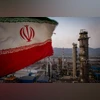 "Iran accelerates production of near weapons-grade uranium, says IAEA")

