Amid escalating
tensions with Iran, Israeli Prime Minister Benjamin Netanyahu suggested that the death of the country’s
Supreme Leader Ayatollah Ali Khamenei could bring an end to decades of hostility. A day later, Defence Minister Israel Katz said Khamenei could meet the same fate as Saddam Hussein. The remarks raise questions about how Iran is governed, and what might happen in the event of a sudden leadership vacuum.
Who holds ultimate power in Iran?
The Supreme Leader is the most powerful figure in the country. He sets broad policy, commands the armed forces, and has final authority over the judiciary, state broadcasting, and a range of senior appointments. Every key institution operates either directly under him or in alignment with his authority.
Does Iran have elected leaders?
Yes, but their power is limited. The president is elected by the public every four years and oversees the executive branch, economic management, and enforcement of laws. However, all his actions must align with the direction set by the Supreme Leader. Iran also has an elected Parliament, known as the Majlis, which legislates and approves budgets, though all its laws are subject to review.
Who chooses Iran's Supreme Leader?
The Assembly of Experts, an 88-member body of clerics, selects the Supreme Leader. Its members are elected by the public for eight-year terms, but only after being approved by the Guardian Council. The Guardian Council screens election candidates, supervises polls, and can veto or amend laws passed by Iran’s Parliament.
When the position becomes vacant, the assembly meets in private to choose a successor. The process considers religious qualifications but is strongly shaped by politics and internal consensus.
For instance, in 1989, Ayatollah Ali Khamenei was appointed despite not being the most senior religious authority at the time, a decision that required a constitutional amendment.
Can a Supreme Leader be removed?
The Assembly of Experts has the theoretical power to remove a Supreme Leader, but it has never done so.
What happens if the Supreme Leader dies suddenly?
In such a case, Article 111 of the constitution allows for the creation of a temporary Leadership Council. This would likely include the president, the head of the judiciary, and a senior cleric from the Guardian Council. The council would assume the Supreme Leader’s duties until the Assembly of Experts names a permanent successor.
Has Khamenei’s successor already been chosen?
In November 2024, reports emerged that the Assembly of Experts had secretly shortlisted three individuals, ranked in order of priority, to succeed Ayatollah Ali Khamenei, 86. The decision was made amid heightened concerns over Khamenei’s health and potential threats to his life. Their identities, however, remain undisclosed.
Mojtaba Khamenei: The front-runner
Mojtaba has long operated from behind the scenes, reportedly playing a significant role in both domestic policy and foreign affairs. Figures close to the regime, including former IRIB head Mohammad Sarafraz and political insider Abbas Palizdar, have publicly acknowledged his influence. His decision in late 2024 to suspend his advanced jurisprudence classes, along with the release of his first formal video address, has been interpreted by analysts as part of a carefully managed transition.
Dynastic succession faces resistance
Despite his proximity to power, Mojtaba’s candidacy is controversial. Critics point out that he lacks the formal religious standing traditionally required for the role. Moreover, reports also suggest that Ayatollah Khamenei himself may oppose the idea of dynastic succession, in keeping with the views of the late Ayatollah Ruhollah Khomeini, who warned against hereditary rule.
Alireza Arafi: A non-dynastic option
Alireza Arafi is regarded as a strong alternative. He holds senior roles across multiple power centres: second deputy chair of the Assembly of Experts, Guardian Council member, and Friday prayer leader in Qom. Arafi is also well-respected in seminary circles and formerly led Al-Mustafa International University. According to the Financial Times, Arafi is seen as a trusted and ideologically aligned figure who could ensure continuity without the risks of a dynastic transfer.
Hashem Hosseini Bushehri: A clerical consensus candidate
Hashem Hosseini Bushehri is the first deputy chairman of the Assembly of Experts and a key figure in Qom’s seminary establishment. He also serves as Friday prayer leader in the city and heads the Qom Seminary Society. His close ties to Khamenei and deep clerical roots strengthen his standing.
Reports in Shabtabnews and Iran International identify him as one of the three most likely candidates, viewed by some as a consensus option within the clerical elite.
Sadiq Larijani and other names in the mix
Ayatollah Sadiq Larijani, former judiciary chief and current Expediency Council chair, has been mentioned in succession discussions. However, recent internal disputes and declining influence appear to have diminished his chances, acocrding to a report by Reuters.
Other names, such as Mohammad-Mahdi Mirbagheri, have emerged in some media, but lack institutional weight. Reformist figures like Hassan Rouhani and Hassan Khomeini are no longer seen as viable due to their exclusion from the system.
The death of President Ebrahim Raisi in a helicopter crash in May 2024 removed the most prominent and publicly positioned candidate from the succession race.

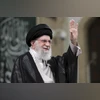 "Khamenei succession: Who might replace Iran's powerful Supreme Leader?")

