
Iran-US nuclear talks move to expert level, signal progress but no deal yet
Under the 2015 agreement, Iran agreed to enrich uranium only to 3.67% purity and keep a stockpile of only 300 kilograms
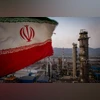 "Iran-US nuclear talks move to expert level, signal progress but no deal yet")
Explore Business Standard
Under the 2015 agreement, Iran agreed to enrich uranium only to 3.67% purity and keep a stockpile of only 300 kilograms
Negotiations between Iran and the United States over Tehran's rapidly advancing nuclear program will move Wednesday to what's known as the expert level a sign analysts say shows that the talks are moving forward rapidly.
Agreeing to technical talks suggests both sides are expressing pragmatic, realistic objectives for the negotiations and want to explore the details, said Kelsey Davenport, the director for nonproliferation policy at the Arms Control Association who long has studied Iran's nuclear program.
If Witkoff was making maximalist demands during his talks with Araghchi, such as dismantlement of the enrichment programme, Iran would have no incentive to meet at the technical level.
That technical level, however, remains filled with possible landmines. Just how much enrichment by Iran would be comfortable for the United States? What about Tehran's ballistic missile program, which US President Donald Trump first cited in pulling America unilaterally out of the accord in 2018? Which sanctions could be lifted and which would be remain in place on the Islamic Republic? The most important determinant of expert talks' value lies in whether there is a political commitment to do something and experts just need to figure out what," said Richard Nephew, an adjunct fellow at the Washington Institute for Near East Policy who worked on Iran sanctions while at the US State Department during negotiations over what became the 2015 nuclear deal.
"If the experts also have to discuss big concepts, without political agreement, it can just result in spun wheels.
The 2015 nuclear deal saw senior experts involved in both sides of the deal. For the US under President Barack Obama, Energy Secretary Ernest Moniz reached an understanding working with Ali Akbar Salehi, then the leader of the Atomic Energy Organization of Iran. Both men's technical background proved key to nailing down the specifics of the deal.
Under the 2015 agreement, Iran agreed to enrich uranium only to 3.67 per cent purity and keep a stockpile of only 300 kilograms.
Today, Iran enriches some uranium up to 60 per cent purity a short, technical step away from weapons-grade levels of 90 per cent. The last report by the International Atomic Energy Agency put Iran's overall uranium stockpile in February at 8,294.4 kilograms.
The deal also limited the types of centrifuges Iran could spin, further slowing Tehran's ability to rush for a bomb, if it chose to do so. It also set out the provisions of how and when sanctions would be lifted, as well as time limits for the accord itself.
Reaching limits, relief and timelines require the knowledge of experts, analysts say.
A nonproliferation agreement is meaningless if it cannot be effectively implemented and verified, Davenport said.
The United States needs a strong technical team to negotiate the detailed restrictions and intrusive monitoring that will be necessary to ensure any move by Iran toward nuclear weapons is quickly detected and there is sufficient time to respond.
It remains unclear who the two sides will be sending for those negotiations.
Both the Americans and the Iranians have been tightlipped over exactly what's been discussed so far, though both sides have expressed optimism about the pace. However, there has been one noticeable dispute stemming from comments Witkoff made in a television interview, suggesting Tehran could be able to enrich up to 3.67 per cent purity. However, analysts noted that was the level set by the 2015 deal under Obama.
Witkoff hours later issued a statement suggesting that comparison struck a nerve: A deal with Iran will only be completed if it is a Trump deal.
Iran must stop and eliminate its nuclear enrichment and weaponisation programme, Witkoff added.
Araghchi responded by warning that Iran must be able to enrich.
"The core issue of enrichment itself is not negotiable, he said.
Despite that, experts who spoke to the AP said they remained positive about the talks' trajectory so far.
Although still early stages, I'm encouraged so far, said Alan Eyre, a former US diplomat once involved in past nuclear negotiations with Tehran. The pace of negotiations to include starting expert level meetings this Wednesday is good.
He added that so far, there didn't appear to be any mutually exclusive red lines for the talks as well signalling there likely wasn't immediately any roadblocks to reaching a deal.
Nephew similarly described reaching the expert level as a positive sign. However, he cautioned that the hard work potentially was just beginning for the negotiations.
They imply the need to get into real details, to discuss concepts that senior (officials) might not understand and to answer questions. I also think too much can be read into them starting, Nephew said. Expert talks can sometimes be a fudge for seniors to avoid working on tough issues let's have experts discuss it while we move on to other things' or to sidestep big political decisions." Corey Hinderstein, the vice president for studies at the Carnegie Endowment for International Peace and a former US government nuclear expert, described herself as feeling cautious optimism over the expert talks beginning.
Heads of delegation are responsible for setting strategic goals and defining success, she said. But if there is a deal to be made, the technical experts are the ones who will get it done.
First Published: Apr 22 2025 | 12:48 PM IST

