
Israel's Netanyahu demands open-ended control of Gaza's border with Egypt
Netanyahu's comments came as the United States is developing a new proposal for a cease-fire and hostage release, hoping to break a long deadlock and bring an end
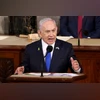 "Israel's Netanyahu demands open-ended control of Gaza's border with Egypt")
Explore Business Standard
Netanyahu's comments came as the United States is developing a new proposal for a cease-fire and hostage release, hoping to break a long deadlock and bring an end
Israeli Prime Minister Benjamin Netanyahu said Wednesday that Israel must keep open-ended control of Gaza's border with Egypt, digging in on his stance on an issue that has threatened to derail cease-fire efforts.
Netanyahu's comments came as the United States is developing a new proposal for a cease-fire and hostage release, hoping to break a long deadlock and bring an end to the nearly 11-month-old war.
The question of Israeli control of the Philadelphi corridor - a narrow strip of land along Gaza's border with Egypt, seized by troops in May - has become a central obstacle in the talks. Hamas has demanded an eventual full Israeli withdrawal from Gaza in the multi-phase truce deal.
Egypt, a mediator in the talks along with the US and Qatar, has also demanded a concrete timeline for Israeli troops to leave the Philadelphi corridor. And on Wednesday, the United Arab Emirates, which established formal ties with Israel in the 2020 Abraham Accords, also criticized the Israeli stance.
Speaking to foreign journalists, Netanyahu repeated his stance that Israel must maintain its hold on the border to prevent Hamas from rearming by smuggling weapons into Gaza. He said it was a vital part of the war goal of ensuring Hamas cannot repeat its Oct. 7 attack on Israel.
Gaza must be demilitarised, and this can only happen if the Philadelphi corridor remains under firm control, he said, claiming Israeli troops had discovered dozens of tunnels under the border.
He said Israel would only consider withdrawing from the corridor when presented with an alternative force to police it.
Bring me anyone who will actually show us that they can actually prevent the recurrence of smuggling, he said. I don't see that happening right now. And until that happens, we're there.
Families of remaining hostages have stepped up their demands that he agree to a deal after Hamas killed six hostages last week as Israeli troops appeared to be moving to rescue them. In angry public statements, hostage families have accused Netanyahu of blocking a deal and potentially sacrificing their loved ones' lives for the sake of holding the border strip. Hundreds of thousands of Israelis have taken to the streets in recent days, calling for a deal and saying time is running out to bring home the hostages alive.
Netanyahu pushed back against the pressure, saying his stance was necessary to ensure Hamas doesn't pose a threat to Israel.
I can understand the torment of families, he said. But the responsibility of leaders is not merely to share the sentiment, the emotion, but also to exercise judgment.
Asked by journalists for a timeline on ending the war, he refused to give one. How long can we do this? As long as it takes to achieve this victory. And I think we're getting a lot closer, he said.
Netanyahu repeatedly insisted holding the border would also pressure Hamas to release hostages. At one point, he erroneously claimed the invasion of Rafah in May forced Hamas' first release of hostages which took place months earlier in November under a weeklong ceasefire deal. He then said the deal was the result of our invasion, the military pressure we put on them.
(Only the headline and picture of this report may have been reworked by the Business Standard staff; the rest of the content is auto-generated from a syndicated feed.)
First Published: Sep 05 2024 | 8:03 AM IST

