Home / World News / Japan presses ahead with missile deployment near Taiwan amid China tensions
Japan presses ahead with missile deployment near Taiwan amid China tensions
When asked about the potential impact on Yonaguni of a Taiwan crisis, Koizumi said he wouldn't comment on hypothetical scenarios
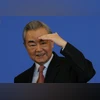
"It is shocking that Japan's current leaders have publicly sent the wrong signal of attempting military intervention in the Taiwan issue."-Chinese Foreign Minister Wang Yi. (Photo: PTI)
4 min read Last Updated : Nov 23 2025 | 11:55 PM IST
By Alastair Gale
Japan’s defense minister, visiting a military base close to Taiwan, said plans to deploy missiles to the post were on track as tensions smolder between Tokyo and Beijing over the East Asian island.
“The deployment can help lower the chance of an armed attack on our country,” Shinjiro Koizumi told reporters on Sunday as he wrapped up his first trip to the base on the southern Japanese island of Yonaguni. “The view that it will heighten regional tensions is not accurate.”
Japan is planning to station medium-range surface-to-air missiles on Yonaguni, about 110 kilometers (68 miles) east of Taiwan, as part of a broader military build-up on its southern island chain. The moves reflect Tokyo’s concerns about China’s growing military power and the potential for a clash over Taiwan.
Those fears have been amplified by a dispute over recent comments by Prime Minister Sanae Takaichi related to the self-ruling territory, which Beijing regards as a province that must be brought under its control, by force if necessary. Takaichi on Nov. 7 raised the theoretical possibility that Japan could deploy its military with other nations if China attacked Taiwan, drawing an angry response and economic retaliation from Beijing.
She has since reverted to the government’s longstanding policy of not discussing particular scenarios that might involve Tokyo’s military, but Beijing continues to demand a retraction. On Saturday, a Japanese official rejected China’s claims that Takaichi has altered Japan’s position on a Taiwan crisis as “entirely baseless.”
When asked about the potential impact on Yonaguni of a Taiwan crisis, Koizumi said he wouldn’t comment on hypothetical scenarios.
Before arriving in Yonaguni, Koizumi visited bases on the islands of Ishigaki and Miyako. The Ishigaki base is equipped with anti-ship missiles, while Miyako is a hub for air surveillance and other military facilities, including ammunition storage. Japan and the US also have major bases on the larger island of Okinawa further to the east.
A popular tourist retreat including for scuba divers, Yonaguni is also home to a surveillance radar facility that scans nearby seas and airspace, as well as an electronic warfare unit introduced in 2024 that could be used to jam enemy communications and guidance systems.
In recent weeks, the US military held a training exercise to bring supplies from Okinawa to Yonaguni to simulate the creation of a forward-operating base that might be needed in any regional crisis.
When China responded to a visit to Taiwan by US House Speaker Nancy Pelosi in 2022 by launching major military drills around the island, ballistic missiles landed just south of Yonaguni, providing a stark illustration of the proximity of the island to any conflict for control of Taiwan.
In a meeting with the mayor of Yonaguni, Koizumi said Japan has to build up its deterrence by increasing its own capabilities and deepening ties with the US military.
“Today, Japan faces the most severe and complex security environment since the end of World War II,” Koizumi said. “To protect the peaceful livelihoods of the Japanese people — including everyone here on Yonaguni — we must strengthen the Self-Defense Forces’ capabilities.”
Yonaguni is the end point of the Ryukyu island chain that stretches several hundred miles from the Japanese mainland. As tensions with China intensified in recent days, Chinese state-controlled media have published articles questioning Japan’s sovereignty over the islands and highlighting how the Ryukyu kingdom was independent from Japan several hundred years ago.
Few residents of the Ryukyu islands, also known as Okinawa Prefecture, seek independence but they’re wary of being embroiled in a regional conflict if military facilities on the islands are targeted.

 "Japan presses ahead with missile deployment near Taiwan amid China tensions")


