Just days after taking office, Japan's new leader faces a series of back-to-back foreign policy tests, with a meeting with US President Donald Trump in Tokyo sandwiched between Asia-region summits in Malaysia and South Korea.
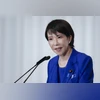
Prime Minister Sanae Takaichi, with limited experience in international affairs, will have to manage Trump's demands and unpredictability and China's wariness of her strong support for a military build-up and her right-wing views on Japan's invasion of China before and during World War II.
She arrives in Malaysia on Saturday for meetings with Southeast Asian leaders, then returns to Japan to meet Trump before heading to South Korea for the Asia-Pacific Economic Cooperation summit at the end of the week.
In her first news conference as prime minister, she described her schedule as packed with diplomatic events and said it will be a valuable opportunity to meet other regional leaders.
Chinese leader Xi Jinping will also attend the summit in South Korea, where talks with Trump are planned, but a one-on-one meeting with Takaichi would be a surprise.
Neither Xi nor Chinese Premier Li Qiang has publicly congratulated Takaichi since she became prime minister on Tuesday. They extended immediate congratulations to her predecessor, Shigeru Ishiba, who held more moderate positions on China.
Increased military spending may please Trump America has long been Japan's most important ally and protector, but as with NATO and other allies, Trump has demanded Japan contribute more for its defence. His tariffs on imports have also delivered a blow to the country's economy.
Takaichi pledged Friday to accelerate a plan to increase defence spending to 2% of Japan's GDP, a measure of the size of the economy. The target would be reached in March instead of 2027, she said.
In the region around Japan, military activities and other actions from our neighbours China, North Korea and Russia are causing grave concerns, she said in a policy speech to parliament.
Trump may be more focused in both Japan and South Korea on his demands for more investment in the United States, particularly for factories that would create jobs for American workers.
Takaichi could benefit from being a political protege of former Japanese Prime Minister Shinzo Abe, who appeared to have won Trump's trust during the American president's first term.
Takaichi may stop visiting Yasukuni Shrine She shares Abe's views on wartime history, perhaps even more strongly than he did. Before becoming prime minister, she was among conservative lawmakers who regularly paid respects to Japan's war dead at Yasukuni Shrine in Tokyo.
The visits anger both China and South Korea because the enshrined include former leaders convicted of war crimes for their actions during World War II.
Takaichi notably skipped a visit during the autumn festival earlier this month, when it appeared likely she would become Japan's leader.
Her paramount mission now is political stability, and experts think she will refrain from expressing her views on the war and stay away from the shrine to avoid any flareups that could shake her weak and untested coalition government.
It would be so foolish of her especially in her first year to create a major diplomatic incident because she wants to go to Yasukuni Shrine, said Gerald Curtis, a Japanese politics expert at Columbia University.
He said her right-wing supporters know she is on their team, so she doesn't need to visit the shrine to prove that to them.
A Chinese expert on Japan concurred.
Lian Degui at Shanghai International Studies University noted that Abe maintained ties with China even while deepening military cooperation with the US and pushing unsuccessfully to revise Japan's pacifist constitution, another hot-button issue for China.
If she can learn from Abe, bilateral relations will not deteriorate, he said. Abe rarely visited Yasukuni Shrine as prime minister and this is the foundation for bilateral relations.
Pleasing Trump on the military will anger China Avoiding the shrine might keep ties from deteriorating, but experts said it's hard to see them improving given the fundamental differences over regional security.
Takaichi has described the US-Japan alliance as the cornerstone of her country's diplomacy and security policy.
Japan, from the US perspective, is an indispensable partner for America's China strategy or its Indo-Pacific strategy, she added at her news conference.
China meanwhile has less incentive to improve ties than it did earlier, said Rintaro Nishimura, a senior associate at The Asia Group.
Given the situation now, their focus is on dealing with Trump directly, and Japan I don't think is their first priority at this point, he said.
Shi Yinhong, a professor of international relations at Beijing's Renmin University of China, expects the military confrontation between Japan and China to intensify under Takaichi, and said disputes over wartime history could increase.
The new prime minister has said she wants to maintain stable ties with China, but another Chinese expert advised against putting much stock in those comments.
These remarks are all the pre-established tones of the Japanese foreign ministry, said Liu Jiangyong, a specialist in East Asian studies at Tsinghua University in Beijing.
He said a meeting with a Chinese leader is difficult to imagine, given Takaichi's past remarks on history and push to expand the military, though some kind of courtesy greeting during a regional summit is possible.


 "Japan's new PM faces foreign policy tests with Trump and regional summits")

