It began last Friday in Tokyo, during a parliamentary session, when newly elected Japan’s Prime Minister Sanae Takaichi was asked about what kind of situation involving Taiwan could threaten the country’s survival. She replied that if it comes to battleships and the use of force, it would constitute a survival-threatening situation.
Her remark started a war of words with China, and set off the fiercest diplomatic clash between the two Asian powers in years.
Under Japan’s 2015 security laws, a “survival-threatening situation” allows the country’s Self-Defence Forces to act if an armed attack on an ally, such as the United States, endangers Japan’s existence.
China-Japan engage in war of words over Taiwan
The remark immediately drew Beijing’s ire. China’s foreign ministry called it “egregious” and accused Takaichi of interfering in its internal affairs.
But the row escalated further the next day when Xue Jian, China’s consul general in Osaka, reposted a news article about Takaichi’s comments on X, adding, “The dirty head that sticks itself in must be cut off.”
Tokyo viewed the line as a thinly veiled threat. Japan’s Chief Cabinet Secretary Minoru Kihara called it “highly inappropriate", while the foreign ministry lodged a formal protest. Beijing, in turn, filed its own protest over Takaichi’s statement.
Xue’s post was later deleted, but the diplomatic damage lingered.
China’s foreign ministry reacted furiously on November 10, calling Takaichi’s remarks “a gross interference in China’s internal affairs". Spokesperson Lin Jian told reporters, “Taiwan is China’s Taiwan. China will not tolerate any foreign interference.”
He added, “What signal is the Japanese leader trying to send to ‘Taiwan independence’ separatist forces? Is Japan ready to challenge China’s core interests?”
Following the escalation, on Tuesday (November 11), Takaichi defended her remarks as consistent with Japan’s traditional policy but said she would be “more careful” when discussing hypothetical security scenarios.
China-Japan relationship scarred by history
The exchange reopens long-festering wounds between Asia’s two biggest powers. The first major rupture came with Japan’s victory in the First Sino-Japanese War (1894-95). The Treaty of Shimonoseki ended Qing control over Korea and forced China to cede Taiwan to Japan, marking the start of Tokyo’s imperial expansion on the Asian mainland. That early loss is remembered in China as the beginning of a “century of humiliation".
And then Japan’s invasion of China in the 1930s, and its wartime atrocities in Nanjing and elsewhere, still colour Chinese public memory. Since the war, the two sides have rebuilt economic ties but remain at odds over security, history textbooks, and territory, notably the disputed Senkaku/Diaoyu Islands in the East China Sea.
Meanwhile, Takaichi’s rise to power has added another layer. A close aide of former prime minister Shinzo Abe, she represents Japan’s nationalist right and has vowed to strengthen defence spending and deepen security cooperation with the United States.
She has also been a vocal supporter of Taiwan, calling it crucial to Japan’s own security, and has warned that a Chinese blockade of the island could directly endanger Japan.
Earlier this month, Beijing had already accused her of violating the “One-China” principle after she met a senior Taiwanese official during the APEC summit in South Korea.
Why does Taiwan remain the flashpoint?
At the heart of this dispute lies Taiwan, the self-governed island that Beijing views as a breakaway province. China has not ruled out using force to bring it under its control in recent years.
Japan, like most countries, does not formally recognise Taiwan as a state but has growing concerns that any military conflict there could spill into its territory. Taiwan sits barely 100 kilometres from Japan’s southernmost islands.
Takaichi’s comments appear to challenge Japan’s long-standing ambiguity over Taiwan, a stance that is very similar to Washington’s “strategic ambiguity", which deliberately leaves unclear how far the US and its allies would go to defend Taiwan.
For decades, that vagueness has served as a deterrent, keeping Beijing guessing while allowing trade and diplomacy to continue. Tokyo has typically expressed only hope for a “peaceful resolution through dialogue” without publicly linking Japan’s security to Taiwan’s.

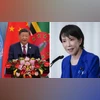 "How a single remark on Taiwan by Japan has reignited tensions with China")


