
MLK, RFK assassination records will soon be public, says Tulsi Gabbard
Searches were also being done of storage lockers at the FBI, CIA and other agencies to see if other documents can be found, Gabbard said
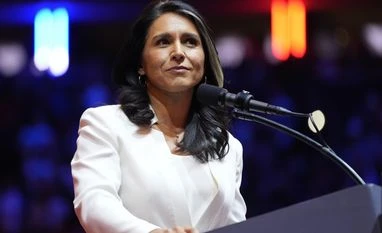 "MLK, RFK assassination records will soon be public, says Tulsi Gabbard")
WebinarsNew
Deep DiveNew
Explore Business Standard
Searches were also being done of storage lockers at the FBI, CIA and other agencies to see if other documents can be found, Gabbard said
Documents related to the 1968 assassinations of civil rights icon Martin Luther King Jr and Sen Robert F Kennedy will soon be made public as more than 100 people have been working around the clock to scan them, US Director of National Intelligence Tulsi Gabbard said during a Cabinet meeting.
The documents had been in boxes in storage for decades, Gabbard said Thursday.
"I've had over 100 people working around the clock to scan the paper around Sen Robert F Kennedy's assassination, as well as Martin Luther King Jr's assassination... They have never been scanned or seen before, she said. We'll have those ready to release here within the next few days.
When Kennedy's son, Health Secretary Robert F Kennedy Jr, who also was at the meeting, was asked by President Donald Trump about the impending release of the documents, he said, I'm very grateful to you Mr President.
Trump asked Gabbard if the health secretary had any concerns about releasing the documents.
His response is, Put it out. The world needs to know the truth,' Gabbard said.
Searches were also being done of storage lockers at the FBI, CIA and other agencies to see if other documents can be found, Gabbard said.
We want to get it all out, Trump said.
The Office of the Director of National Intelligence did not immediately respond to questions seeking information about the effort to identify records about the MLK or RFK assassinations.
Trump had signed an executive order in January after taking office calling for the release of governmental documents related to the assassinations.
King and Robert F Kennedy were assassinated within two months of each other in 1968.
King was outside a motel in Memphis, Tennessee, on April 4, 1968, when shots rang out. The civil rights leader, who had been in town to support striking sanitation workers, was set to lead marches and other nonviolent protests there.
James Earl Ray pleaded guilty to assassinating King. He later though renounced that plea and maintained his innocence up until his death.
Robert F Kennedy, then a New York senator, was fatally shot on June 5, 1968, at the Ambassador Hotel in Los Angeles moments after giving his victory speech for winning California's Democratic presidential primary. His assassin, Sirhan Sirhan, was convicted of first-degree murder and is serving life in prison.
Earlier this week Gabbard announced the creation of a task force that will consider whether the government should declassify material about several other issues of public interest, including the origins of COVID-19, federal efforts to influence online speech and investigations into mysterious health symptoms reported by some US diplomats and government employees that were once dubbed Havana syndrome.
Gabbard's office did not specify how the task force would be appointed or when it expects to submit its recommendations.
(Only the headline and picture of this report may have been reworked by the Business Standard staff; the rest of the content is auto-generated from a syndicated feed.)
First Published: Apr 11 2025 | 7:17 AM IST

