By Jason Gale and Janice Kew
As disease detectives rush to central Africa to quell a mushrooming mpox contagion, they’re finding a complex mosaic of infection patterns involving different viral strains and vastly different routes of infection.
In the Democratic Republic of Congo’s gold-rich eastern region, a newly mutated virus is spreading mostly among adults through sexual contact. In other areas of the country, an older strain is spilling from infected wildlife to humans who hunt and handle the animals, leading to a deadly explosion of cases among children. Linked to both viral pathways are infections among patients’ household members and health workers caring for them.
The virus is riding international transport routes into neighbouring countries, and there are reports of increased sexual violence stoking transmission, especially among conflict-displaced Congolese living in crowded camps. Determining how spread occurs is critical for stopping transmission of an emerging disease that the World Health Organization declared an international health emergency last week.
“There are big knowledge gaps and an enormous need to fill them as soon as possible,” said Margaret Harris, a WHO spokeswoman in Geneva. “An understanding of transmission patterns is one of the most pressing needs.”
Insufficient testing
Diagnostic testing is insufficient in central Africa, investigators say, as is the sophisticated genomic sequencing that helped scientists map and understand the spread of Covid-19 within communities.
Mpox is being transmitted in multiple ways in the Congo, according to the WHO, including via close physical contact between people engaging in transactional sex. Infected people may also pass the virus to those they live with and to health-care workers treating them.
Experts on the ground don’t see evidence of airborne spread, epidemiologists Anne Rimoin and Katelyn Jetelina said in an Aug. 20 blog post. Rather, they see potential routes of infection such as children hunting rodents, or sleeping four to a bed.
There have been about 19,000 cases and almost 550 deaths across Africa since the start of the year. The bulk of those have been in Congo, with the country recording almost three-quarters of 1,405 new mpox cases on the continent in the week through Tuesday, according to data from the Africa CDC.
Still, the true number is likely much higher due to under-reporting and limited testing. About 17 per cent of Congo’s new cases were confirmed by tests and the rest met the agency’s definition of the disease. Burundi reported 100 cases and last week Sweden reported an initial infection in a traveler.
The strain that’s exploding in Africa, endemic to Congo and historically more severe, is called clade I. The majority of cases in Congo are the Ia subvariant, which accounts for about 85 per cent of deaths; about 80 per cent of known clade Ia cases are in children. The second subvariant, Ib, is spreading among adults.
“Some of these emerging viruses that we’re seeing are changing behaviour and becoming more aggressive,” said Helen Rees, founder of the Reproductive Health and HIV Institute in Johannesburg. “We saw it with Ebola, we saw it with Covid, and now we’re seeing it with mpox.”
While understanding how the different strains are spreading is vital, health authorities say working with the affected communities to explain the need for behavior change is equally crucial.
High time
“We have to give good communication to children to abstain from meat from the jungle or animals that are found dead in the forest,” said Jean-Jacques Muyembe-Tamfum, a microbiologist who leads health emergency responses in the DRC. “This is the first step.”
The second is halting human-to-human transmission by ensuring communities are aware of the need to wash hands regularly and take precautionary measures when having sex, such as wearing a condom, Muyembe-Tamfum said.
Unlike clade IIb, a milder strain that erupted in 2022 and spread primarily through men who have sex with men, the monkeypox virus is spreading in the Congo through various forms of sexual activity and close physical contact.
Experience gained in the region from the spread of viruses that have caused diseases such as Ebola, Covid and AIDS needs to used again, he said.
“Unfortunately we forgot all this,” Muyembe-Tamfum said. But, with a new infectious threat on the doorstep, “it’s high time now that we put all this in place.”

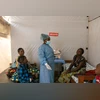 "Mpox risks heighten with mosaic of infection patterns in Central Africa")


