Home / World News / N Korea vows to block border with S Korea and boost front-line defence
N Korea vows to block border with S Korea and boost front-line defence
S Korean officials earlier said North Korea had already been adding anti-tank barriers and reinforcing roads on its side of the border since April in a likely attempt to boost its front-line security
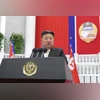
North Korea's military said Wednesday it will completely cut off roads and railways linked to South Korea and fortify the relevant areas of our side with strong defense structures, according to the North's official Korean Central News Agency (Photo: PTI)
North Korea said Wednesday it will permanently block its border with South Korea and boost its front-line defense posture to cope with confrontational hysteria" by South Korean and US forces, while not announcing an expected constitutional revision to formally designate South Korea its principal enemy and codify new national borders.
While the moves were likely a pressure tactic, it's unclear how they will affect ties with South Korea since cross-border travel and exchanges have been halted for years.
North Korea's military said Wednesday it will completely cut off roads and railways linked to South Korea and fortify the relevant areas of our side with strong defense structures, according to the North's official Korean Central News Agency.
The North's military called its steps a self-defensive measure for inhibiting war and defending the security of North Korea. It said that the hostile forces are getting ever more reckless in their confrontational hysteria. It cited what it called various war exercises in South Korea, the deployment of US strategic assets and its rivals' harsh rhetoric.
South Korean officials earlier said North Korea had already been adding anti-tank barriers and reinforcing roads on its side of the border since April in a likely attempt to boost its front-line security posture and prevent its soldiers and citizens from defecting to South Korea.
KCNA earlier Wednesday said the Supreme People's Assembly met for two days this week to amend the legal ages of North Koreans for working and participating in elections. But it didn't say whether the meeting dealt with leader Kim Jong Un's order in January to rewrite the constitution to remove the goal of a peaceful Korean unification, formally designate South Korea as the country's invariable principal enemy and define the North's sovereign, territorial sphere.
Some experts say North Korea might have delayed the constitutional revision but others speculated it amended the constitution without announcing it because of its sensitivity.
Kim's order stunned many North Korea watchers because it was seen as breaking away with his predecessors' long-cherished dreams of achieving a unified Korea on the North's terms. Experts say Kim likely aims to diminish South Korea's voice in the regional nuclear standoff and seek direct dealings with the US. They say Kim also likely hopes to diminish South Korean cultural influence and bolster his rule at home.
(Only the headline and picture of this report may have been reworked by the Business Standard staff; the rest of the content is auto-generated from a syndicated feed.)

 "N Korea vows to block border with S Korea and boost front-line defence")

