Home / World News / Nasa's James Webb telescope zeroes in on asteroid that could hit Earth
Nasa's James Webb telescope zeroes in on asteroid that could hit Earth
Nasa is directing the James Webb Space Telescope to track asteroid 2024 YR4, whose collision risk with Earth has risen to 2.3 per cent, in a bid to better understand its size and trajectory
After Nasa raised the likelihood of asteroid 2024 YR4 colliding with Earth from just over one per cent to more than two per cent, astronomers have decided to turn the James Webb Space Telescope (JWST) towards it.
The most powerful telescope in the world, positioned over 1.5 million km from Earth, will help clarify the size and orbit of asteroid '2024 YR4.'
Astronomers are working to reduce the uncertainty surrounding the asteroid's orbit and eliminate any risk of impact, although it will soon be too far out of view from Earth to monitor.
"The chance of impact is very slim, and the asteroid is small enough that the effects of any potential impact would be on a local scale, but the situation is significant enough to warrant the attention of the global planetary defence community," the European Space Agency (ESA) said in a blog post.
Currently about 35 million miles away, YR4’s trajectory has led scientists to conduct thorough calculations. Initially, there was a 1 in 83 chance of an impact in 2032, but recent observations have raised the probability to 2.3 per cent, fueling further concern.
Measuring around 200 ft in diameter, YR4 could cause widespread damage if it struck Earth. Scientists estimate that such an impact could devastate around 800 sq miles, with potential zones including the Pacific Ocean, South America, Africa, and South Asia.
"To accurately assess the hazard posed by asteroid 2024 YR4, we need a more precise estimate of its size. Our current estimate, 40-90 m, has not changed much since the asteroid was first discovered in December 2024, despite many follow-up observations," ESA added.
Webb can detect the infrared light (heat) emitted by 2024 YR4, offering a clearer estimate of the asteroid’s size. "Observations made using Webb’s NIRCam instrument will complement MIRI’s thermal data and will also provide additional measurements of the asteroid’s position once it is beyond the reach of Earth-based telescopes," the ESA stated.
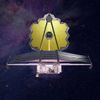
James Webb Space Telescope
The James Webb Space Telescope (JWST) is a space observatory focused on studying the formation of stars, planets, and galaxies. As the largest and most powerful telescope ever constructed, it is designed to look farther back in time than the Hubble Space Telescope.
Nasa describes Webb as the successor to the Hubble Space Telescope, with the aim of becoming the leading space observatory for astronomers across the globe.
Galaxy that could shed light on Milky Way's origins
The James Webb Space Telescope made a groundbreaking discovery in December last year by identifying a galaxy that existed just 600 million years after the Big Bang. This finding offers a rare glimpse into the early universe and provides valuable insights into what the Milky Way might have looked like during its formative years.
The galaxy, named "Firefly Sparkle," is notable for its relatively low mass compared to other galaxies observed by the JWST. Researchers analysed 10 star clusters within the galaxy to better understand its formation and evolution.
In a post on X, Nasa stated: “Webb discerned distinct star clusters in the Firefly Sparkle galaxy, which existed 600 million years after the Big Bang — the first discovery of an actively forming galaxy as lightweight as the young Milky Way.”

 "Nasa's James Webb telescope zeroes in on asteroid that could hit Earth")

