
Netherlands follows Germany, others in enforcing extra border checks
It is the latest move by the country's hard-right government aimed at reining in immigration
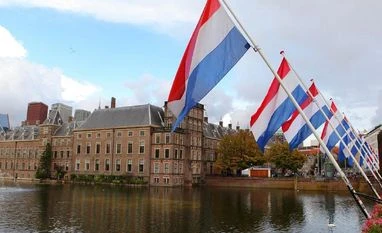 "Netherlands follows Germany, others in enforcing extra border checks")
Explore Business Standard
It is the latest move by the country's hard-right government aimed at reining in immigration
The Dutch government said on Monday that it will bring in extra checks at its land borders to combat irregular migration, similar to a policy brought in by Germany in September.
It is the latest move by the country's hard-right government aimed at reining in immigration, as anti-foreigner sentiment surges across Europe.
Dutch Migration Minister Marjolein Faber announced the policy in a press release after the move got the green light from the Cabinet. It is time to tackle irregular migration and migrant smuggling in a concrete way. That is why we will start reintroducing border controls in the Netherlands from the beginning of December, she said in a statement.
The measure will take effect on December 9. Under European Union law, countries must give Brussels four weeks notice before restricting freedom of movement.
Earlier this year, Faber told Brussels the Netherlands also wanted to opt out of EU refugees obligations.
Geert Wilders, whose anti-immigration party won the largest share of seats in elections last year, posted on social media that his PVV party delivers. Wilders has been calling for closing Dutch borders for more than a decade.
Faber, who represents Wilders' party in the Cabinet, did not specify how the border controls would be carried out. The move comes with no extra funding for the national policy force response for border checks. The six-month restrictions must be done within the existing capacity, the statement says.
The Netherlands has hundreds of land border crossings with neighbouring Germany and Belgium. Currently, the police carry out spot checks. Faber says the border controls must be carried out with as little hindrance as possible to traffic.
Germany began carrying out similar checks on the border with France, the Netherlands, Belgium, Luxembourg and Denmark last month following several high-profile attacks by extremists.
Germany and the Netherlands are both part of the Schengen area, the border-free travel zone which includes most EU member states, as well as Iceland, Liechtenstein, Norway and Switzerland.
According to the EU, member states are allowed to temporarily reintroduce controls at the EU's so-called internal borders in case of a serious threat, such as one to internal security. But it also says border controls should be applied as a last resort in exceptional situations, and must be time-limited.
(Only the headline and picture of this report may have been reworked by the Business Standard staff; the rest of the content is auto-generated from a syndicated feed.)
First Published: Nov 12 2024 | 7:48 AM IST


