
New mutation in bird flu virus shows potential for humans outbreak: Report
Scientists have identified new mutations in avian influenza virus H5N1, which recently infected a man in Chile, and may pose risk of spread in humans
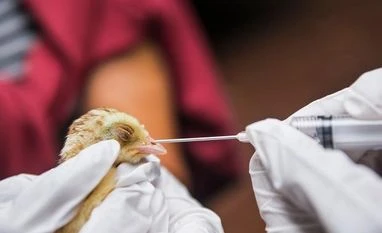 "New mutation in bird flu virus shows potential for humans outbreak: Report")
WebinarsNew
Deep DiveNew
Explore Business Standard
Scientists have identified new mutations in avian influenza virus H5N1, which recently infected a man in Chile, and may pose risk of spread in humans
Scientists have identified new mutations in avian influenza virus H5N1, which recently infected a man in Chile, and may pose risk of spread in humans.
According to the European Centre for Disease Control (ECDC), the risk of spread from human to human remains low but the new changes seen are 'concerning'. It also suggests that the potential risk to humans spillover is increasing
Last month, Chile's Health Ministry confirmed that a 53-year-old man has tested positive for H5N1 virus. The man was reported to be in serious but stable condition with severe pneumonia.
As per officials from the US Centers for Disease Control and Prevention, a sample of the virus isolated from the man contains two genetic mutations that are signs of adaptation to mammals, The New York Times reported.
In experimental animal studies, the mutations, both of which are in what is known as the PB2 gene, have previously been shown to help the virus replicate better in mammalian cells.
The risk to the public remains low, health officials said, adding that no additional human cases have been linked to the Chilean man who remains hospitalised.
Importantly, the sample did not contain other critical genetic changes that scientists believe would be necessary for H5N1 to spread efficiently among humans, including mutations that would stabilise the virus and help it bind more tightly to human cells, The New York Times reported.
"There are three major categories of changes we think H5 has to undergo to switch from being a bird virus to being a human virus," Richard J. Webby, a bird flu expert at St. Jude Children's Research Hospital, was quoted as saying.
"The sequences from the person in Chile have one of those classes of changes. But we also know that of those three sets of changes, this is the easiest one for the virus to make."
Globally, there have been 874 human cases, including 458 deaths (case-fatality rate: 52.4 per cent), of human infection with avian influenza A(H5N1) reported in 23 countries since 2004. To date, no human to-human transmission has been detected, the ECDC said.
In a report published this week, the agency said that the risk assessments contain "high uncertainty" due to the increasing transmission of H5N1, including its introduction to the Americas and the spread in animals.
The PB2 gene was recently identified in mink in Spain.
H5N1 jumped from wild birds to thousands of farmed animals -- within weeks, more than four per cent had died from haemorrhagic pneumonia. In total, 50,000 mink were culled, The Telegraph reported.
Experts noted that an increase in mammalian transmission could spur a greater risk to humans.
Last month, a woman in China was hospitalised with H5N1, while a young girl died earlier this month and her father was quarantined in Cambodia after contracting the virus.
It was found during the sequencing of the Cambodia cases that the virus did have the mutations expected to allow it to infect humans but there were no signs that the pathogen has changed to better spread between people, the report said.
--IANS
rvt/prw/pgh
(Only the headline and picture of this report may have been reworked by the Business Standard staff; the rest of the content is auto-generated from a syndicated feed.)
First Published: Apr 15 2023 | 7:20 PM IST


 Connect with us on WhatsApp