
No jail time: Judge sets Trump's sentencing in hush money case for Jan 10
After Trump's November 5 election, Merchan halted proceedings and indefinitely postponed the sentencing so the defense and prosecution could weigh in on the future of the case
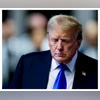 "No jail time: Judge sets Trump's sentencing in hush money case for Jan 10")
Explore Business Standard

Associate Sponsors
Co-sponsor
After Trump's November 5 election, Merchan halted proceedings and indefinitely postponed the sentencing so the defense and prosecution could weigh in on the future of the case
In an extraordinary turn, a judge Friday set President-elect Donald Trump's sentencing in his hush money case for January 10 little over a week before he's due to return to the White House but indicated he wouldn't be jailed.
The development nevertheless leaves Trump on course to be the first president to take office convicted of felony crimes.
Judge Juan M Merchan, who presided over Trump's trial, signalled in a written decision that he'd sentence the former and future president to what's known as a conditional discharge, in which a case gets dismissed if a defendant avoids rearrest.
Merchan rejected Trump's push to dismiss the verdict and throw out the case on presidential immunity grounds and because of his impending return to the White House. The judge said he found no legal impediment to sentencing Trump and that it was incumbent on him to sentence Trump prior to his swearing in on January 20.
Only by bringing finality to this matter will the interests of justice be served, Merchan wrote.
Trump was convicted in May of 34 counts of falsifying business records. They involved an alleged scheme to hide a hush money payment to porn actor Stormy Daniels in the last weeks of Trump's first campaign in 2016. The payout was made to keep her from publicising claims she'd had sex with the married Trump years earlier. He says that her story is false and that he did nothing wrong.
After Trump's November 5 election, Merchan halted proceedings and indefinitely postponed the sentencing so the defense and prosecution could weigh in on the future of the case.
Trump's lawyers urged Merchan to toss it. They said it would otherwise pose unconstitutional disruptions to the incoming president's ability to run the country.
Prosecutors acknowledged there should be some accommodation for his upcoming presidency, but they insisted the conviction should stand.
They suggested various options, such as freezing the case during his term or guaranteeing him a no-jail sentence. They also proposed closing the case while formally noting both his conviction and his undecided appeal a novel idea drawn from what some state courts do when criminal defendants die while appealing their cases.
Trump takes office January 20 as the first former president to be convicted of a crime and the first convicted criminal to be elected to the office.
His conviction left the 78-year-old facing the possibility of punishment ranging from a fine or probation to up to four years in prison.
The case centered on how Trump accounted for reimbursing his personal attorney for the Daniels payment.
The lawyer, Michael Cohen, fronted the money. He later recouped it through a series of payments that Trump's company logged as legal expenses. Trump, by then in the White House, signed most of the checks himself.
Prosecutors said the designation was meant to cloak the true purpose of the payments and help cover up a broader effort to keep voters from hearing unflattering claims about the Republican during his first campaign.
Trump said that Cohen was legitimately paid for legal services, and that Daniels' story was suppressed to avoid embarrassing Trump's family, not to influence the electorate.
Trump was a private citizen campaigning for president, but neither elected nor sworn in when Cohen paid Daniels in October 2016. He was president when Cohen was reimbursed, and Cohen testified that they discussed the repayment arrangement in the Oval Office.
Trump, a Republican, has decried the verdict as the rigged, disgraceful result of a witch hunt pursued by Manhattan District Attorney Alvin Bragg, a Democrat.
Before Trump's November election, his lawyers sought to reverse his conviction for a different reason: a U.S. Supreme Court decision in July that gave presidents broad immunity from criminal prosecution. That request was still pending when the election raised new issues.
While urging Merchan to nix the conviction, Trump also sought to move the case to federal court, where he could also assert immunity. A federal judge repeatedly said no, but Trump appealed.
The hush money case was the only one of Trump's four criminal indictments to go to trial.
Since the election, special counsel Jack Smith has ended his two federal cases. One pertained to Trump's efforts to overturn his 2020 election loss; the other alleged he hoarded classified documents at his Mar-a-Lago estate.
A separate, state-level election interference case in Georgia is largely on hold.
(Only the headline and picture of this report may have been reworked by the Business Standard staff; the rest of the content is auto-generated from a syndicated feed.)
First Published: Jan 04 2025 | 7:00 AM IST

