
Russia blames US Intelligence, Apple for hacking thousands of iPhones
Without providing evidence, Russia's Federal Security Service claimed that several thousand iPhones in the country had been compromised in a recently uncovered espionage operation
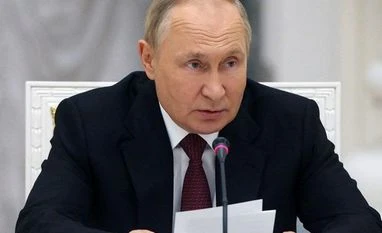 "Russia blames US Intelligence, Apple for hacking thousands of iPhones")
WebinarsNew
Deep DiveNew
Explore Business Standard
Without providing evidence, Russia's Federal Security Service claimed that several thousand iPhones in the country had been compromised in a recently uncovered espionage operation
Without providing evidence, Russia's Federal Security Service claimed on Monday that several thousand iPhones in the country had been compromised in a recently uncovered espionage operation that it attributed the US government, The Washington Post reported.
Russian cybersecurity firm Kaspersky Lab claimed that the campaign had installed file-stealing malware on iPhones belonging to its staff that were running an outdated version of Apple's mobile operating system. The firm added that it lacked sufficient proof to attribute the breaches to any particular government or organisation.
According to Kaspersky, the infections started with an iMessage attachment without any user involvement, a vector similar to that employed by NSO Group, a vendor of Pegasus spyware, and rivals who sell to international government agencies.
A Kaspersky representative told The Washington Post that researchers were still investigating the effort and lacked sufficient technical proof to identify its source.
The Federal Security Service (FSB), however, asserted that the attack targeted thousands of people, including diplomats stationed there, that the United States was responsible, and that the vulnerability's presence proved Apple had worked with US government hackers.
An Apple spokesperson while denying the charges said, "We have never worked with any government to insert a backdoor into any Apple product and never will," according to The Washington Post.
A Kremlin spokesperson stated that the government believed iPhones to be inherently unsafe.
The foreign ministries of China and Israel did not reply to calls for comment after the FSB said that hacked diplomats were from those nations among others, according to The Washington Post.
No impacted devices, according to Kaspersky, were using an operating system that was more recent than iOS 15.7, which was replaced in September 2022. None of the impacted devices were also using Lockdown Mode, an optional setting that lessens the number of ways that iPhones can be attacked by limiting the functionality of iMessage, among other things.
A high-end government spying operation would more frequently exploit a zero-day vulnerability, which is an undiscovered defect that still affects software that is fully patched. International spying frequently targets the gadgets used by embassies and private security professionals.
The US Office of the Director of National Intelligence refused to provide any comment to The Washington Post.
Kaspersky did not divulge much that would have helped Apple determine what vulnerability was used, and it notified the firm just overnight, hours before the FSB revealed its findings.
The security company, which frequently collaborates with Russian law enforcement, did release a list of obscure websites that had been used to connect to the infected phones as well as technical indicators of penetration that consumers might use to examine their own devices, The Washington Post reported.
(Only the headline and picture of this report may have been reworked by the Business Standard staff; the rest of the content is auto-generated from a syndicated feed.)
First Published: Jun 02 2023 | 7:51 AM IST


 Connect with us on WhatsApp