Russia warned French President Emmanuel Macron on Thursday not to threaten it with nuclear rhetoric and, mocking his height by calling him 'Micron', ruled out European proposals to send peacekeeping forces from NATO members to Ukraine.
Macron said in an address to the nation on Wednesday that Russia was a threat to Europe, Paris could discuss extending its nuclear umbrella to allies and that he would hold a meeting of army chiefs from European countries willing to send peacekeeping troops to Ukraine after a peace deal.
The Kremlin said the speech was extremely confrontational and that Macron wanted the war in Ukraine to continue.
"This (speech) is, of course, a threat against Russia," Foreign Minister Sergei Lavrov said.
"Unlike their predecessors, who also wanted to fight against Russia, Napoleon, Hitler, Mr Macron does not act very gracefully, because at least they said it bluntly: 'We must conquer Russia, we must defeat Russia'.
Russia's invasion of Ukraine has led to the biggest confrontation between the West and Russia since the 1962 Cuban Missile Crisis, and the Kremlin and White House have said missteps could trigger World War Three.
Russia and the United States are the world's biggest nuclear powers, with over 5,000 nuclear warheads each. China has about 500, France has 290 and Britain 225, according to the Federation of American Scientists.
Russian officials and lawmakers accused Macron of rhetoric that could push the world closer to the abyss. Russian cartoons cast him as Napoleon Bonaparte riding towards defeat in Russia in 1812.
"Micron himself poses no big threat though. He'll disappear forever no later than May 14, 2027. And he won't be missed," former President Dmitry Medvedev wrote on X, looking ahead to the end of Macron's term.
Foreign Ministry spokeswoman Maria Zakharova suggested Macron might want help measuring his true military size, and her ministry said his speech contained "notes of nuclear blackmail" and amounted to a threat directed towards Russia.
"Paris' ambitions to become the nuclear 'patron' of all of Europe have burst out into the open, by providing it with its own 'nuclear umbrella', almost to replace the American one.
Needless to say, this will not lead to strengthening the security of either France itself or its allies," it said.
NO ON PEACEKEEPERS
Russian advances in Ukraine and U.S. President Donald Trump's upending of U.S. policy on the war have caused fears among European leaders that Washington is turning its back on Europe.
Russian officials say tough rhetoric from Macron, British Prime Minister Keir Starmer and other European powers is not backed up by hard military power and point to Russia's advances on the battlefield in Ukraine.
Lavrov and the Kremlin dismissed Macron's proposal to send peacekeepers to Ukraine and said Russia would not agree to it.
"We are talking about such a confrontational deployment of an ephemeral contingent," Kremlin spokesman Dmitry Peskov said.
Lavrov said saying Moscow would see such a deployment as NATO presence in Ukraine.
Russian President Vladimir Putin has dismissed Western assertions that Russia could one day attack a NATO member.
He portrays the war as part of a historic struggle with the West following the collapse of the Soviet Union and NATO's encroachment on what he considers Moscow's sphere of influence.
U.S. Secretary of State Marco Rubio this week cast the conflict as a proxy war between Russia and the U.S., a position the Kremlin said was accurate.
"This is actually a conflict between Russia and the collective West. And the main country of the collective West is the United States of America," Peskov said. "We agree that it is time to stop this conflict and this war." (Only the headline and picture of this report may have been reworked by the Business Standard staff; the rest of the content is auto-generated from a syndicated feed.)

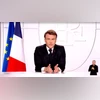 "Russia mocks Macron as 'Micron', warns France against nuclear threats")

