By Alastair Gale, Philip J. Heijmans and Eric Martin
After months of tariff threats and brow-beating on defense spending, American allies in Asia had ample reason to be wary of President Donald Trump. But he ended up using a three-nation tour of the region to hammer home a clear message: The US still has your back.
Trump said the US was “wedded” to South Korea, addressed some of its concerns about a $350 billion investment pledge and approved its request for nuclear-powered submarines. He told Japan’s new Prime Minister Sanae Takaichi that she can ask him for help with “anything.” And he avoided watering down the US commitment to Taiwan in a summit with Chinese President Xi Jinping, while his defense chief, Pete Hegseth, voiced concerns about Beijing’s naval activities around the island democracy.
The US president also sought to mend ties with Southeast Asian nations that have leaned closer toward Beijing as Trump took aim at their economic growth engines — signing trade agreements with Cambodia and Malaysia and frameworks for deals with Thailand and Vietnam. Hegseth, traveling separately in the region, signed a 10-year defense deal with India and announced that military exercises with Cambodia would resume for the first time in eight years.
“It’s much better than what I expected — the trust, the friendship and the commitment to enhance relations,” Malaysian Prime Minister Anwar Ibrahim said of his discussions with Trump, speaking to Bloomberg while displaying a presidential coin given by the US leader moments earlier.
Yet for all the assurances, nations across the Asia-Pacific region must still reckon with a Trump 2.0 reality that features much costlier access to the American market, and the unpredictability inherent in his approach to international relations. And China’s leaders also notched milestones of their own last week.
Xi marked his first visit to South Korea in 11 years, had his first formal sit-down with a Canadian leader since 2017, and met Japan’s new conservative premier. China’s president called for stable supply chains and deeper economic integration with the region, while his Premier Li Qiang expanded a trade pact with Southeast Asian nations already deeply reliant on the world’s second-biggest economy.
“The Americans have to show that they are sort of dialing down the hostility and attempting to build constructive relations if they want to please their audiences in Southeast Asia,” said Bill Hayton, an associate fellow with the Asia-Pacific program at Chatham House, a London-based research group, who has written several books on Asia.
The sometimes-truculent US president tilted toward charm, pageantry and protocol on his swing through Asia.
In Malaysia, where he attended a gathering of the Association of Southeast Asian Nations, he briefly danced with local performers and waved US and Malaysian flags to the delight of onlookers. In Japan, he made a joint visit with Takaichi to a US aircraft carrier, where the nation’s first female leader pumped her fist into the air as troops cheered. In South Korea, he set aside the latest tensions with Canada to have a “very nice conversation” with Prime Minister Mark Carney. And at the top of his meeting with Xi, he refrained from his usual practice of engaging with reporters, turning to the business at hand.
Still, Trump’s attention to the region doesn’t amount to “full-spectrum engagement,” Hayton added. “It doesn’t compare with what the Chinese side are offering.”
The US president also didn’t stick around for key parts of the two summits. He left Malaysia ahead of a key regional discussion and then flew out of South Korea prior to the Asia-Pacific Economic Cooperation leaders’ sessions on Friday and Saturday, which Xi attended.
Thursday’s high-stakes meeting with Xi came as both the US and China sparred over tariffs and export curbs, with Beijing imposing sweeping controls on sales of rare-earth materials vital to manufacturers worldwide in retaliation for a move by the US Commerce Department to expand its own restrictions on semiconductor gear.
The result: A one-year truce that bought both sides time to further reduce dependence on each other in strategic areas. While not all issues are resolved, Trump’s plan to visit China in April at Xi’s invitation provides some momentum toward keeping the relationship stable.
Heading into the Xi meeting, China hawks in Washington had feared Trump might go even further in loosening national-security restrictions, including approving the sale of Nvidia Corp.’s most-powerful chips and watering down support for Taiwan, which is claimed by Beijing. But neither happened.
Among the week’s surprising developments was a trade deal clinched by Trump and South Korean President Lee Jae Myung, which seemed unlikely only days earlier given Korean concerns over the details of a $350 billion investment pledge. But the agreement capped South Korean annual investments at $20 billion, addressing Seoul’s worries about destabilizing the foreign-exchange market. And in a bonus, Trump gave a green light to South Korea’s long-running goal to build a nuclear-powered submarine.
Helping to smooth Trump’s Asia tour was a heavy dose of flattery. He was given a golden golf ball and a putter used by the late Shinzo Abe in Japan, while South Korea gave him a golden crown. He was given the opportunity to preside over a peace ceremony between Thailand and Cambodia after a recent border conflict, and Takaichi later told Trump she was joining other global leaders in nominating him for a Nobel Peace Prize.
“I think President Trump wants to be a man of peace,” Thai Foreign Minister Sihasak Phuangketkeow said in an interview. “He wants to promote peace and we welcome that.”
After arriving back in the US, Trump touted the strength of relations with Asian countries in a social media post. “Great Trade Deals were made, Long Term relationships now exist,” Trump wrote on his Truth Social platform. Hegseth repeated that sentiment at a regional defense meeting in Malaysia, telling reporters: “We were never gone and aren’t going anywhere.”
But not everything went swimmingly. Indian Prime Minister Narendra Modi stayed away from the Asean summit to avoid a meeting with the US president, Bloomberg reported. Trump then quipped on Wednesday that Modi was “the nicest-looking guy” who is also a “killer” eager to fight, threatening to further inflame relations with a nation that the US had previously courted as a counterweight to China.
“US foreign policy under Trump has not been orthodox,” said Bonnie Glaser, managing director of the Indo-Pacific program at the German Marshall Fund of the US. “And I don’t see Trump’s recent Asia tour as suggesting a shift to a more traditional approach.”

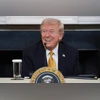 "Trump plays nice with Asian allies stung by tariffs, repeated threats")


 Connect with us on WhatsApp