
UK's Treasury chief accepts that recession may be imp to lower inflation
Higher borrowing costs are aimed at making it more expensive for individuals and businesses to borrow, which dampens demand in the economy
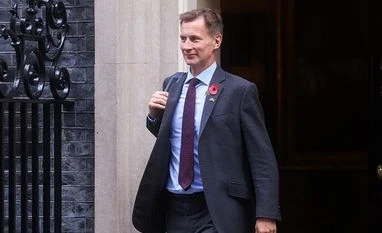 "UK's Treasury chief accepts that recession may be imp to lower inflation")
Explore Business Standard

Associate Sponsors
Co-sponsor
Higher borrowing costs are aimed at making it more expensive for individuals and businesses to borrow, which dampens demand in the economy
Britain's Treasury chief said he would be prepared to see the UK economy slip back into recession if further interest rate hikes are necessary to bring down inflation.
With the Bank of England expected to keep raising rates following higher-than-anticipated inflation figures this week, Jeremy Hunt said it was necessary to prioritise measures to slow the pace of price increases.
In an interview with Sky News that aired on Friday, Hunt said the only path to sustainable growth is to bring inflation under control.
Asked if he was comfortable with further rate hikes even if it could precipitate a recession, Hunt said, Yes, because in the end, inflation is a source of instability. ... It is not a trade-off between tackling inflation and recession."
Like other central banks, the Bank of England has been raising interest rates aggressively over the past 18 months or so to a 15-year high of 4.5 per cent after inflation spiked sharply, first because of bottlenecks caused by the coronavirus pandemic and then Russia's invasion of Ukraine, which caused energy and food prices to surge.
Higher borrowing costs are aimed at making it more expensive for individuals and businesses to borrow, which dampens demand in the economy.
If we want to have prosperity, to grow the economy, to reduce the risk of recession, we have to support the Bank of England in the difficult decisions that they take," Hunt said.
There had been hope that the bank, whose primary task is to keep inflation at around 2 per cent, may pause rate hikes but the inflation figures this week raised alarm bells that it will have to go on tightening monetary policy.
The consumer prices index eased to 8.7 per cent in the year to April from 10.1 per cent in March, largely because last year's energy spike in the wake of the invasion of Ukraine dropped out of the annual comparison.
The decline wasn't as big as anticipated, especially as prices in the wholesale gas market have been falling for months.
Since then, financial markets have priced in further rate hikes from the central bank in the coming months, possibly up to 5.5 per cent, bad news for borrowers and those looking to get a new mortgage.
The shock print for inflation this week has very quickly reset most forecasters' expectations of where the peak in the Bank of England rate will be," said Luke Hickmore, investment director at asset management firm abrdn.
Earlier this week, the International Monetary Fund predicted that the British economy would avoid falling into recession this year.
However, its upgraded growth forecasts were released before the inflation figures, which led to the uptick in anticipated interest rates.
(Only the headline and picture of this report may have been reworked by the Business Standard staff; the rest of the content is auto-generated from a syndicated feed.)
First Published: May 26 2023 | 9:01 PM IST

